Recipes › Breakfast
Brazilian Cheese Bread ‘puffs’ (Pão de Queijo)
By Samira Kazan
updated August 13, 2024








How to make Brazilian cheese bread ‘puffs/rolls’ (aka p√£o de queijo) with just 5 ingredients and in under an hour from start to finish. These Brazilian cheese puffs are naturally gluten-free and packed with cheese for tons of flavor. Enjoy them with breakfast or as a snack any time of the day!

So far this year (and last year too, come to think of it), I jumped head-first into the world of baking. After sharing recipes for American NY-style bagels and soft pretzels , Turkish Ramadan pide and simit , Greek pita , Middle Eastern cheese manakish , now it’s the turn of P√£o de Queijo aka Brazilian cheese bread.
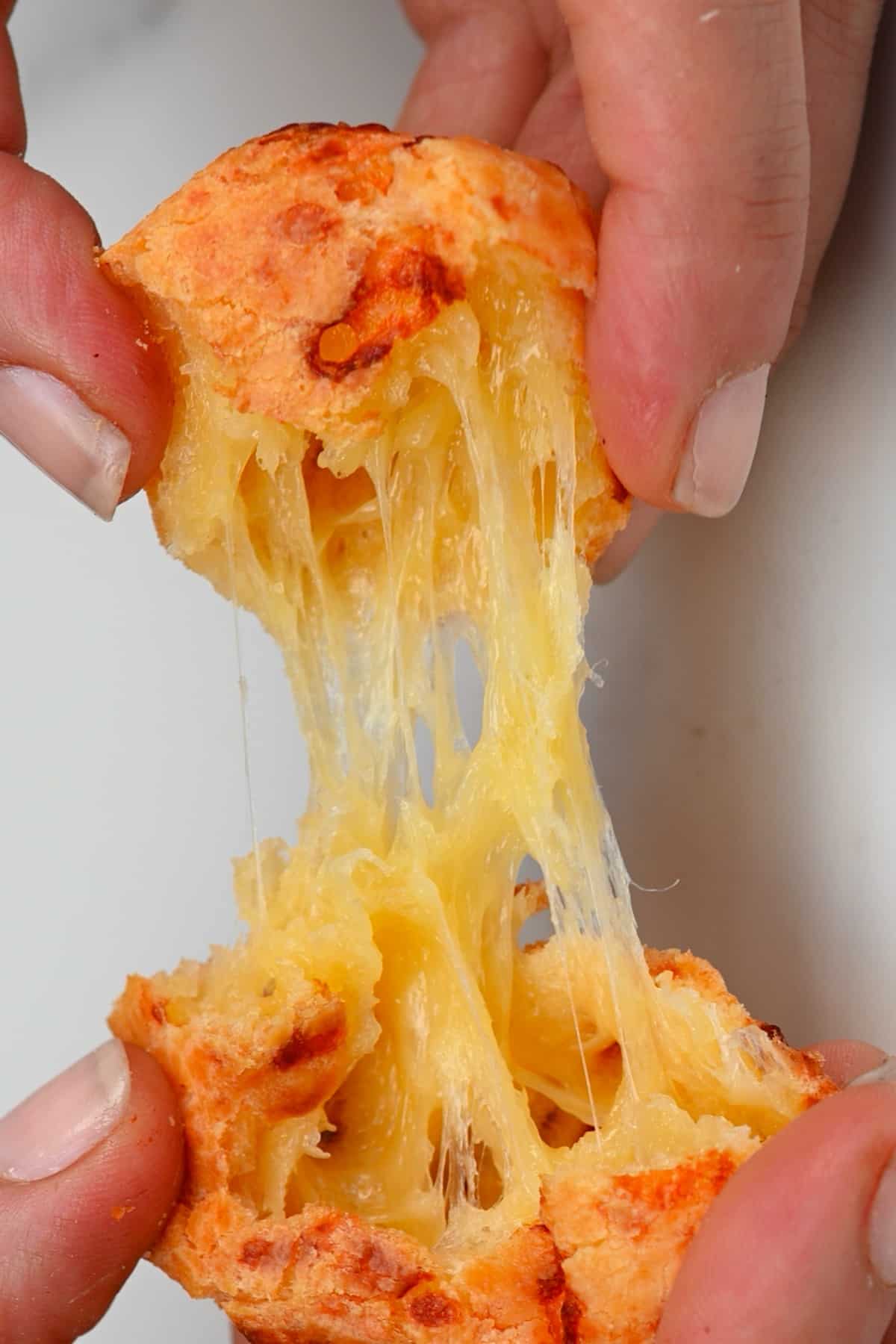
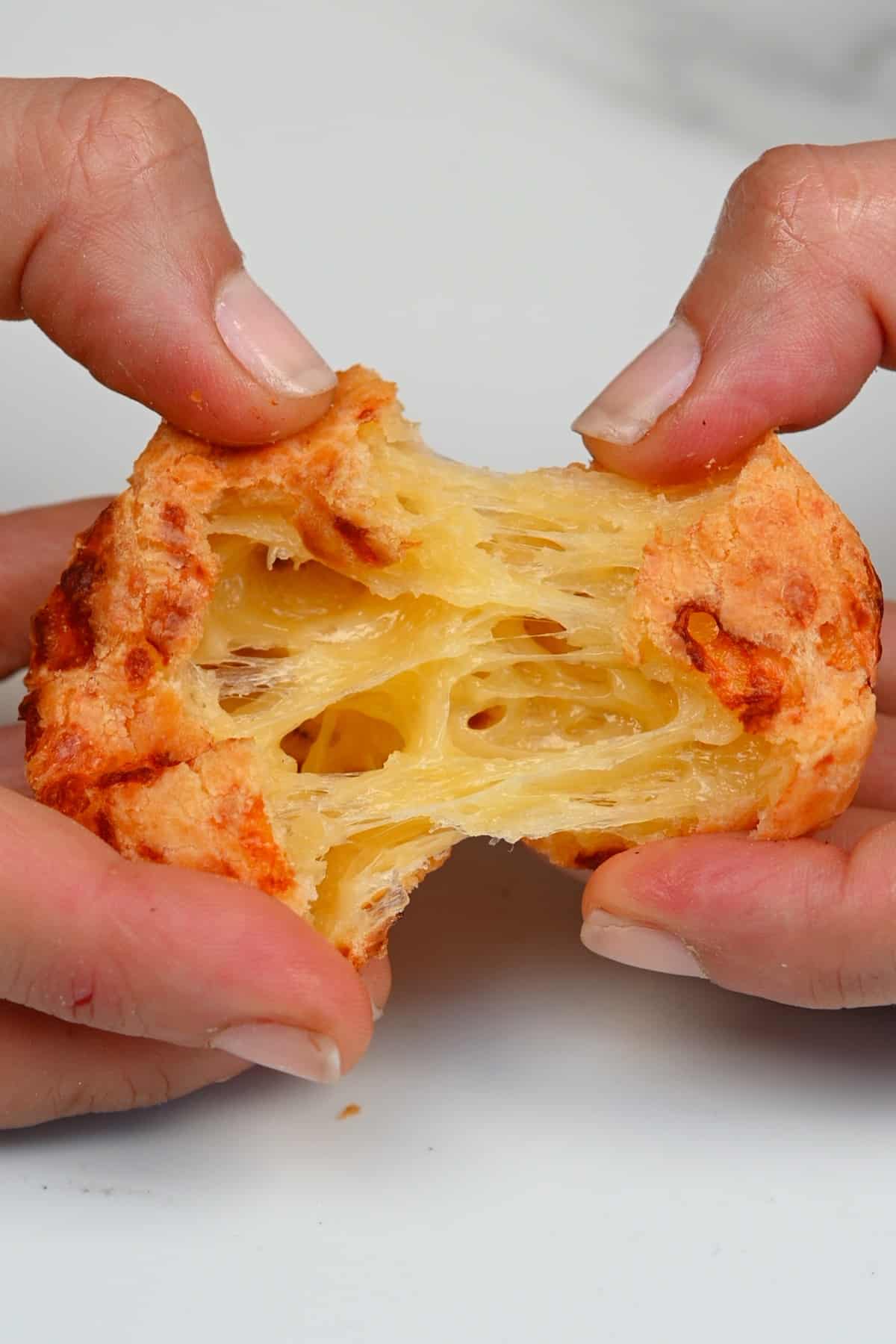
The funny thing is this isn’t actually bread at all – there’s no flour, water, or yeast. Instead, these Brazilian cheese balls rely on cassava starch for cheese puffs that are slightly crisp outside with a chewy, cheesy center. Unlike yeast-leavened breads, these naturally gluten-free, starchy cheese rolls puff up due to the air trapped within the elastic starch dough expanding during the baking process.
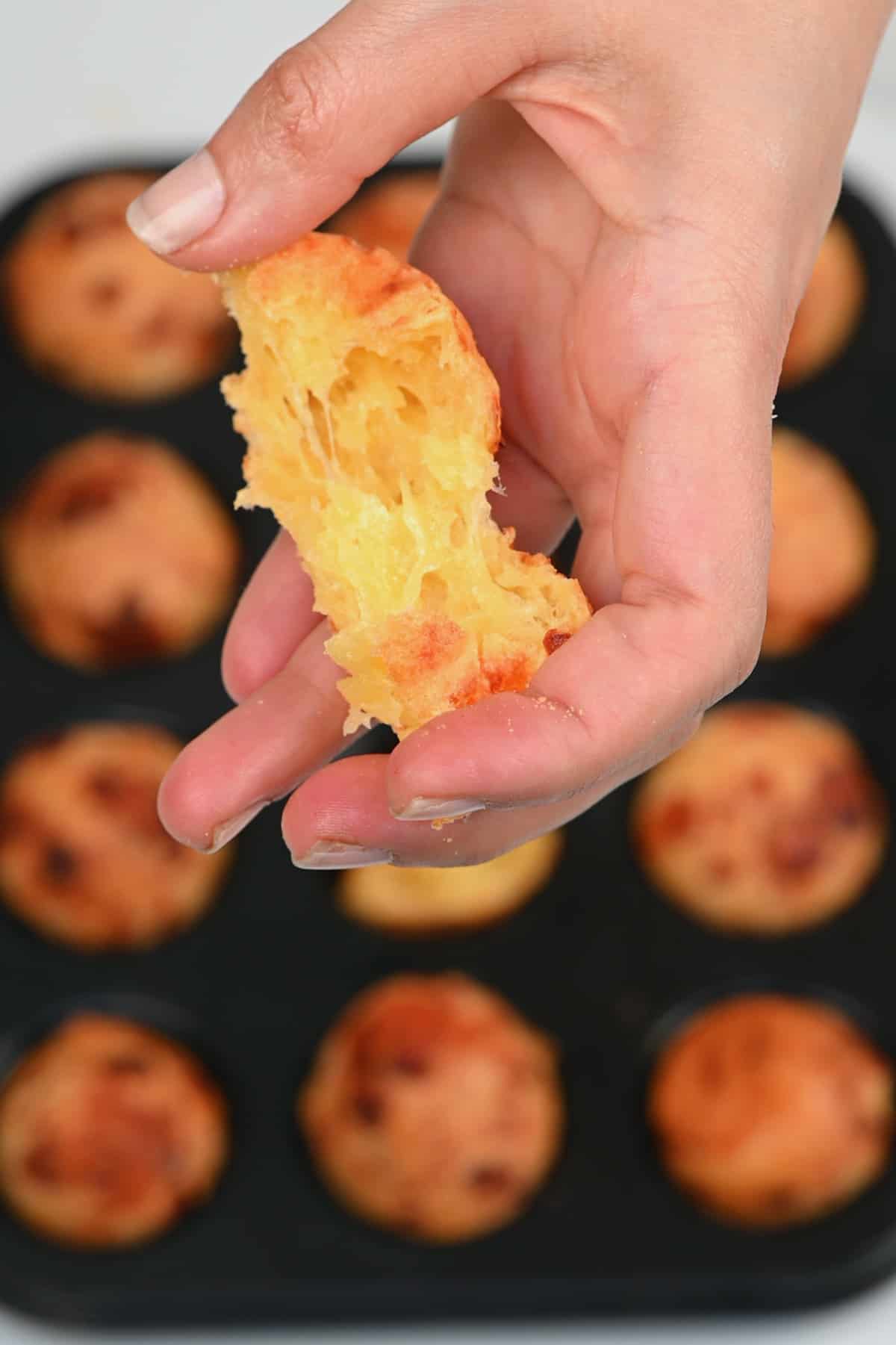
Once baked, the paõ de queijo makes for a great breakfast item or snack alongside a big mug of coffee (or maybe this dalgona latte ?). Check out my how-to serve section for tons of ideas. Best of all, you can make a massive batch and freeze them to bake later!
Want to save this recipe?
- What is p√£o de queijo?
- The Ingredients
- How to Make Brazilian Cheese Bread (P√£o de queijo)
- How to Make Ahead and Store?
- How to Serve P√£o De Queijo
- FAQs
- Recipe Notes & Variations
- Other Bread Recipes
- Brazilian Cheese Bread ‘puffs’ (Pão de Queijo) Recipe
What is p√£o de queijo?
P√£o de queijo (‘cheese bread’ in Portuguese) is described as Brazilian cheese bread. Shaped like a small ball/roll, these aren’t technically bread at all. Instead, p√£o de queijo is more accurately described as a starch cookie. It combines cassava flour with cheese as its base ingredients.
The result is these small Brazilian cheese puffs that have a crisp outer shell with a melty inner cheese center. They’re perfect for enjoying with breakfast or as a snack.
It’s said that originally these cassava starch rolls were made minus the cheese and were eaten by enslaved Portuguese colonists. Now they are sold by street vendors across northern Argentina, and Brazil, often sold in supermarkets and bakeries.
While they are traditionally made with Minas cheese, there are several variations, including mozzarella and parmesan fillings.
There are several similar recipes across the globe, including Goug√®re in France, pandebono in Ecuador and Colombia, cu√±apes in Bolivia, and Chipa in Paraguay. Unfortunately, there’s no such thing in the UK, so I couldn’t wait to try this recipe!
The Ingredients
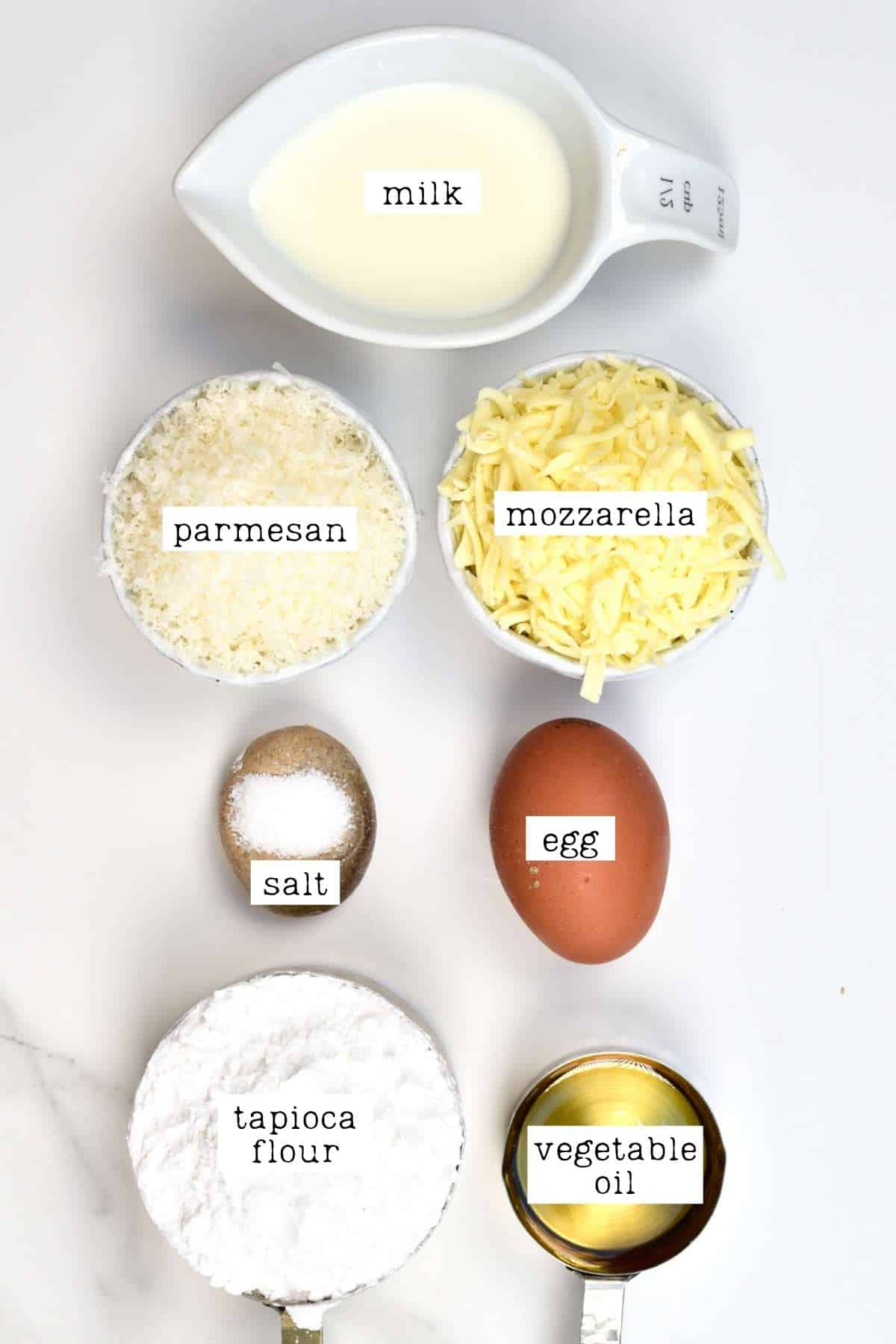
- Tapioca flour: the base of this Brazilian cheese bread, tapioca flour fully controls the texture of these cheese puffs and is crucial to the recipe. The pa√µ de queijo recipe can be made using sweet or sour starch (read FAQs for more info) or a combination of the two. Tapioca flour/starch is the ‘sweet’ version.
- Cheese: if you live somewhere where you can access Minas cheese, that is the authentic option. I decide to use a combination of mozzarella and parmesan for cheese pull and sharp flavor.
- Vegetable oil: adding fat to the p√£o de queijo is vital for providing that dough’s elastic texture since it has no gluten. You could alternatively use butter. Someone asked if you could use coconut oil. You MAY be able to, but it isn’t something I’ve tried – I don’t think the Brazilian cheese bread would be quite as ‘soft.’
- Egg : the egg not only gives the cheese rolls color and flavor, but it acts as a kind of binder and helps with stability. It’s best to use a room-temperature egg. Alternatively, set it in a bowl of warm water for several minutes before using.
- Milk: you can use whole or semi-skim milk. Alternatively, skip the dairy and use a dairy-free option like coconut milk or oat milk ‚Äì they should all work fine. I haven’t tried with skim milk, so I can’t guarantee results.
- Salt: just a little to enhance the flavor.
Optional add-ins
There are several ‘untraditional’ ways that you can adapt this Brazilian cheese bites recipe. Here are a few suggestions.
- Seasonings: like any cheese bread, these will be delicious with additional herbs and seasonings. Perhaps Italian seasoning , rosemary, or a garlic powder and herb mixture.
- For spice: add some dried chili flakes for pops of heat throughout the Brazilian cheese bread rolls.
Let me know what else you’d add!
How to Make Brazilian Cheese Bread (P√£o de queijo)
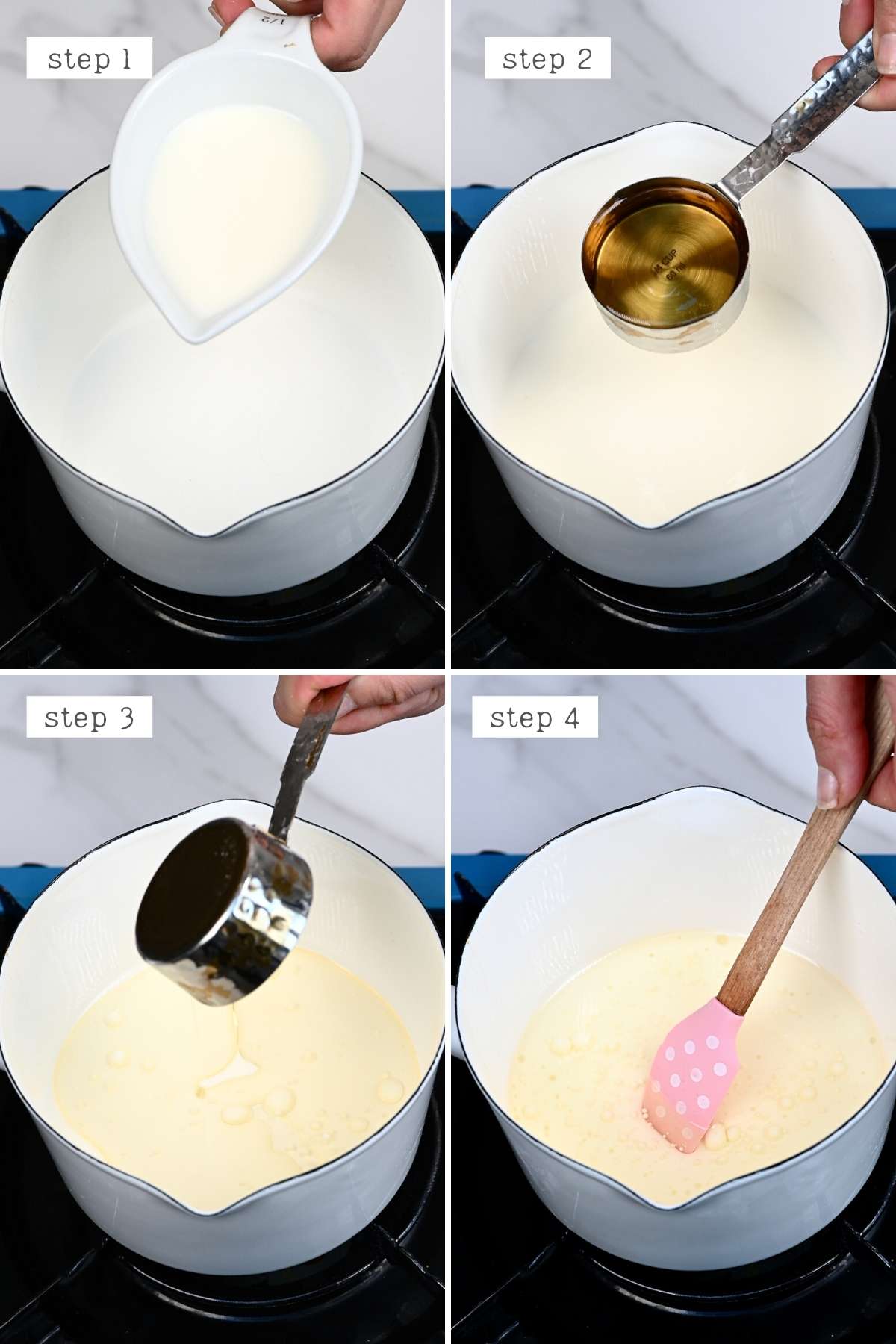
Step 1: Heat the milk fat mixture
Add the milk and vegetable oil (or butter) to a small pan. Heat over medium-high heat until it comes to a boil.
Meanwhile, as it heats up, add the starch and salt to a large bowl (or blender).
Step 2: Prepare the dough
Add the warmed milk mixture to the bowl with the tapioca starch. Mix it well into a sticky dough – almost like a fondant texture.
If the mixture is very hot, it can be a good idea to cool it for several minutes. Otherwise, you run the risk of your egg starting to cook and the cheese melting – whoops!
Then add the egg and incorporate it well before adding the cheese and folding it into the batter.
Traditionally the mixture is added to a blender to properly incorporate the oil (or butter) into the batter. Still, I’ve found that it works fine blending it by hand using my method.
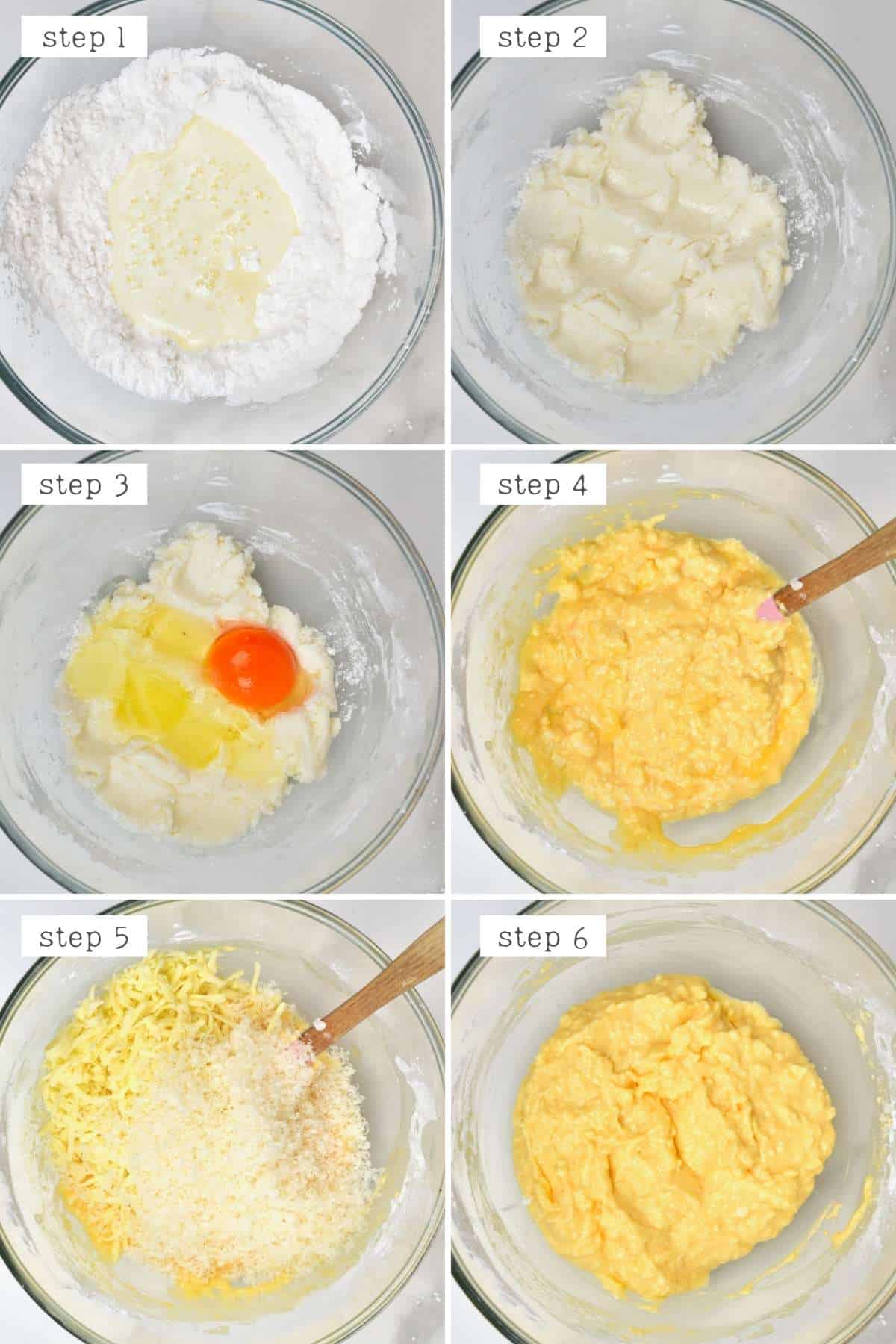
To use a blender/stand mixer: For a blender, you just add the starch and milk mixture, blend, add in the egg and cheese, and blend into a batter. For a stand mixer, slowly pour in the milk mixture while mixing it on a low. Then mix in the egg and cheese and increase the mixer speed to medium speed to form the batter.
Step 3: Bake the Brazilian cheese bread
Preheat the oven to 400ºF/200ºC.
If the batter is hand moldable, then you can hand mold each ball. Otherwise, use a 1 Tbsp measuring spoon/scoop per p√£o de queijo. Spoon the mixture into a well-oiled (or use cooking spray) mini muffin pan or onto a parchment-lined baking tray (1 inch apart). I prefer using the muffin tin as it works well with a slightly looser batter too!
Optionally, you can sprinkle a little extra cheese over them ‚Äì but it’s not necessary.
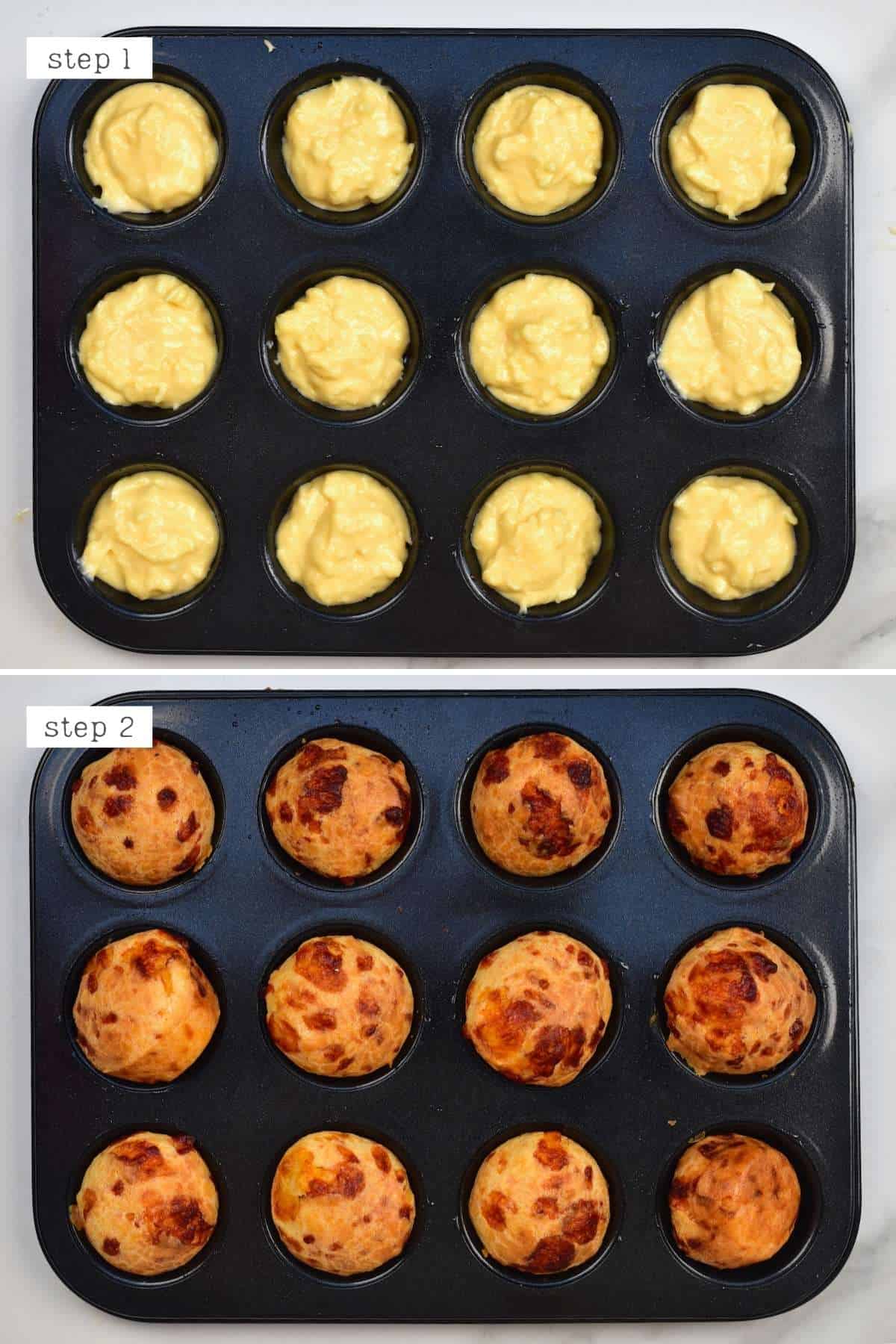
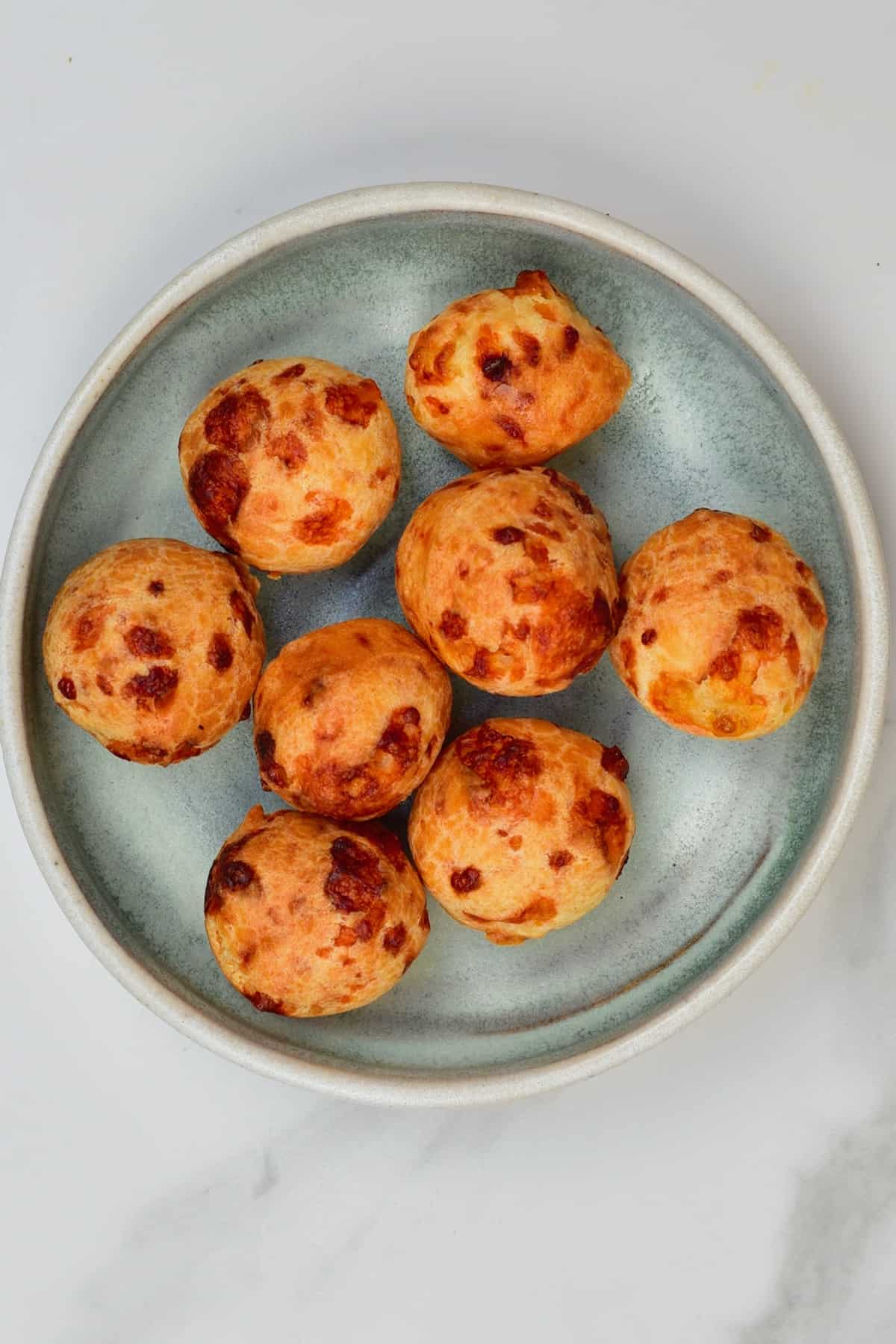
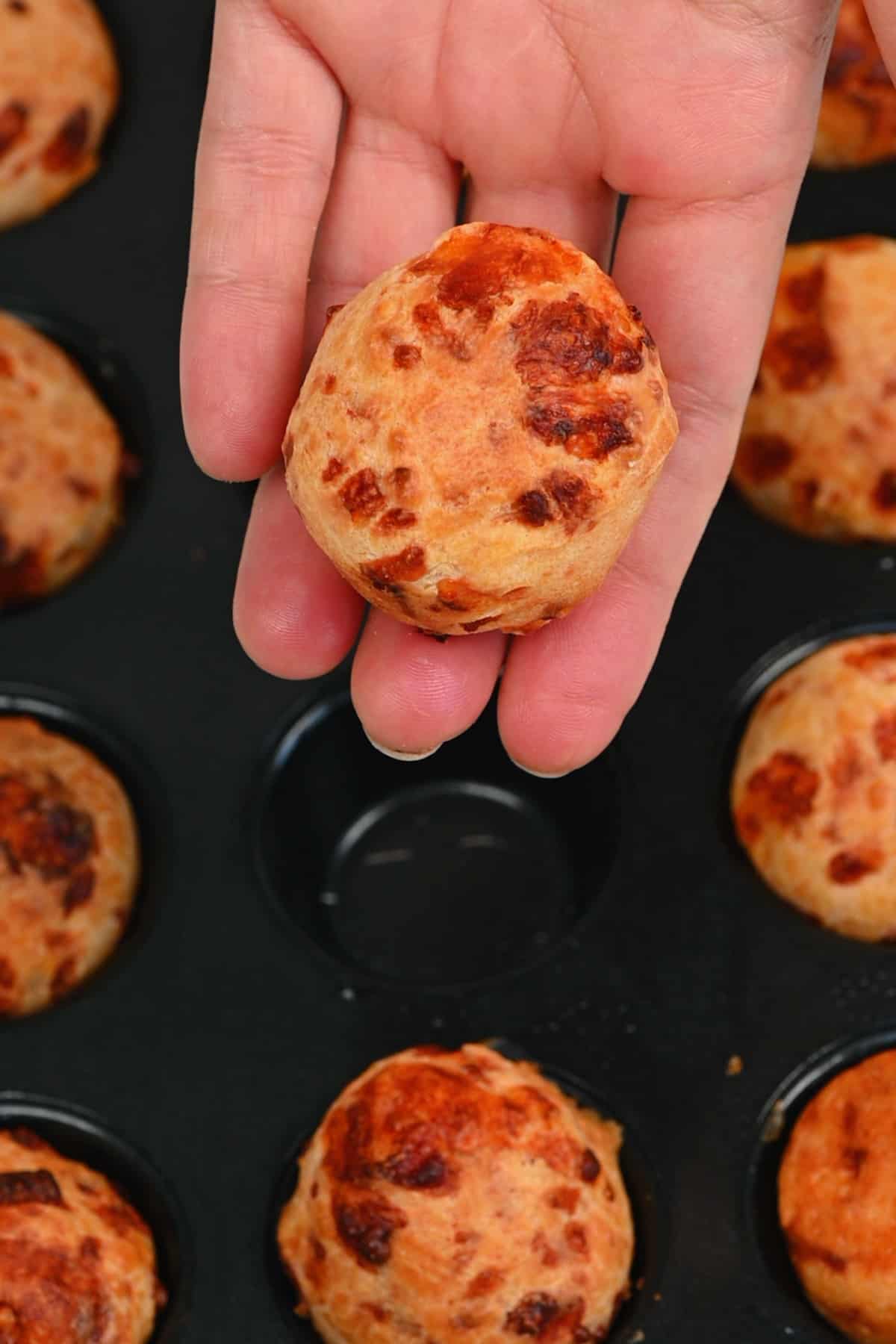
Bake for between 15-20 minutes (the time will vary based on your oven and if you’re using a muffin tin vs. oven tray). Once ready, the Brazilian cheese bread should be lightly brown and puffed up. Mine are slightly browner than usual this time because I got distracted (whoops!).
If you bake them until very lightly golden, then they will be chewier and more elastic. If you bake them until a darker brown, like mine, then they’ll be crisper on the outside.
Once baked, they are ready to enjoy immediately or be allowed to cool for later.
How to Make Ahead and Store?
Room Temp: you can store the thoroughly cooled p√£o de queijo at room temperature for 2-3 days. Enjoy as is or reheat (instructions below).
Fridge: the Brazilian cheese bread rolls can be stored in an airtight container for up to a week in the refrigerator.
Freezer: I usually freeze the unbaked versions rather than the baked ones (the frozen Brazilian cheese bread can be baked from frozen), so I don’t know how the texture may be impacted by freezing the baked cheese bread.
Reheat : to reheat the Brazilian cheese bread, just place them back in the oven until warmed through.
How to Serve P√£o De Queijo
When I took to my Instagram stories the other day and asked how people enjoy serving these Brazilian cheese bread rolls, I received literally hundreds of replies and won’t run out of ideas for ‚Ķ ever! But I thought the ideas could help to inspire others, too:
- As a snack alongside coffee (black coffee or café con Leche), hot cocoa, or even juice like orange juice ,
- Serve with a bowl of creamy tomato soup ,
- Alongside scrambled eggs or scrambled tofu with veggies,
- With a bean and brown rice dish,
- Alongside a bowl of fruit,
- As a side with a leafy salad.
The p√£o de queijo can also be cut open and ‘stuffed‚Äô/topped with all sorts of toppings, including:
- Jam – particularly guava jam (goiabada),
- Cream cheese (like requeij√£o cheese) or harder cheese,
- Sweet spreads like homemade Nutella or Dulce de leche (dolce de leite),
- With sliced tomato, cucumber, and/or avocado.
Yes ‚Äì there are a couple of ways to ‘prep’ these. The prepared batter can be covered and stored in the refrigerator for several days (4-5 days, I’d say). Alternatively, once the Brazilian cheese bread ‘dough’ is ready, use your scoop/measuring spoon to place blobs of the dough or a parchment-lined tray (or in cupcake liners) and transfer to the freezer until solid. Then transfer the dough blobs to a freezer-safe bag/container and freeze for one month. To bake from frozen, bake them in a preheated oven at 400¬∫F/200¬∫C for 20-25minutes or until browned.
Personally, I’d say no ‚Äì this ingredient is key to the texture of the Brazilian cheese bread and is vital to the texture. Using regular flour would make a completely different product and require a different cooking method. As far as I’m aware, no other starch will react in the same way either.
Yes, however, the amount of starch needed will change, and the texture will vary. Sweet tapioca starch makes for a more ‘gluey’ pão de queijo. In comparison, the sour tapioca provides more crunch and possibly a little extra lift. To make this recipe with sour tapioca starch: use 2/3 cup sour starch instead of 1 full cup. You could also make it with a 50:50 blend of sweet and sour starch for bigger, softer Brazilian cheese bread that is both crunchy and gluey.
I suppose saying ‘it just does sometimes’ wouldn’t be conducive. But the truth is, I’m not entirely sure, and it does just seem to happen sometimes. It could be the size of your eggs is different, the type of starch you’ve used (sweet vs. sour), or that the milk mixture wasn’t hot enough. You could try adding an extra 1-2 Tbsp starch to the dough, but if it’s still very runny, then transfer it to the refrigerator to chill for at least 30 minutes (1-2 hours, if needed), and it should thicken up enough to scoop. However, if you’re using a mini muffin tin as I do, then I’d also point out that it doesn’t matter too much if the batter is still a bit liquidy ‚Äì they should still puff up amazingly in the tin.
Recipe Notes & Variations
- Experiment with the cheese: I think half the fun of these p√£o de queijo is being able to experiment with different cheese and cheese blends to find your perfect option. I like to combine a hard cheese like parmesan with softer options like mozzarella , Monterey Jack, pepper jack, etc. If you only use one or the other, it will either be too gummy or too dry (but I don’t know for sure).
- Don’t open the oven too early: this is one of those recipes that can lead to disaster (aka no puffing up) if you open the oven door before they’re ready.
- The texture: for those who haven’t tried this Brazilian cheese bread before, it’s important to note that these are meant to be quite dense and chewy; that’s not a mistake.
- For larger p√£o de queijo: if you want to make larger Brazilian cheese puffs, I recommend using a small ice-cream scoop (usually around 2 Tbsp) per ball and placing them 2-inches apart on the baking tray (or use a large muffin pan). It’s best to dip the scoop in water between scoops if the batter is very sticky.
- If you don’t have or use sour tapioca starch : you can optionally add a few drops of lemon juice or vinegar to reproduce the slightly tart flavor.
- The tapioca starch: In Brazil, the cassava starch (aka manioc starch) is ‘Polvilho’, and there is the sweet (doce) and sour (azedo).
Other Bread Recipes
- Sourdough Cheesy Pull-Apart Bread (‘Crack’ Bread)
- How To Make Soft Pretzels
- Grilled Cheese Sandwich
- Easy No-Knead Turkish Bread (Ramadan Pide Bread)
- Christmas Tree Pull-Apart Bread (Cheese Buns)
- Easy Cheese Flatbread (Cheese Manakish)
- 2-Ingredient Sweet Potato Flatbread (Gluten-free)
If you try this Brazilian cheese bread recipe, I’d love to hear your thoughts/questions below. Also, I’d really appreciate a recipe card rating below, and feel free to tag me in your recipe recreations on Instagram @Alphafoodie !
IngredientsUS CustomaryMetric1x2x3x
- ▢ 1/2 cup milk full fat, semi-skimmed, and dairy-free options should work. Haven’t tested skimmed milk.
- ▢ 1/4 cup vegetable oil or butter
- ▢ 1 cup tapioca starch sometimes called tapioca flour (read FAQs about sweet vs. sour tapioca starch)
- ▢ 1/2 tsp salt
- ▢ 1 egg large
- ▢ 3/4 cup shredded cheese mozzarella + parmesan, minas, or your cheese of choice
Instructions
Step 1: Heat the milk fat mixture
- Add the milk and vegetable oil (or butter) to a small pan and heat over medium-high heat until it comes to a boil.
- Meanwhile, as it heats up, add the starch and salt to a large bowl (or blender).
Step 2: Prepare the dough
- Add the warmed milk mixture to the bowl with the tapioca starch and mix it well into a sticky dough- almost like a fondant texture. If the mixture is very hot, it can be a good idea to cool it for several minutes. Otherwise, you run the risk of your egg starting to cook and the cheese melting – whoops!
- Then add the egg and incorporate it well before adding the cheese and folding it into the batter.
- Traditionally the mixture is added to a blender to properly incorporate the oil (or butter) into the batter. Still, I’ve found that it works fine blending it by hand using my method.
- To use a blender/stand mixer: For a blender, you just add the starch and milk mixture, blend, add in the egg and cheese, and blend into a batter. For a stand mixer, slowly pour in the milk mixture while mixing it on a low, then mix in the egg and cheese and increase the mixer speed to medium speed to form the batter. The batter texture can vary. Some Instagram followers let me know mine was a little wet, yet others said it was thicker than theirs ‚Äì my main problem was whether it works when baked, and it does wonderfully! If it’s scoopable like a batter, then it should be fine. If it’s too liquidy, chill it in the refrigerator for 30-60 minutes to thicken up (Read FAQs for more advice).
Step 3: Bake the Brazilian cheese bread
- Preheat the oven to 400ºF/200ºC.
- If the batter is hand moldable, then you can hand mold each ball. Otherwise, use a 1tbsp measuring spoon/scoop per p√£o de queijo. Spoon the mixture into a well-oiled (or use cooking spray) mini muffin pan or onto a parchment-lined baking tray (1-inch apart). I prefer using the muffin tin as it works well with a slightly looser batter too! Optionally, you can sprinkle a little extra cheese over them ‚Äì but it’s not necessary.
- Bake for between 15-20 minutes (the time will vary based on your oven and if you’re using a muffin tin vs. oven tray). Once ready, the Brazilian cheese bread should be lightly brown and puffed up. Mine are slightly browner than usual this time because I got distracted (whoops!).
- If you bake them until very lightly golden, then they will be chewier and more elastic. If you bake them until a darker brown, like mine, then they’ll be crisper on the outside.
- Once baked, they are ready to enjoy immediately or be allowed to cool for later.
How to Make Ahead and Store?
- Room Temp : You can store the thoroughly cooled p√£o de queijo at room temperature for 2-3 days. Enjoy as-is or reheat (instructions below). Fridge : The Brazilian cheese bread rolls can be stored in an airtight container for up to a week in the refrigerator. Freezer : I usually freeze the unbaked versions rather than the baked ones (the frozen Brazilian cheese bread can be baked from frozen), so I don’t know how the texture may be impacted by freezing the baked cheese bread. Reheat : To reheat the Brazilian cheese bread, just place them back in the oven until warmed through.
Video
Notes
Nutrition
Nutrition information is automatically calculated, so should only be used as an approximation.

Brazilian Cheese Bread ‘puffs’ (Pão de Queijo)
Ingredients
- 1/2 cup milk full fat, semi-skimmed, and dairy-free options should work. Haven’t tested skimmed milk.
- 1/4 cup vegetable oil or butter
- 1 cup tapioca starch sometimes called tapioca flour (read FAQs about sweet vs. sour tapioca starch)
- 1/2 tsp salt
- 1 egg large
- 3/4 cup shredded cheese mozzarella + parmesan, minas, or your cheese of choice
Instructions
Step 1: Heat the milk fat mixture
- Add the milk and vegetable oil (or butter) to a small pan and heat over medium-high heat until it comes to a boil.
- Meanwhile, as it heats up, add the starch and salt to a large bowl (or blender).
Step 2: Prepare the dough
- Add the warmed milk mixture to the bowl with the tapioca starch and mix it well into a sticky dough- almost like a fondant texture. If the mixture is very hot, it can be a good idea to cool it for several minutes. Otherwise, you run the risk of your egg starting to cook and the cheese melting - whoops!
- Then add the egg and incorporate it well before adding the cheese and folding it into the batter.
- Traditionally the mixture is added to a blender to properly incorporate the oil (or butter) into the batter. Still, I’ve found that it works fine blending it by hand using my method.
- To use a blender/stand mixer: For a blender, you just add the starch and milk mixture, blend, add in the egg and cheese, and blend into a batter. For a stand mixer, slowly pour in the milk mixture while mixing it on a low, then mix in the egg and cheese and increase the mixer speed to medium speed to form the batter. The batter texture can vary. Some Instagram followers let me know mine was a little wet, yet others said it was thicker than theirs – my main problem was whether it works when baked, and it does wonderfully! If it’s scoopable like a batter, then it should be fine. If it’s too liquidy, chill it in the refrigerator for 30-60 minutes to thicken up (Read FAQs for more advice).
Step 3: Bake the Brazilian cheese bread
- Preheat the oven to 400ºF/200ºC.
- If the batter is hand moldable, then you can hand mold each ball. Otherwise, use a 1tbsp measuring spoon/scoop per pão de queijo. Spoon the mixture into a well-oiled (or use cooking spray) mini muffin pan or onto a parchment-lined baking tray (1-inch apart). I prefer using the muffin tin as it works well with a slightly looser batter too! Optionally, you can sprinkle a little extra cheese over them – but it’s not necessary.
- Bake for between 15-20 minutes (the time will vary based on your oven and if you’re using a muffin tin vs. oven tray). Once ready, the Brazilian cheese bread should be lightly brown and puffed up. Mine are slightly browner than usual this time because I got distracted (whoops!).
- If you bake them until very lightly golden, then they will be chewier and more elastic. If you bake them until a darker brown, like mine, then they’ll be crisper on the outside.
- Once baked, they are ready to enjoy immediately or be allowed to cool for later.
How to Make Ahead and Store?
- Room Temp : You can store the thoroughly cooled pão de queijo at room temperature for 2-3 days. Enjoy as-is or reheat (instructions below). Fridge : The Brazilian cheese bread rolls can be stored in an airtight container for up to a week in the refrigerator. Freezer : I usually freeze the unbaked versions rather than the baked ones (the frozen Brazilian cheese bread can be baked from frozen), so I don’t know how the texture may be impacted by freezing the baked cheese bread. Reheat : To reheat the Brazilian cheese bread, just place them back in the oven until warmed through.
Video
Notes
Nutrition
Recipe on Alphafoodie: https://www.alphafoodie.com/brazilian-cheese-bread-puffs-pao-de-queijo/
