Recipes › DIYs
How To Make Apple Cider Vinegar
By Samira Kazan
updated November 02, 2023
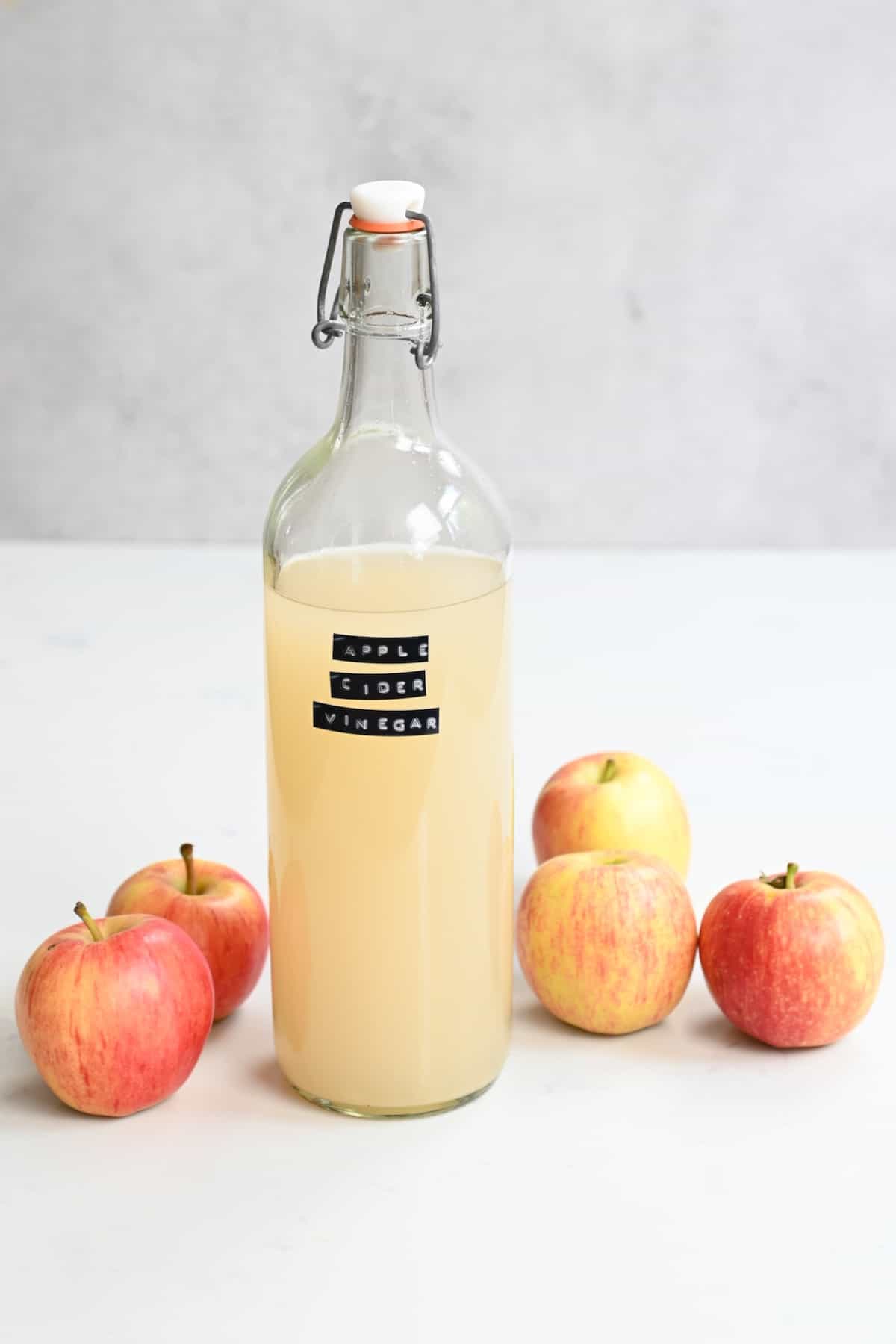
Over the last decade, apple cider vinegar (ACV) has dominated the health food scene. However, this wonder ingredient also comes with a hefty price tag.
Homemade versions use just three ingredients (water included) and are far more cost-efficient. If you have your own apple trees (or know someone who does) then this is practically cost-less.
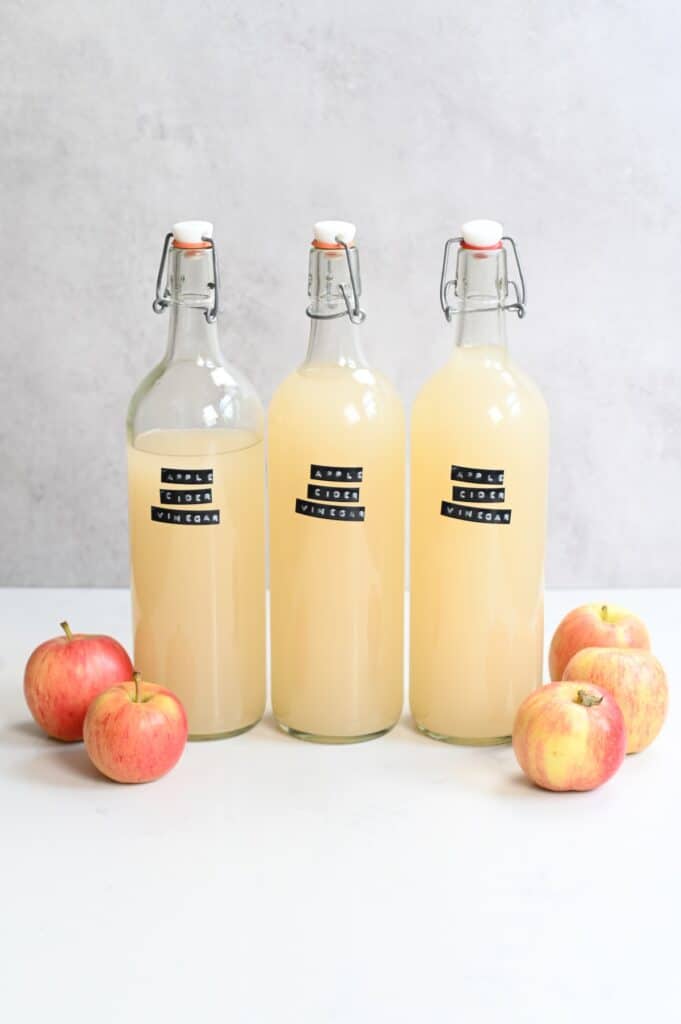
Through my adventures making homemade ACV I’ve learnt quite a few tips and tricks along the way (including all about vinegar ‘mothers’ and apple scrap vs apple cider vinegar). Within this post I’ll take you through everything I’ve learnt, and how to make apple cider vinegar with multiple methods.
Making homemade vinegar and fermented products do take time and patience, but it’s still simple, and well worth the process.
Want to save this recipe?
- What is apple scrap vinegar?
- Ingredients you need
- The tools needed
- Step by step instructions
- How to use
- FAQs and tips
- Related recipes and DIYs
- How To Make Apple Cider Vinegar (+ Apple Scrap Vinegar) Recipe
What is apple scrap vinegar?
It probably won’t surprise you to learn that store-bought apple cider vinegar is made using a process that first makes apple cider. Many DIY apple cider vinegar methods, though, use a water mixture, rather than apple juice, which isn’t ‘exactly’ the same. And so, technically, the vinegar is considered ‘apple scrap vinegar’.
Ingredients you need
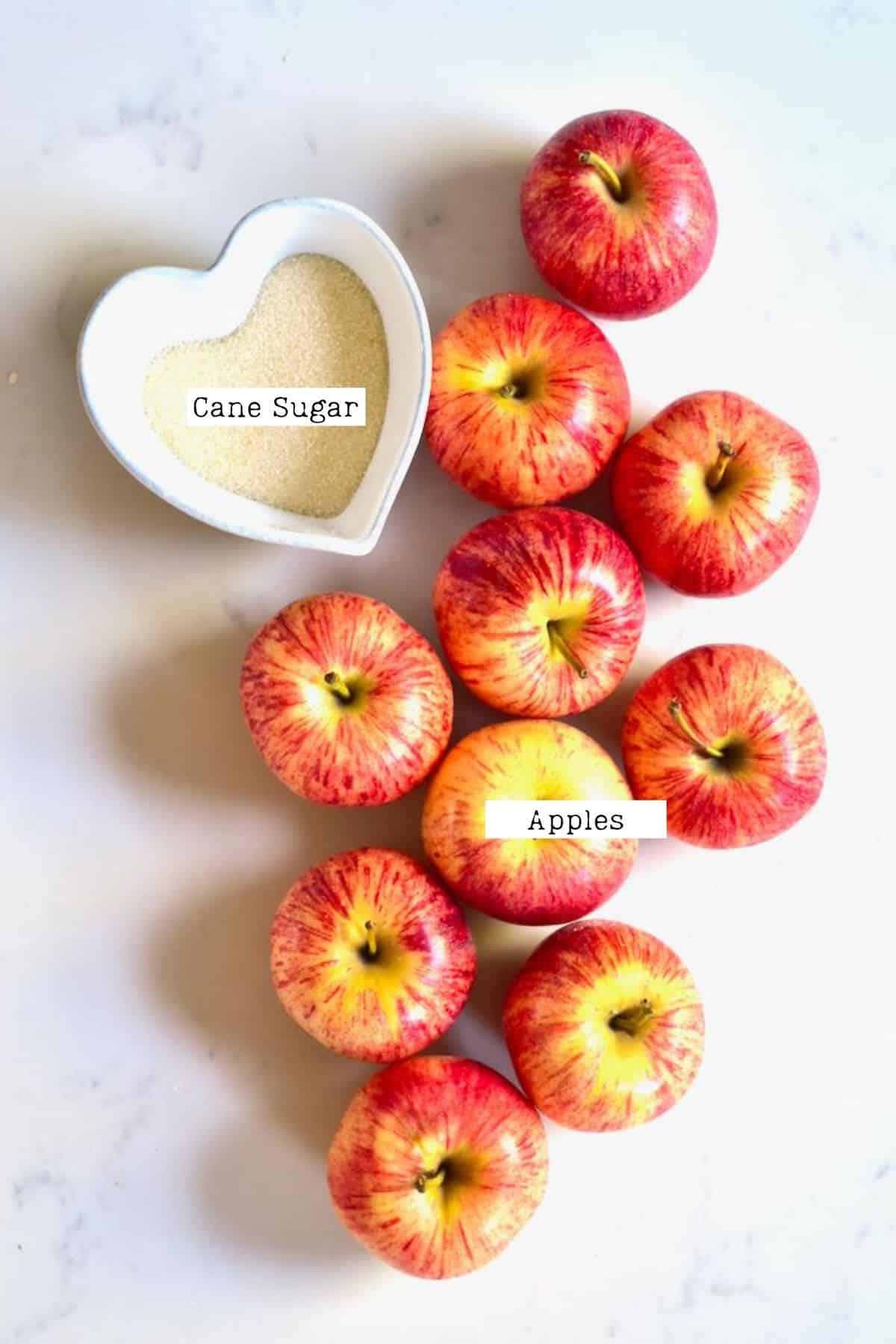
- Apples: I’ve tried this method with all different types of apples (and blends) – all with positive results. Make sure to use organic apples though, especially if you plan on using the peels and core
- Sugar : Raw sugar is best. This is required for the fermentation process and definitely shouldn’t be ditched or minimized. While it’s possible to use honey instead, it will massively slow the process (by weeks!)
- Filtered Water: Avoid using any chlorinated water as it will destroy microbes that help the fermentation process.
Top Tip: If this is your first time making vinegar then you can speed up the process by adding a few spoonful’s of Braggs apple cider vinegar ‘with the mother’ to the concoction too. This, along with the sugar, will speed up fermentation.
The tools needed
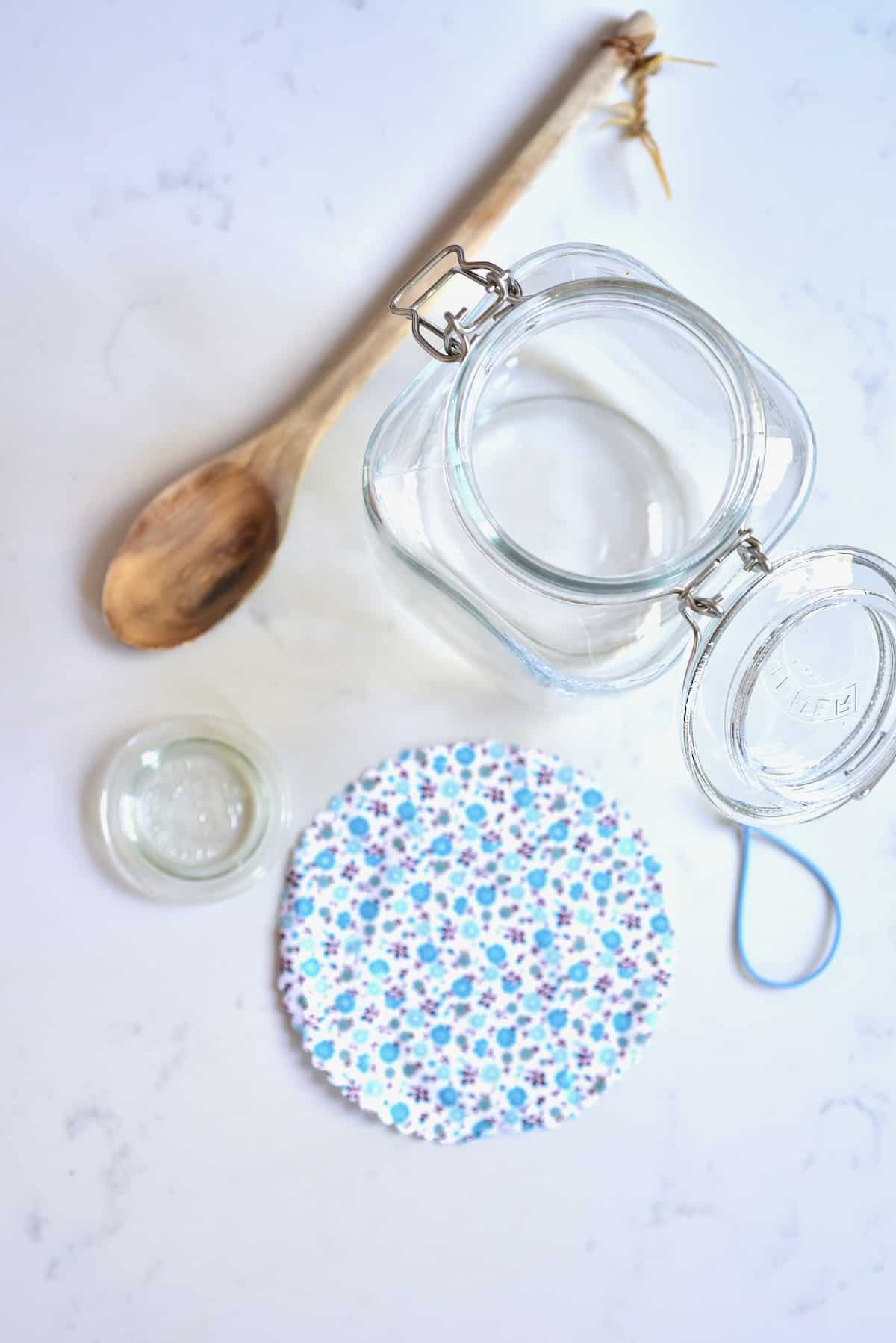
- A large jar (or jars): You can split this between multiple jars or use a single, large one.
- Cheesecloth or coffee filter: You need material fine enough to allow air to pass through (and good microbes) but no flies/bugs or unwanted bacteria.
- Rubber band: To secure the material to the jar
- Non-metal sieve & Spoon/mixing tool : Avoid metal as it can affect the fermenting process.
Step by step instructions
Step 1. Sterilize the tools
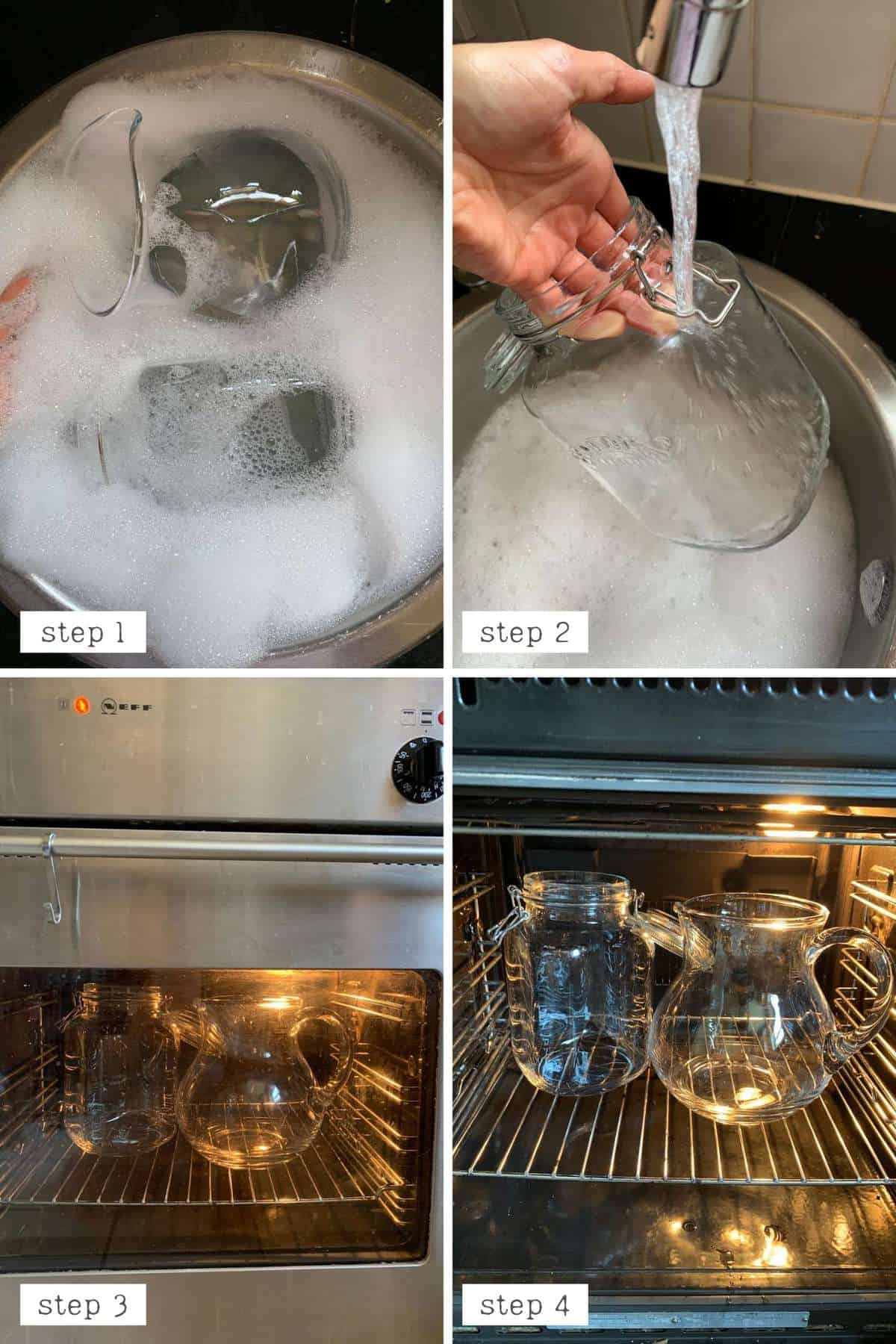
It’s incredibly important when making any fermented product, to sterilize the tools thoroughly.
To do this wash them with hot, soapy water, taking care to wash away all soap suds. Then place in the oven (without any plastic elements) for around 10 minutes at 160ºC/320ºF.
Step 2. Prepare the apples
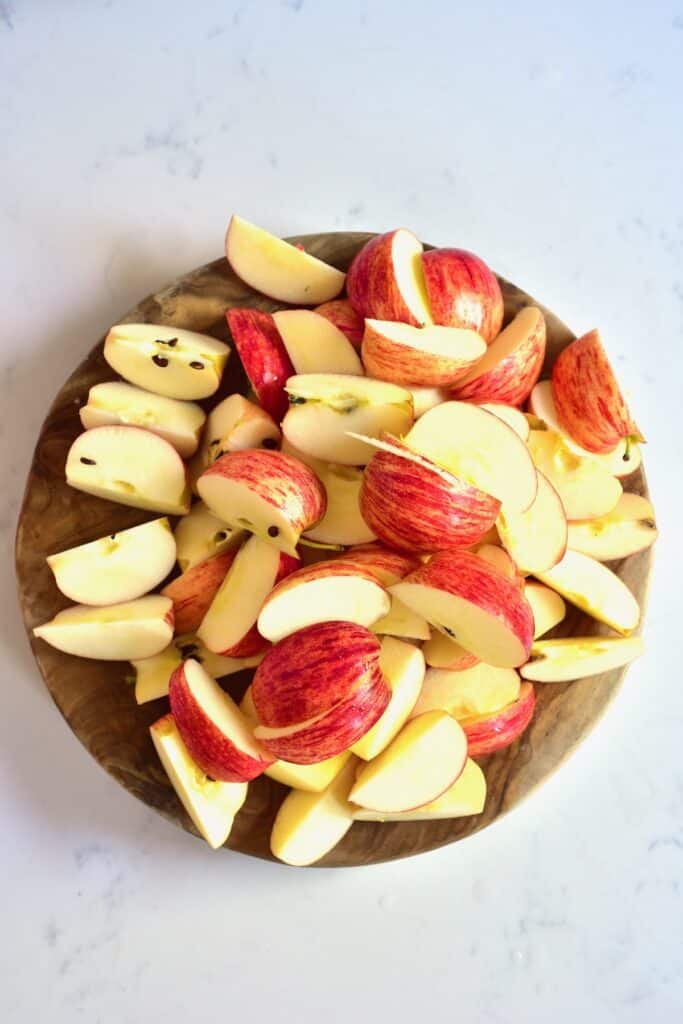
You can make this with whole organic apples, or peels and cores leftover from apples. Roughly chop (1 apple into 8 pieces works well).
If using the apple scraps, you can keep a bag in the freezer until you reach the ‘quantity’ you desire.
Step 3. Prepare the jar
Fill your large jar with the apple slices, leaving some ‘wiggle’ room, to allow us to move them about during the fermentation.
Dissolve the sugar in a little filtered water, then pour into the jar and add enough extra water to cover the apples completely. Stir the mixture (hence, we need the wiggle room).
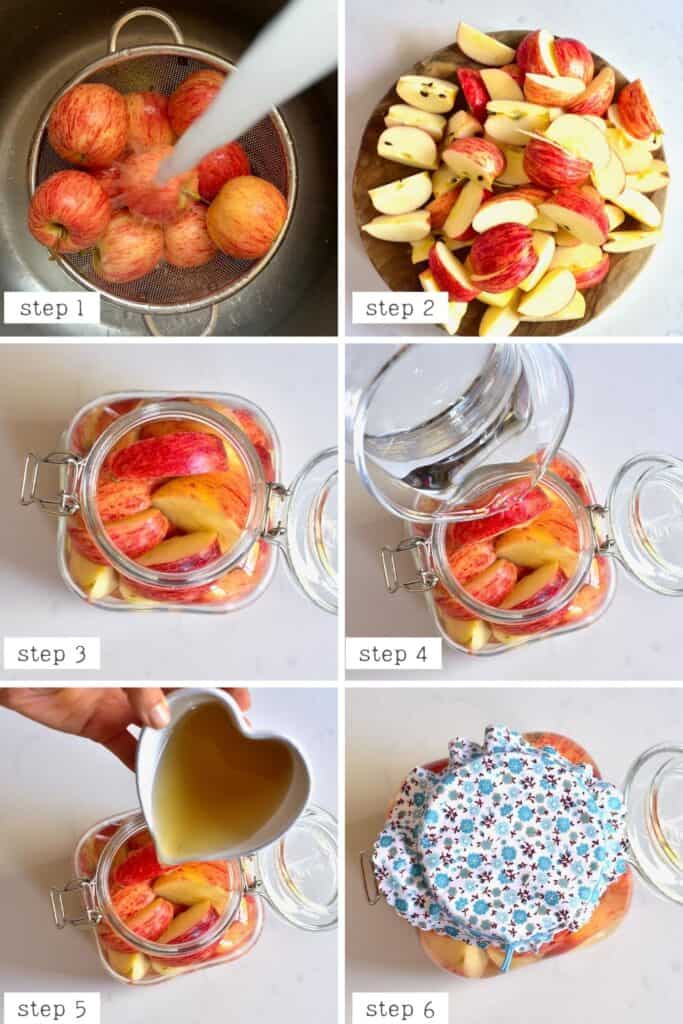
If your apples are floating to the top, then you can weight them down with a small jar or dish that fits the jar.
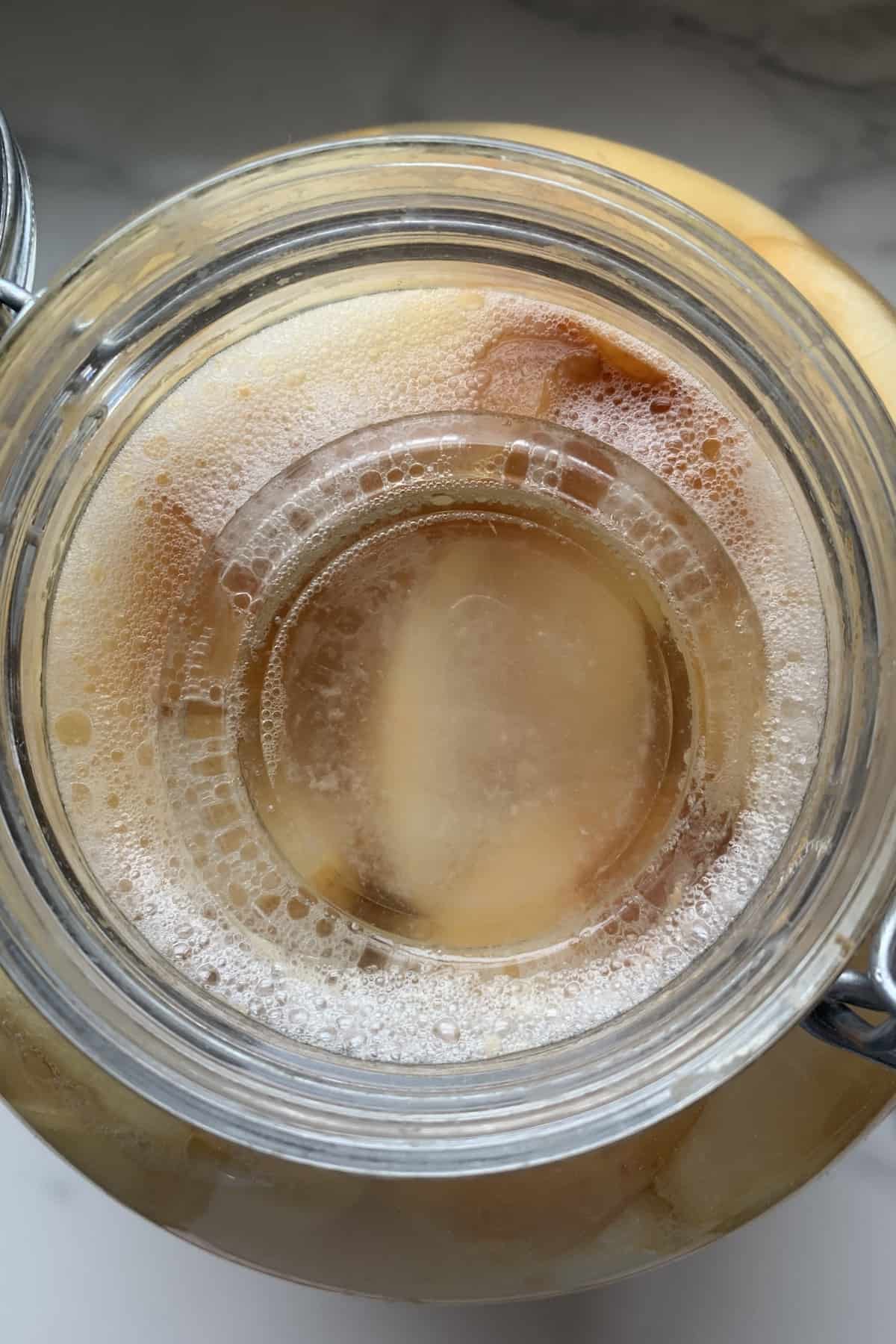
Weighting down the apples with a small glass plate/coaster
Step 4. The first ferment
Cover the jar with a clean cheesecloth or coffee filter and secure with a rubber band. This will allow for air flow, without letting bugs and bad bacteria in.
Place in a dark, cool area and allow to ferment for 3-4 weeks at room temperature. Stir the mixture every couple of days (don’t use metal), moving the apples around so that the ones on top go lower down in the jar.
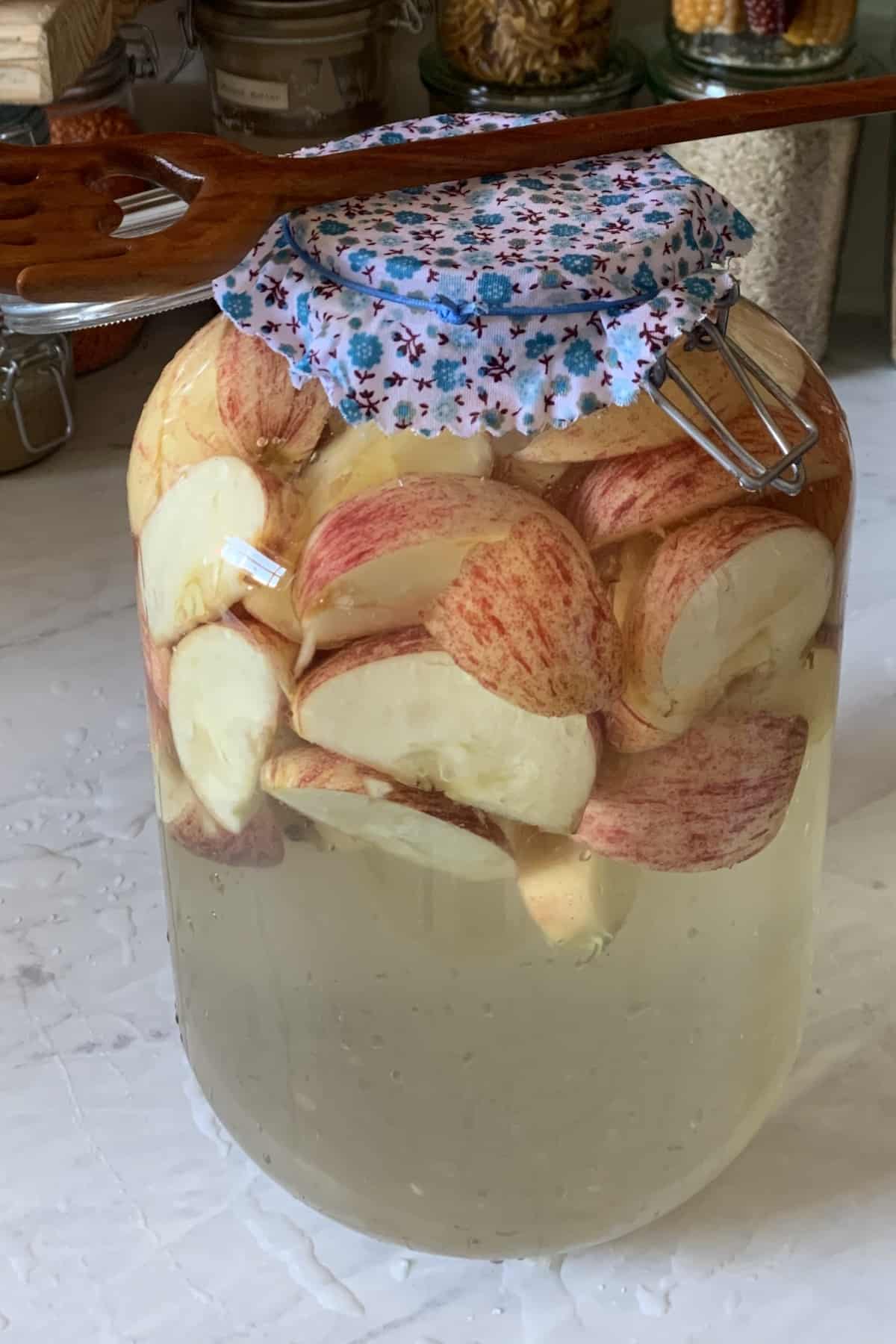
Around the three week period, you should start noticing bubbles in the mixture and a faintly alcoholic smell. By week four the bubbles have usually calmed and the first fermentation is complete.
Step 4. The second ferment
After 3-4 weeks, remove the apple pieces and then allow the mixture to ferment for a further 3-4 weeks, stirring every few days.
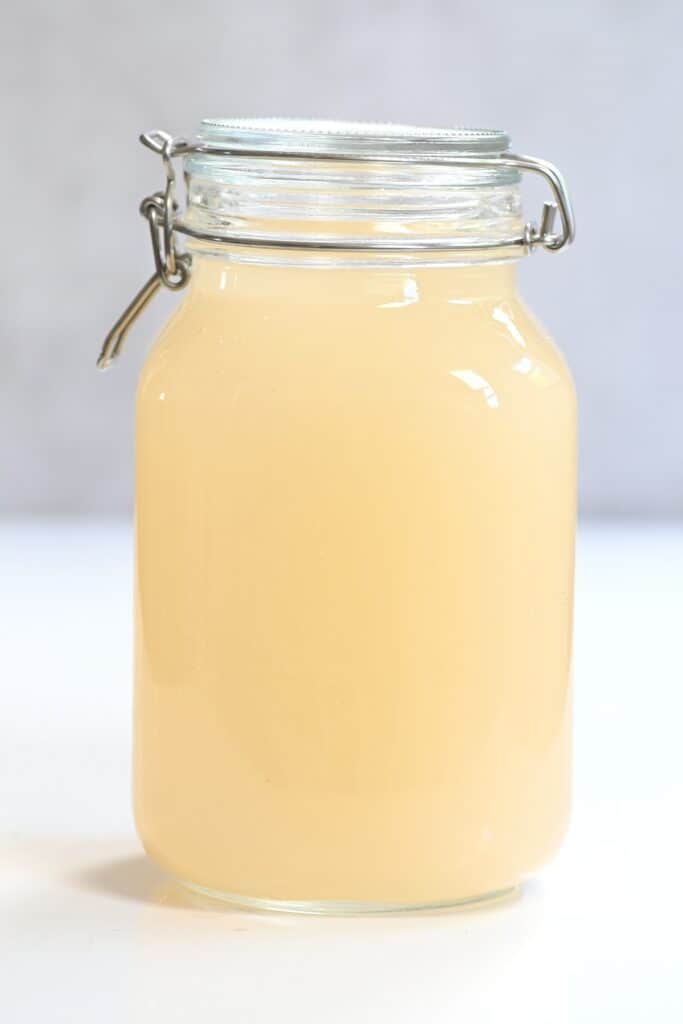
As the vinegar ages, you may notice some white scum on the top of the mixture, eventually this will grow into a vinegar ‘mother’, that looks fairly similar (and equally as odd) as a kombucha SCOBY.
This is all natural and the ‘mother’ can be used to help jump-start your next batch of vinegar.
Once ready, you can then replace the cheesecloth/filter with a lid or decant into another glass jar. Note that, as this is a raw vinegar, it will continue to get stronger as it ages and get darker in color.
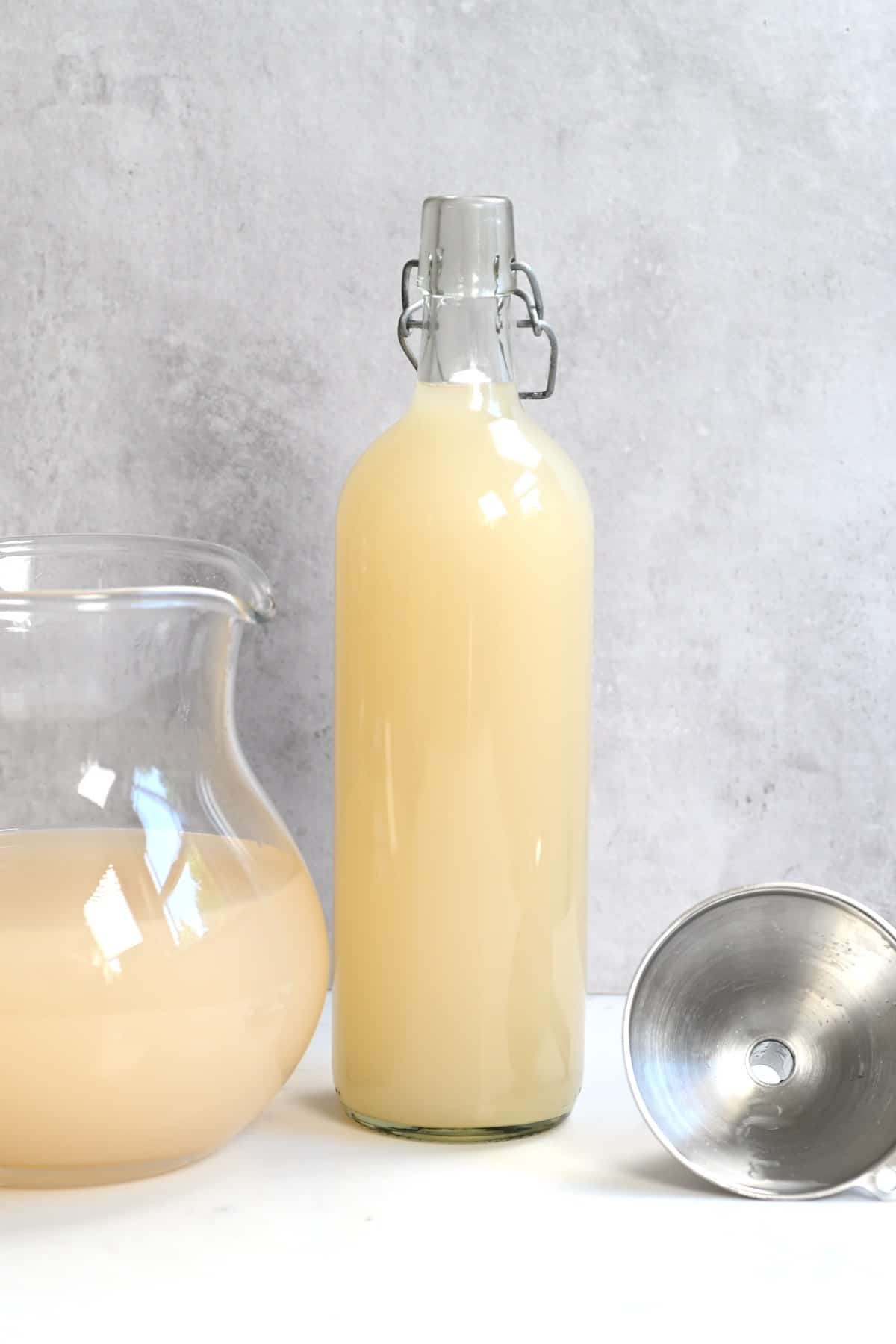
Store apple cider vinegar in a cool, dark cupboard/area.
How to use
There are hundreds of raw apple cider vinegar uses. These include ingesting, as well as for beauty purposes. Here are some options here on the blog, that you could try.
- Easy Pickled Cucumbers
- Fluffy Japanese Pancakes
- Egg and Potato Salad
- Easy Strawberry Vinaigrette
- Vegan GF Fudgy Chocolate Cake
- Homemade Mustard
- Homemade Ketchup
There are technically two answers here. In commercial vinegar that includes ‘the mother’, this usually means unfiltered vinegar, with sediment remaining at the bottom of the bottle. This is full of good bacteria. However, a vinegar ‘mother’ also refers to something that is very similar to that of a kombucha SCOBY. While fermenting, the vinegar will form a scum, which will form into a slimy disk that is referred to as a ‘mother’. This live ‘mother’ can be used to jump start your next batch of vinegar, allowing it to ferment quicker.
Some people tend to keep it in the jar with the vinegar until it comes time to make a new batch. You could also keep it in a separate jar, submerged under some of the vinegar until it’s needed. As long as it’s kept submerged, the mother will last indefinitely . Plus, more will form with each batch – to keep or share among friends/family.
Technically, ACV never goes ‘bad’ (like many vinegars). However, storing properly (in a cool, dry place away from heat and sunlight) is recommended.
I know that many suggest discarding these immediately. However, I’ve found that they can be used to ferment further vinegar (repeating the above processes, but usually in less time) or even make fermented apple juice . Apple juice needs just 2-3 days to ferment – for even more good gut bacteria.
Yes, this is easiest done when you have a ‘mother’. Simply place the mother in the apple juice and leave to ferment for 3-4 weeks. Then, remove the mother, strain, and ferment for a further 3-4 weeks and voila.
What you need is raw, unpasteurized apple cider, and the process is simple. Leave the cider to ferment on the counter. First, it will ferment into ‘hard cider’, before it turns to vinegar (2-4 weeks). You can use a few spoonfuls of raw ACV ‘with the mother’, to speed up the process. If using pasteurized vinegar, you’ll need around 1tsp of beer/wine-making ‘yeast’ to help the ferment along (don’t use bread yeast!). During the process, the mixture will bubble a lot, only ceasing once it’s ready for the ‘second ferment’. At this point, you can add in some Braggs vinegar ‘with the mother’  or a physical ‘mother’. Continue to ferment until you’ve reached your required taste, then sieve and bottle.
Read the recipe card ‘notes’ for more tips and helpful notes.
Related recipes and DIYs
- Homemade Kombucha (Plain and Pomegranate)
- Pink Pickled Turnips
- Naturally Dyed Rainbow Pickled Quail Eggs
- How To Make Yogurt (Natural Yogurt + Greek Yogurt)
- Homemade Dairy-free Coconut Yogurt
- DIY How To Make Paneer At Home
- Homemade Ricotta Cheese
- Super Easy Homemade Cream Cheese
Equipment
- Large glass bottle You can split this between multiple jars or use a single, large one.
- Cheesecloth (Muslin cloth) or coffee filter – a material fine enough to allow air to pass through (and good microbes) but no flies/bugs or unwanted bacteria.
- Rubber band To secure the material to the jar.
- Silicone spatula or wooden spoon – avoid metal as it can affect the fermenting process.
Ingredients
- ▢ apples (or apple ‘scraps’- peels and cores) Organic is best. Most varieties will work.
- ▢ sugar – brown sugar, cane sugar, raw sugar 1 tsp of sugar per 1 apple or 2 apples ‘scraps’
- ▢ Water Filtered or at-least non-chlorinated
Instructions
Step 1. Sterilize the tools
- It’s incredibly important when making any fermented product, to sterilize the tools thoroughly. To do this wash them with hot, soapy water, taking care to wash away all soap suds. Then place in the oven (without any plastic elements) for around 10 minutes at 160ºC/320F.
Step 2. Prepare the apples
- You can make this with whole organic apples, or peels and cores leftover from apples. Roughly chop (1 apple into 8 pieces works well for most jars).
Step 3. The First Ferment
- Fill your large jar with the apple slices, leaving some ‘wiggle’ room, to allow us to move them about during the fermentation.
- Dissolve the sugar in a little filtered water, then pour into the jar and add enough extra water to cover the apples completely. Stir the mixture (hence, we need the wiggle room).
- If your apples are floating to the top, then you can weight them down with a small jar or dish that fits the jar.
- Cover the jar with a clean cheesecloth or coffee filter and secure with a rubber band. This will allow for air flow, without letting bugs and bad bacteria in.
- Place in a dark, cool area and allow to ferment for 3-4 weeks at room temperature. Stir the mixture every couple of days ( don’t use metal), moving the apples around so that the ones on top go lower down in the jar. Around the three week period, you should start noticing bubbles in the mixture and a faintly alcoholic smell. By week four the bubbles have usually calmed and the first fermentation is complete.
Step 4. The Second Ferment
- After 3-4 weeks, remove the apple pieces and then allow the mixture to ferment for a further 3-4 weeks, stirring every few days. You can save the cultured apples for further use – as you’ll see in the FAQ section.
- As the vinegar ages, you may notice some white scum on the top of the mixture, eventually this will grow into a vinegar ‘mother’, that looks fairly similar (and equally as odd) as a kombucha SCOBY. This is natural and the ‘mother’ can be used to help jump-start your next batch of vinegar
- Once ready, you can then replace the cheesecloth/filter with a lid or decant into another glass jar. Note that, as this is a raw vinegar, it will continue to get stronger as it ages and get darker in color. Store apple cider vinegar in a cool, dark cupboard/area.
Notes
- If you want to use apple scraps instead of whole apples (peel and core), no problem. If you don’t have enough in one go then leave the scraps in a bag in the freezer until there’s enough .
- 2-3 apple ‘scraps’ make up one ‘apple’ (in terms of the sugar content needed for the scraps).
- Make sure that the apple pieces are fully submerged throughout, or else mold can form and the entire jar will need to be thrown away. You can use a small saucer, jar, or even ‘fermentation weights’ to help weight the pieces.
- While the whitish scum on top of the vinegar is normal ( and will become a mother), any other colored scum or mold is not normal.
- Fruit flies and other ‘nasties’ love this fermenting mixture so make sure to use fine cheesecloth or a coffee filter. Grocery store cheesecloth is usually too wide to stop the flies from getting through.
- If you are a long term vinegar maker, then you’ll notice that the mother grows and adds new layers . This can be given to family/friends to help make their own batches of vinegar. Or keep submerged in vinegar in the fridge and you can use the different mothers for different jars of vinegar.
How To Make Apple Cider Vinegar (+ Apple Scrap Vinegar)
Equipment
- Large glass bottle You can split this between multiple jars or use a single, large one.
- Cheesecloth (Muslin cloth) or coffee filter - a material fine enough to allow air to pass through (and good microbes) but no flies/bugs or unwanted bacteria.
- Rubber band To secure the material to the jar.
- Silicone spatula or wooden spoon - avoid metal as it can affect the fermenting process.
Ingredients
- apples (or apple ‘scraps’- peels and cores) Organic is best. Most varieties will work.
- sugar - brown sugar, cane sugar, raw sugar 1 tsp of sugar per 1 apple or 2 apples ‘scraps’
- Water Filtered or at-least non-chlorinated
Instructions
Step 1. Sterilize the tools
- It’s incredibly important when making any fermented product, to sterilize the tools thoroughly. To do this wash them with hot, soapy water, taking care to wash away all soap suds. Then place in the oven (without any plastic elements) for around 10 minutes at 160ºC/320F.
Step 2. Prepare the apples
- You can make this with whole organic apples, or peels and cores leftover from apples. Roughly chop (1 apple into 8 pieces works well for most jars).
Step 3. The First Ferment
- Fill your large jar with the apple slices, leaving some ‘wiggle’ room, to allow us to move them about during the fermentation.
- Dissolve the sugar in a little filtered water, then pour into the jar and add enough extra water to cover the apples completely. Stir the mixture (hence, we need the wiggle room).
- If your apples are floating to the top, then you can weight them down with a small jar or dish that fits the jar.
- Cover the jar with a clean cheesecloth or coffee filter and secure with a rubber band. This will allow for air flow, without letting bugs and bad bacteria in.
- Place in a dark, cool area and allow to ferment for 3-4 weeks at room temperature. Stir the mixture every couple of days ( don’t use metal), moving the apples around so that the ones on top go lower down in the jar. Around the three week period, you should start noticing bubbles in the mixture and a faintly alcoholic smell. By week four the bubbles have usually calmed and the first fermentation is complete.
Step 4. The Second Ferment
- After 3-4 weeks, remove the apple pieces and then allow the mixture to ferment for a further 3-4 weeks, stirring every few days. You can save the cultured apples for further use – as you’ll see in the FAQ section.
- As the vinegar ages, you may notice some white scum on the top of the mixture, eventually this will grow into a vinegar ‘mother’, that looks fairly similar (and equally as odd) as a kombucha SCOBY. This is natural and the ‘mother’ can be used to help jump-start your next batch of vinegar
- Once ready, you can then replace the cheesecloth/filter with a lid or decant into another glass jar. Note that, as this is a raw vinegar, it will continue to get stronger as it ages and get darker in color. Store apple cider vinegar in a cool, dark cupboard/area.
Notes
- If you want to use apple scraps instead of whole apples (peel and core), no problem. If you don’t have enough in one go then leave the scraps in a bag in the freezer until there’s enough .
- 2-3 apple ‘scraps’ make up one ‘apple’ (in terms of the sugar content needed for the scraps).
- Make sure that the apple pieces are fully submerged throughout, or else mold can form and the entire jar will need to be thrown away. You can use a small saucer, jar, or even ‘fermentation weights’ to help weight the pieces.
- While the whitish scum on top of the vinegar is normal ( and will become a mother), any other colored scum or mold is not normal.
- Fruit flies and other ‘nasties’ love this fermenting mixture so make sure to use fine cheesecloth or a coffee filter. Grocery store cheesecloth is usually too wide to stop the flies from getting through.
- If you are a long term vinegar maker, then you’ll notice that the mother grows and adds new layers . This can be given to family/friends to help make their own batches of vinegar. Or keep submerged in vinegar in the fridge and you can use the different mothers for different jars of vinegar.
Recipe on Alphafoodie: https://www.alphafoodie.com/how-to-make-apple-cider-vinegar/
