Recipes › DIYs
How To Make Avocado Oil (Extra Virgin – Cold Process)
By Samira Kazan
updated July 20, 2022
How to make avocado oil – extracted from ripe/overripe avocados with a simple, cold process and perfect for cooking, frying, hair, and beauty uses!
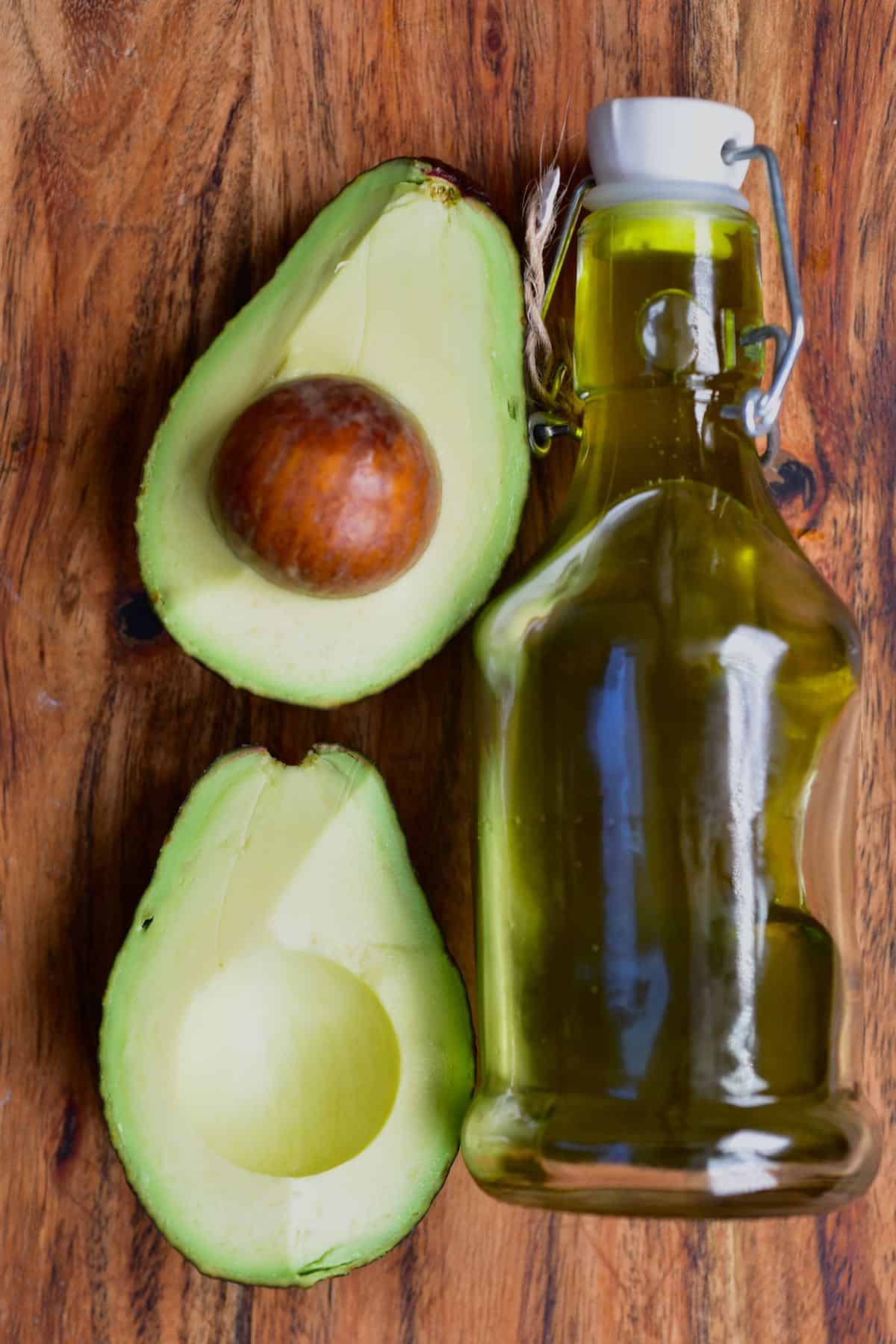
If virgin coconut oil or extra virgin coconut oil isn’t for you, perhaps this homemade avocado oil is more up your alley. Using just a few ripe (or overripe) avocados and a bit of patience, you’ll have some ‘green gold’ oil for all your cooking, beauty, and/or DIY needs. It’s a perfect way to use up the overripe avocados we all find ourselves with too!
Making your own pantry staples is not only fun, but it’s a great way to ensure that your products have no unwanted and unnecessary additives, preservatives, or chemicals. You can also avoid unnecessary extra processing and, very often, save money! Plus, with avocado oil, you can reduce waste too—by using all those surprise overripe avocados for the job!
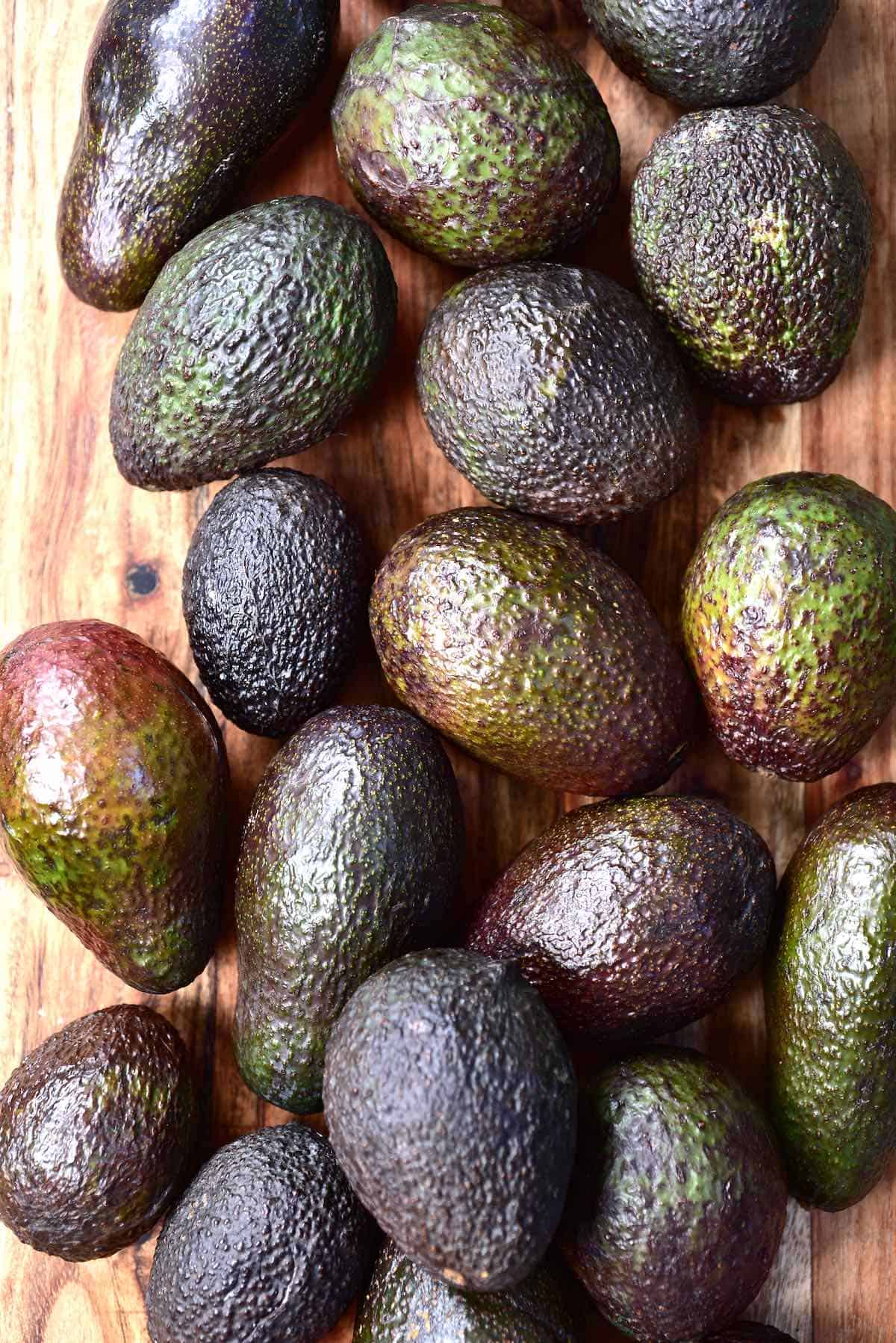
Okay, I’ll admit that avocado oil is not exactly the most cost-effective of my many DIYs unless you have a source of free/ low-cost avocados (or can slowly gather overripe avocados to stop them from going to waste (see notes*)). However, it’s certainly fun and worth sharing! Plus, there’s something extremely satisfying about seeing your avocados turn to an (admittedly yucky) brown paste before unexpectedly squeezing out a bounty of wonderful avocado oil.
This extra virgin avocado oil is also great for those who want to consume unrefined oils without the use of heat. While this process isn’t exactly cold-pressed ( I don’t have the equipment for that), this is the next best thing and a method ANYONE can do at home!
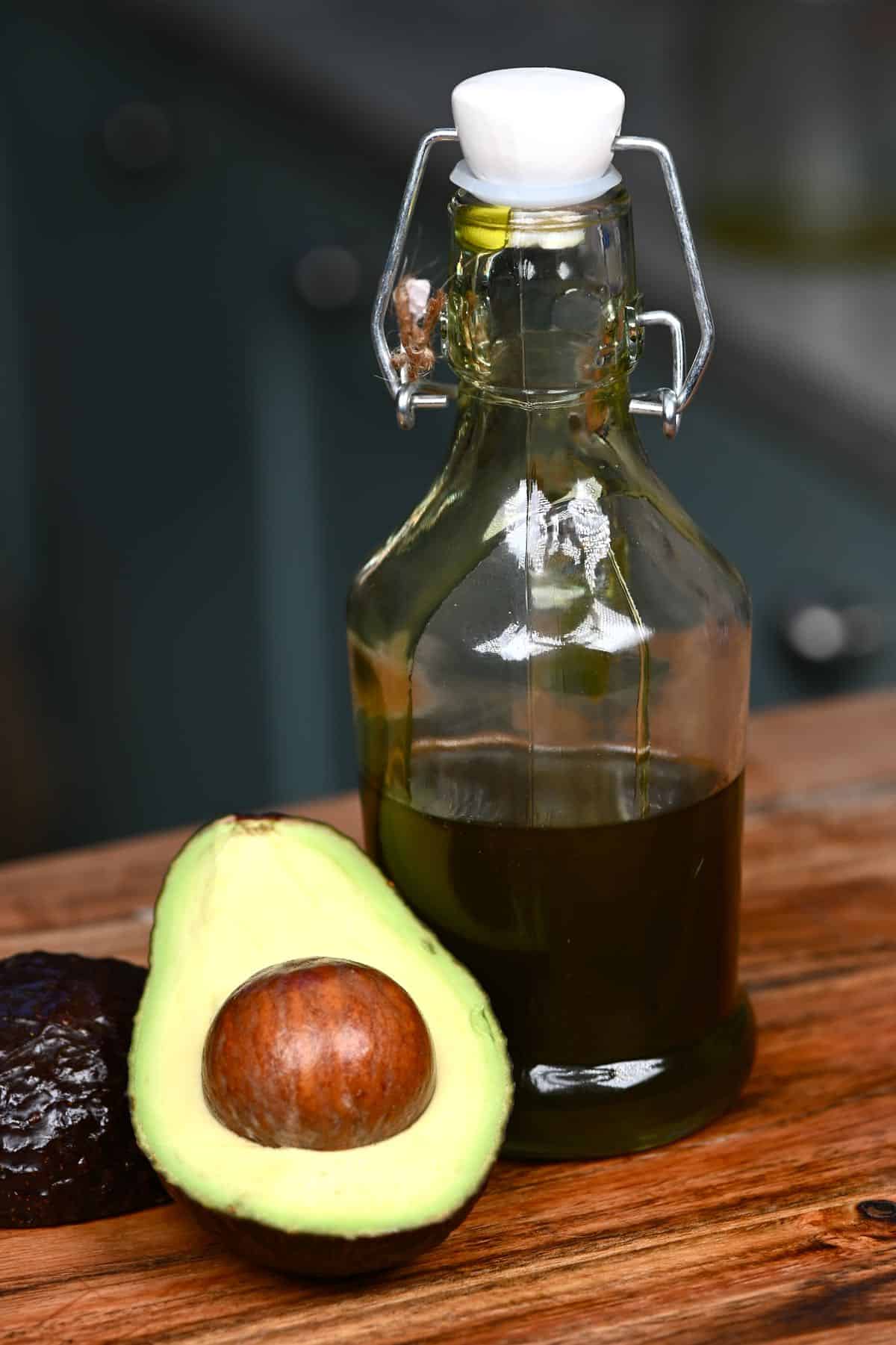
Want to save this recipe?
- How to make avocado oil at home
- How to store
- Avocado oil uses
- How to use the leftover avocado
- DIY notes
- Related DIYs
- How To Make Avocado Oil (Extra Virgin – Cold-process) Recipe
How to make avocado oil at home
Step 1: Prepare an avocado paste
First, mash the avocados into a smooth paste. You can use a hand masher, blender, or food processor for this.
I used a hand masher this time around to see the results. A smoother paste from a machine can yield slightly better results due to the more even drying.
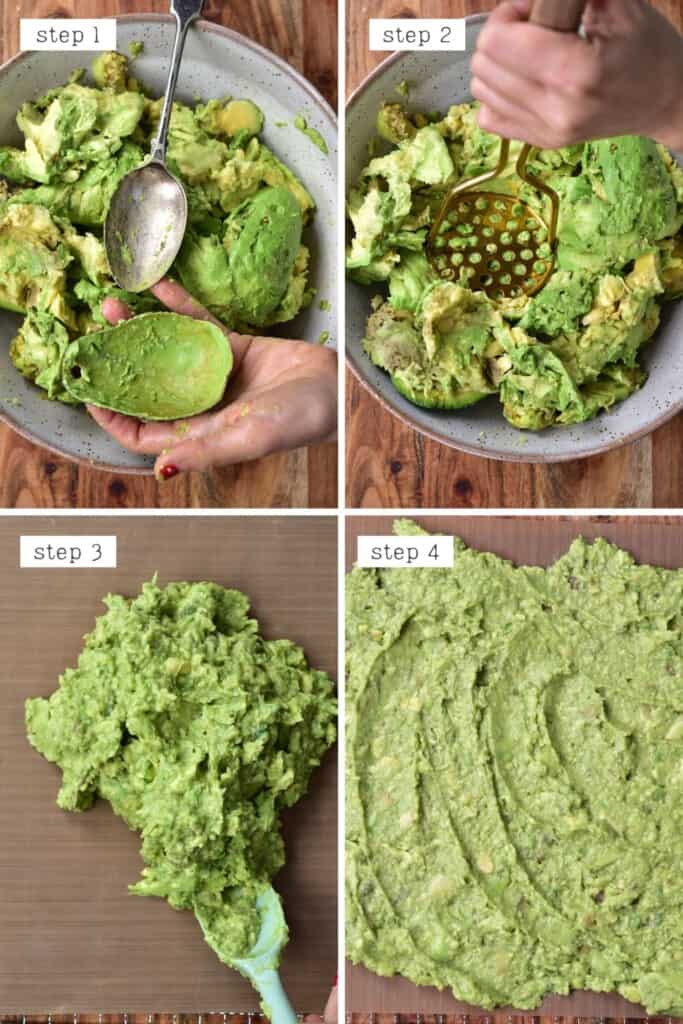
Once mashed, spread the avocado paste in a thin layer over a parchment paper-lined tray or similar surface. Aim to keep the layer below 1/2-inch thickness. If necessary, use multiple trays.
Step 2: Dry the paste
Allow the avocado paste to dry naturally in a well-ventilated area (away from direct sunshine) for a few days.
You may also use a dehydrator to speed up this process. However, keep the temperature below 40ºC/104ºF for the oil to remain extra virgin.
The amount of time this takes may differ depending on the climate/weather where you live.
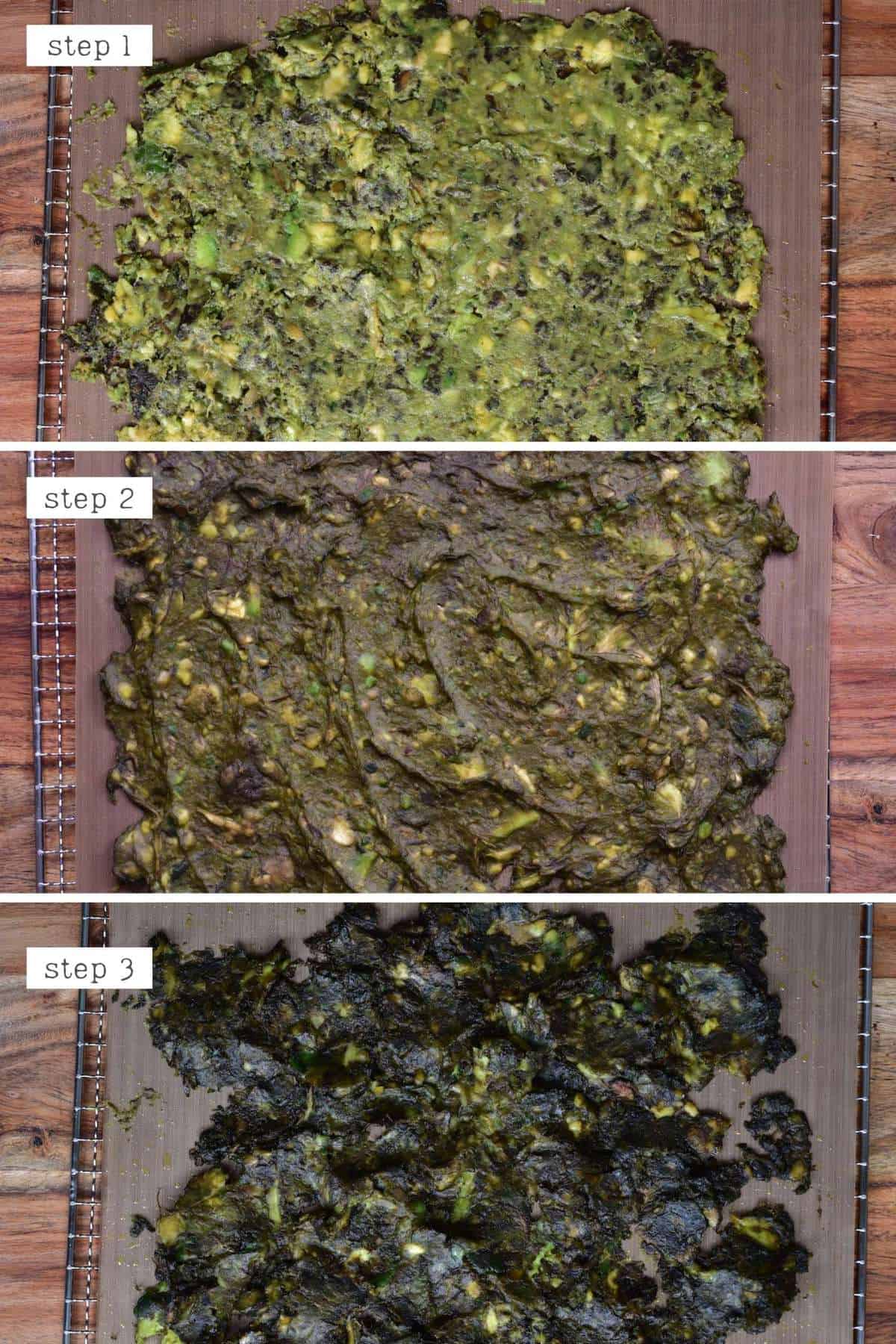
Once you notice that the top of your avocado paste has gone considerably brown, then mix it up well and re-spread into a thin layer. You’ll need to do this several times (at least 2 times a day – usually morning and evening).
Continue to do this until you have a very dark brown-colored paste. If yours was slightly chunky, like mine, then you may still have a few green bits. If it was super smooth, it’s likely that the entire paste is now brown.
Some people wait until the paste is almost completely dried, but if you do so, then you’ll find it incredibly difficult to extract the oil. One good way to know that it is ready is to look at your spoon when mixing the paste; the first few times you mix the mixture, it will pick up avocado. However, when it’s ready, you’ll notice that the paste no longer sticks to the spoon. Instead, it will look slightly oily.
Step 3: Extract the avocado oil
Place the avocado paste in a nut milk bag, muslin cloth, or similar material.
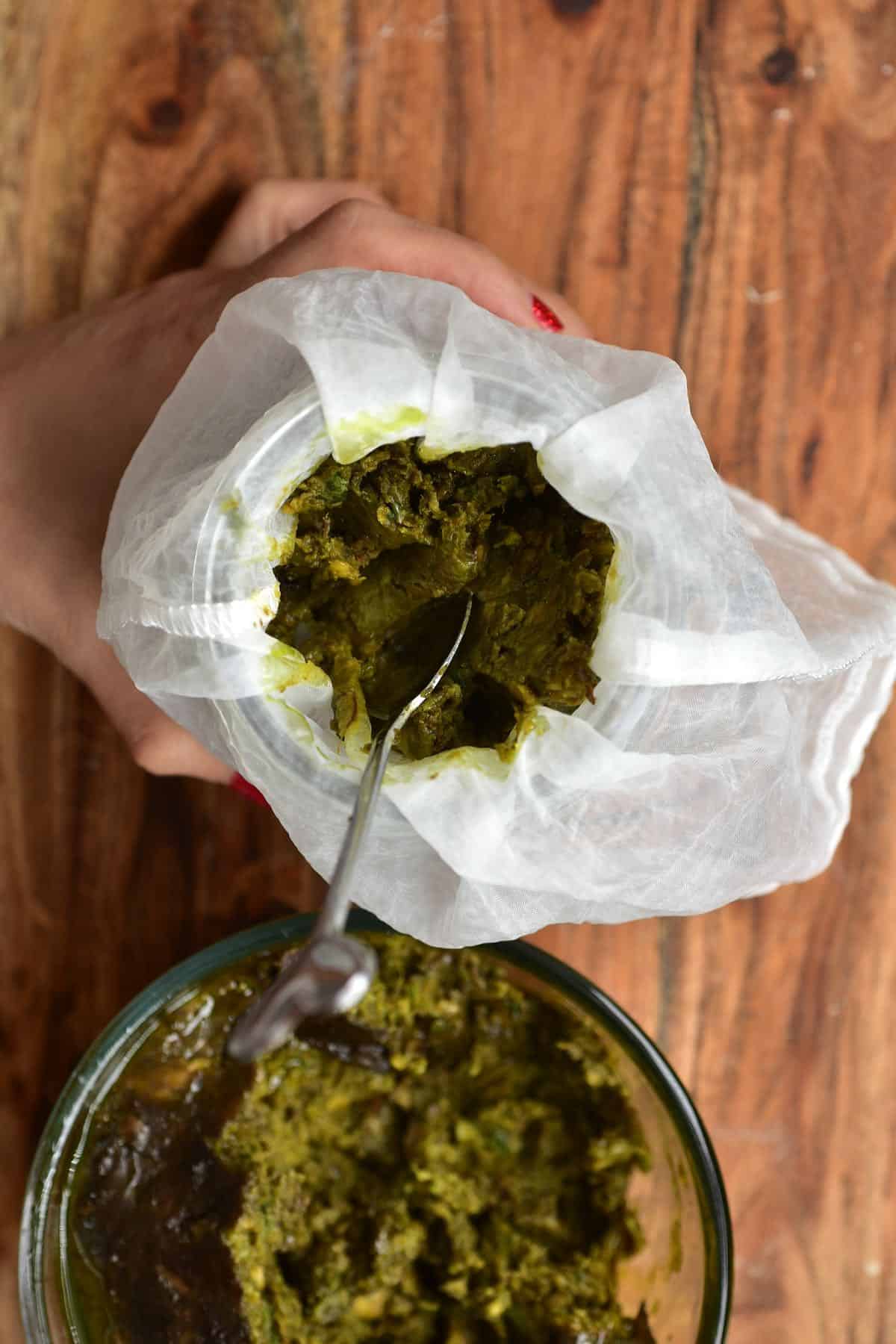
You can now either hand-squeeze the oil into a container or leave it to naturally drain, squeezing it at the end of the draining process to get the last of the oil.
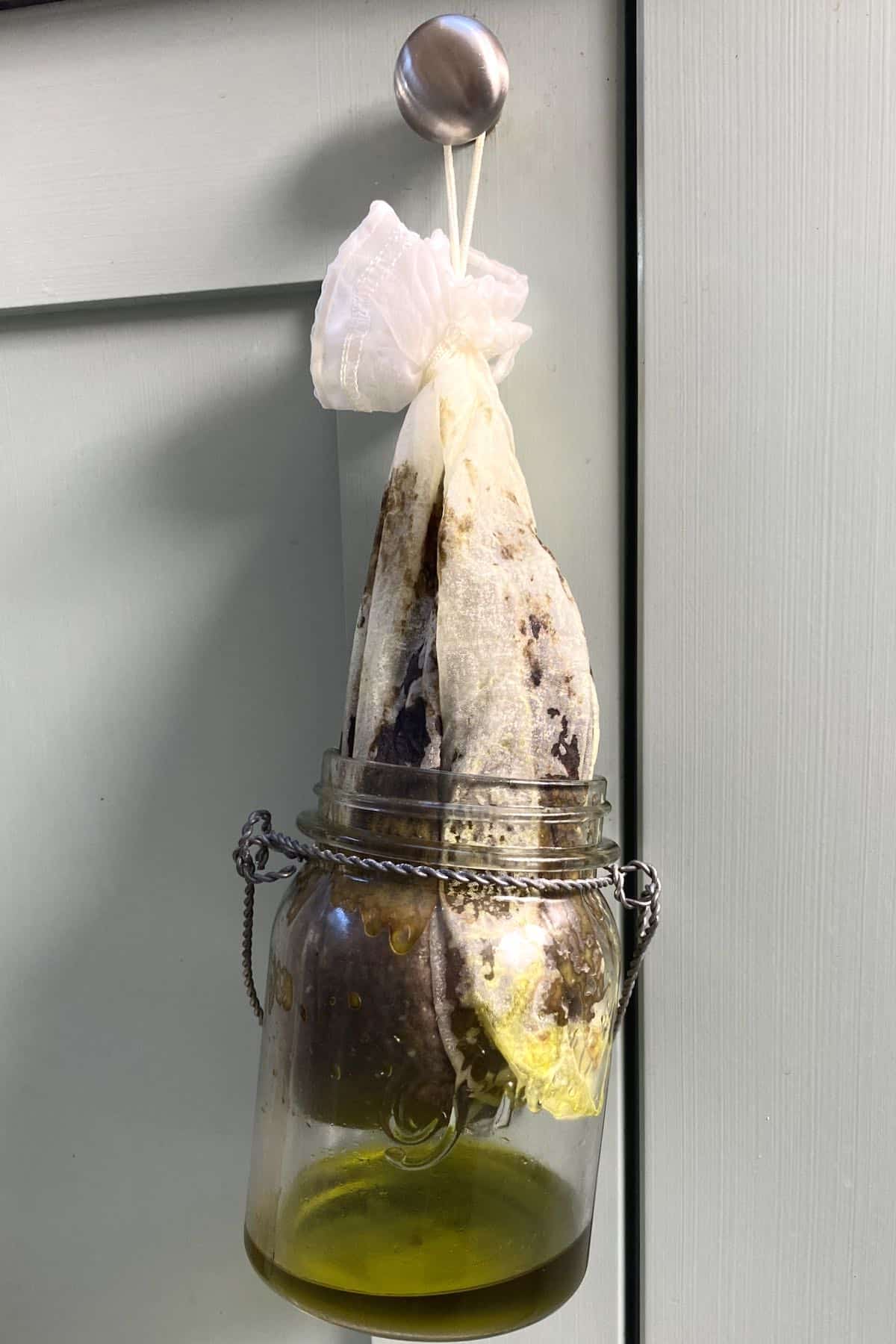
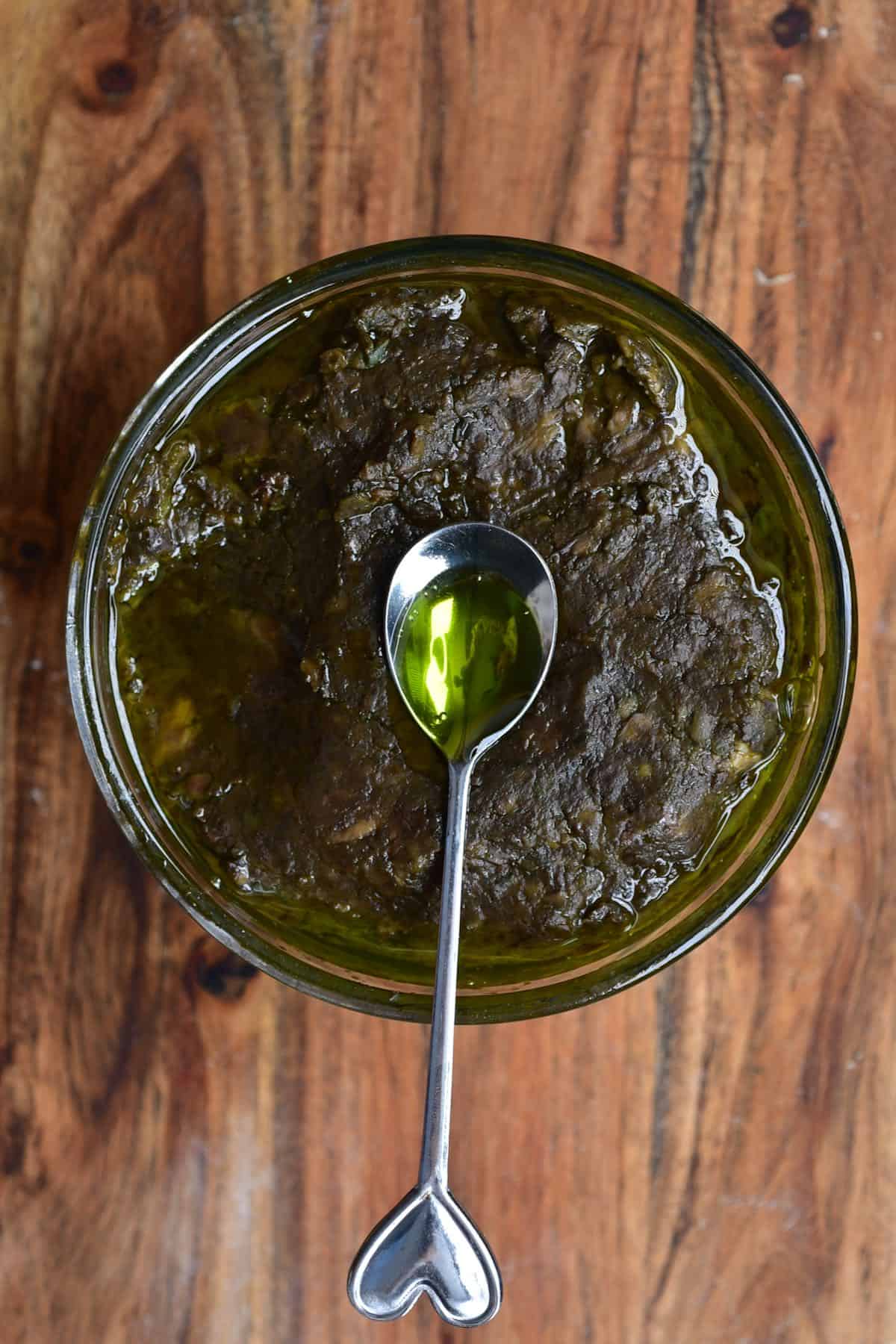
If the oil contains any ‘bits’, feel free to strain it once more before decanting it into a sterilized glass container.
Check the notes section at the bottom of the post for ways how to use the leftover avocado pulp, seeds, and skin!
How to store
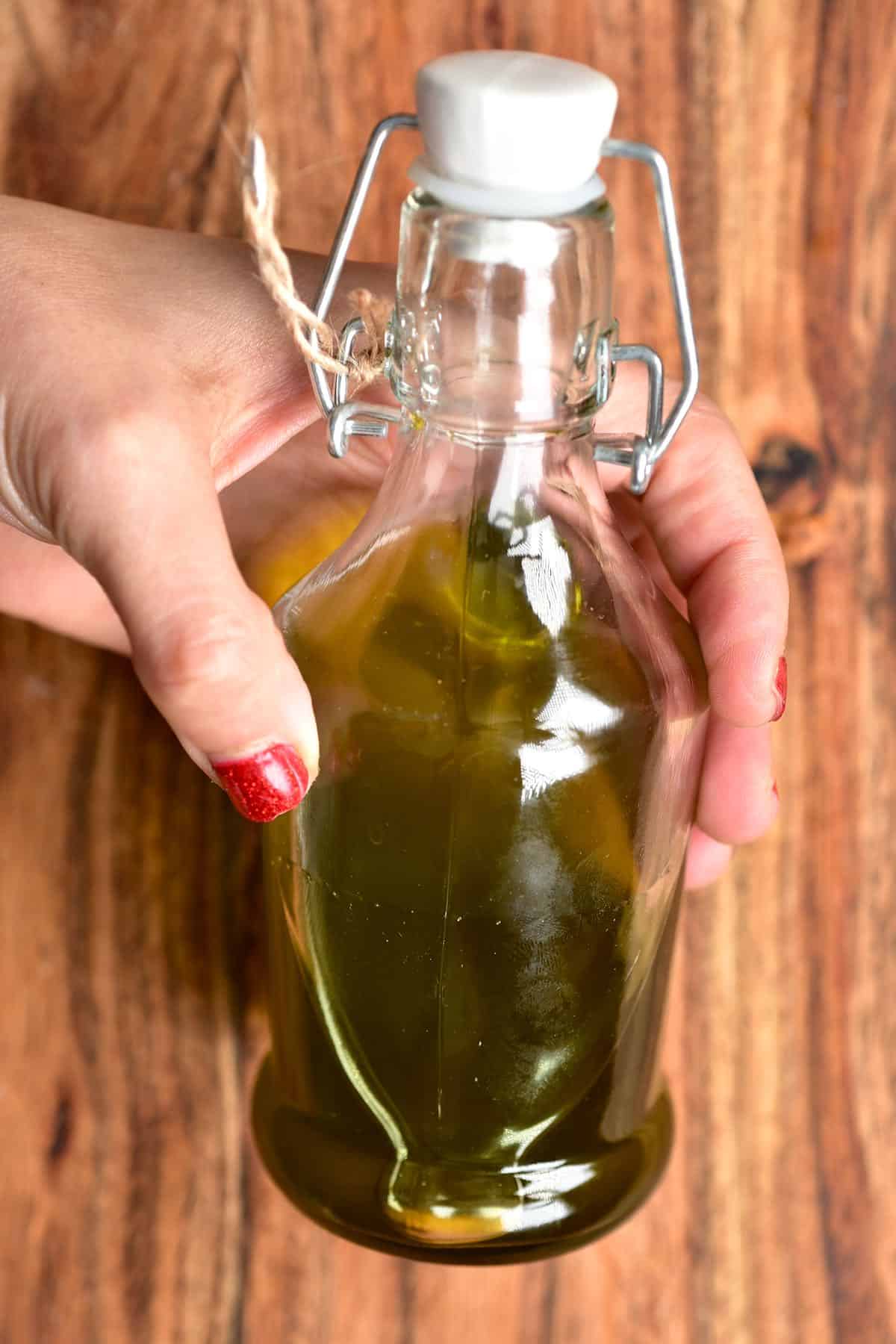
Avocado oil is shelf-stable and should last for months (possibly even up to a year) when stored in an airtight container away from direct heat and sunlight.
You can also keep the oil stored in the fridge to extend the shelf life further, by a few months, even.
Avocado oil uses
You can use this oil in many of the same ways that you would extra virgin olive oil. Though, luckily for avocados, this oil has a higher smoke point (around 250C/480F) than many oils and yet still has a fairly neutral flavor (especially when heated).
- Within salad dressings and marinades – like this raspberry vinaigrette dressing .
- As an oil when baking – for sweet or savory.
- Use as a frying oil – whether to deep fry or saute – like with these Fried Padrón Peppers.
- Drizzled over roasting veg – like Super Crispy Smashed Potatoes (With Herbs) or Roasted Okinawan sweet potato.
- Use it to make homemade mayonnaise .
- Drizzle it over salads, soups, and dips – like homemade hummus or Moutabal .
- Add a little to your daily smoothie as a healthy fat boost.
There are several different ways to use it for beauty purposes. These include using it as a moisturizer, facial moisturizer, face mask, skin cream, scalp oil, hair mask, bath oil, etc.
How to use the leftover avocado
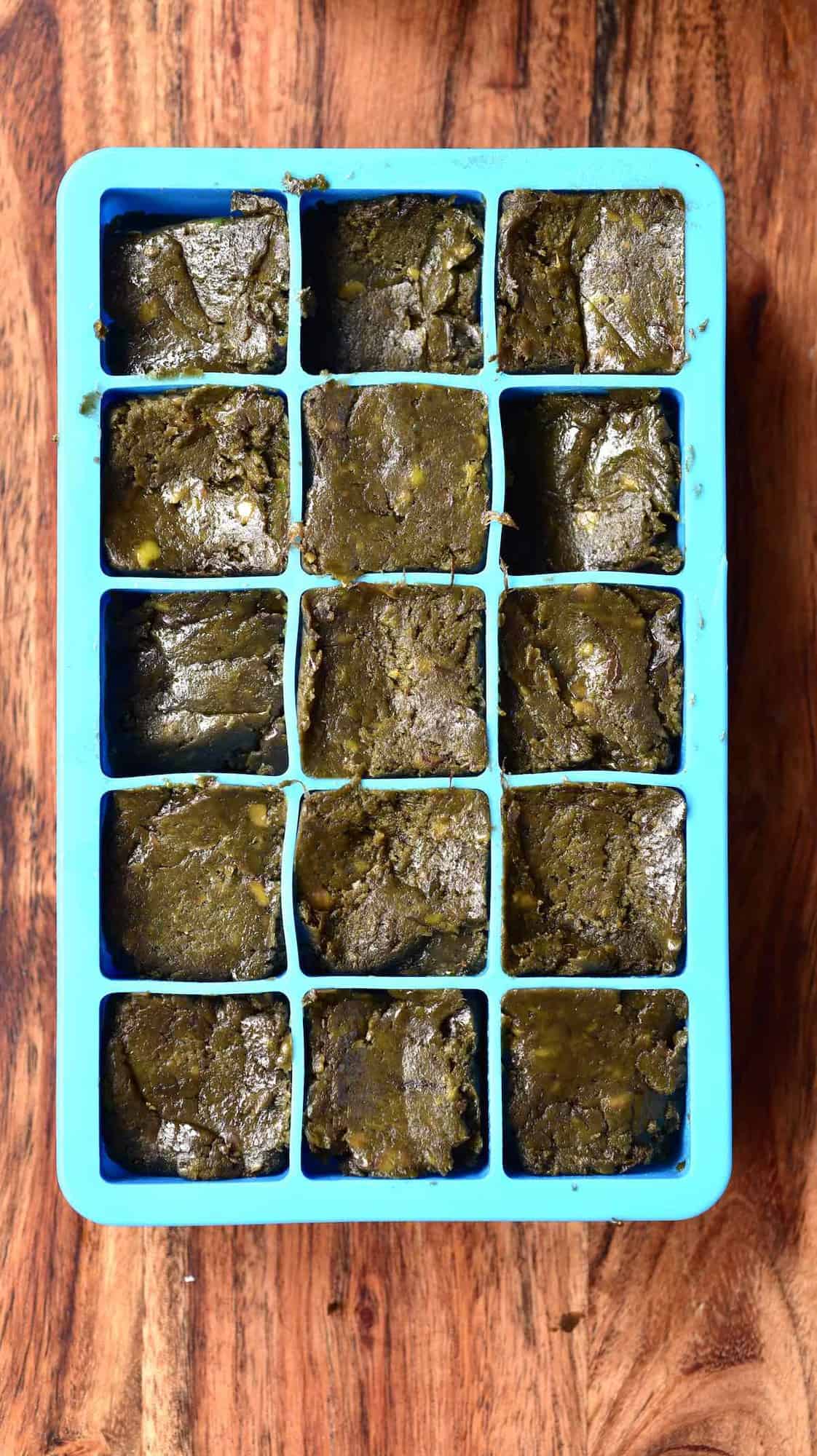
- Leftover avocado pulp: You can use this pulp to make brownies or as a spread similar to olive spread. You can also use the leftover avocado pulp for hair and face masks . It can also be composted or dried into a powder and added to increase nutrients within dishes. If you don’t want to use it all immediately, freeze the paste into ice-cube trays and thaw when needed.
- Leftover avocado seeds: You can use the skins and pits together to create a natural pink-hued dye , dry and grate/grind it into a powder to add to smoothies and dishes (or use as an exfoliant ), make into a highly nutritious tea , or even use the pit to help grow a new avocado plant .
- Leftover Avocado Peels: As previously mentioned, these can be used to make a pink dye . The skin can also be used to extract oil if you have a presser (like an orange presser!). You can also freeze the skins and then use them as an interesting way to plate up food (like this Simple 4-Ingredient Avocado Ice Cream ) or even to plant seedlings .
DIY notes
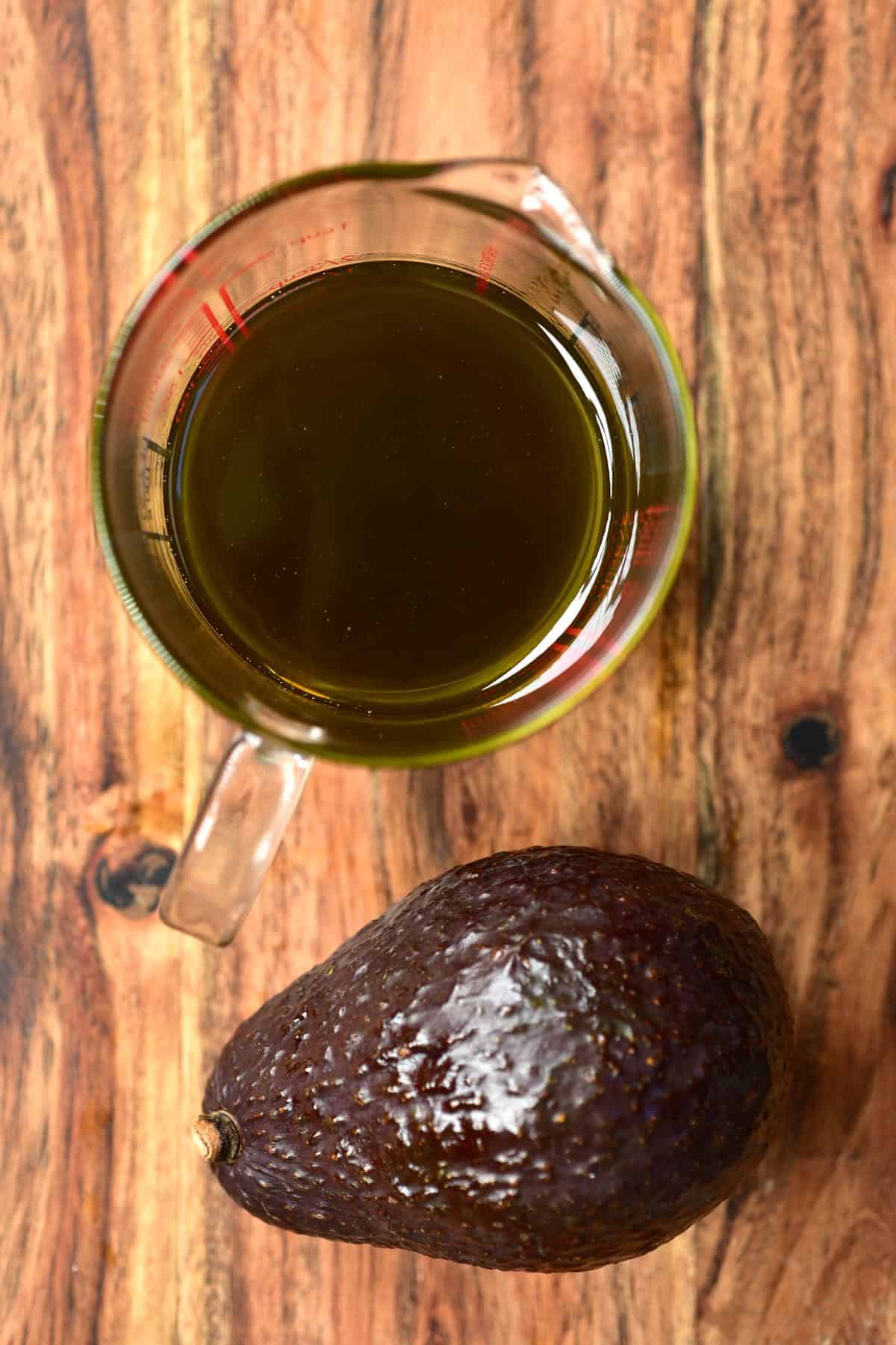
- Avocado oil can differ in shade and yield based on what avocados you use and several factors. The color can range from a golden yellow-green to dark green.
- To make organic avocado oil , simply use organic avocados.
- Tip for cheap avocados: If you’re purchasing avocados from a farmer’s market, look for overripe avocados. You’ll often get them cheaper (or can haggle to get them cheaper).
- You can also use any overripe avocados that you have at home ( it happens to all of us). If you want to wait until you have a good amount before making the oil, then freeze the overripe avocados until you have enough. Thaw them on the counter before using them.
Related DIYs
- DIY Extra Virgin Coconut Oil (Cold-pressed Coconut Oil)
- How to Make Chili Oil
- How To Make Rose Extract (Rose Essence)
- How to make Virgin Coconut Oil
- How to make Vanilla Extract
- Organic Rose Water
- How is Olive Oil Made? (Extra Virgin Olive Oil | Guide | FAQs)
Ingredients1x2x3x
- ▢ 10 avocados, medium
This many medium avocados yields about2/3cups of avocado oil.
Instructions
Step 1: Prepare an avocado paste
- First, mash the avocados into a smooth paste. You can use a hand masher, fork, or blender/food processor for this*.
- Once mashed, spread the avocado paste in a thin layer over a parchment paper-lined tray or similar surface. Aim to keep the layer below 1/2-inch thickness. Use multiple trays, if necessary.
Step 2: Dry the paste
- Allow the avocado paste to dry naturally** in a well-ventilated area (away from direct sunshine) for a few days (4-5). The amount of time this takes may differ depending on the climate/weather where you live. Once you notice that the top of your avocado paste has gone considerably brown, then mix it up well and re-spread into a thin layer. You’ll need to do this several times (at least 2 times a day – usually morning and evening).
- Continue to do this until you have a very dark brown colored paste. If yours was slightly chunky, like mine, then you may still have a few green bits. If it was super smooth, it’s likely that the entire paste is now brown.***
Step 3: Extract the avocado oil
- Place the avocado paste in a nut milk bag, muslin cloth, or similar material. You can now either hand-squeeze the oil into a container or leave it to naturally drain, squeezing it at the end of the draining process to get the last of the oil. If, for whatever reason, there are any ‘bits’ in the oil, then feel free to strain it once more when decanting it into a sterilized glass container.
How To Store
- Avocado oil is shelf-stable and should last for months (possibly even up to a year) when stores in an airtight container away from direct heat and sunlight. You can also keep the oil stored in the fridge to extend the shelf life further, by a few months even.
Notes
- Avocado oil can differ in shade and yield based on what avocados you use and several factors (the color can range from a golden yellowy green to dark green- green is best!).
- To make organic avocado oil , simply use organic avocados.
- Tip for cheap avocados: If you’re purchasing avocados from a farmers market, it can be a good idea to look out for overripe avocados as you’ll often get them cheaper (or can haggle to get them cheaper).
- You can also use any overripe avocados that you have at home ( it happens to all of us). If you want to wait until you have a good amount before making the oil, then freeze the overripe avocados until you have enough, thawing them on the counter till they reach room temperature.Â
How To Make Avocado Oil (Extra Virgin - Cold-process)
Ingredients
- 10 avocados, medium
This many medium avocados yields about2/3cups of avocado oil.
Instructions
Step 1: Prepare an avocado paste
- First, mash the avocados into a smooth paste. You can use a hand masher, fork, or blender/food processor for this*.
- Once mashed, spread the avocado paste in a thin layer over a parchment paper-lined tray or similar surface. Aim to keep the layer below 1/2-inch thickness. Use multiple trays, if necessary.
Step 2: Dry the paste
- Allow the avocado paste to dry naturally** in a well-ventilated area (away from direct sunshine) for a few days (4-5). The amount of time this takes may differ depending on the climate/weather where you live. Once you notice that the top of your avocado paste has gone considerably brown, then mix it up well and re-spread into a thin layer. You’ll need to do this several times (at least 2 times a day - usually morning and evening).
- Continue to do this until you have a very dark brown colored paste. If yours was slightly chunky, like mine, then you may still have a few green bits. If it was super smooth, it’s likely that the entire paste is now brown.***
Step 3: Extract the avocado oil
- Place the avocado paste in a nut milk bag, muslin cloth, or similar material. You can now either hand-squeeze the oil into a container or leave it to naturally drain, squeezing it at the end of the draining process to get the last of the oil. If, for whatever reason, there are any ‘bits’ in the oil, then feel free to strain it once more when decanting it into a sterilized glass container.
How To Store
- Avocado oil is shelf-stable and should last for months (possibly even up to a year) when stores in an airtight container away from direct heat and sunlight. You can also keep the oil stored in the fridge to extend the shelf life further, by a few months even.
Notes
- Avocado oil can differ in shade and yield based on what avocados you use and several factors (the color can range from a golden yellowy green to dark green- green is best!).
- To make organic avocado oil , simply use organic avocados.
- Tip for cheap avocados: If you’re purchasing avocados from a farmers market, it can be a good idea to look out for overripe avocados as you’ll often get them cheaper (or can haggle to get them cheaper).
- You can also use any overripe avocados that you have at home ( it happens to all of us). If you want to wait until you have a good amount before making the oil, then freeze the overripe avocados until you have enough, thawing them on the counter till they reach room temperature.
Recipe on Alphafoodie: https://www.alphafoodie.com/how-to-make-avocado-oil-extra-virgin/
