Recipes › Drinks
How to Make Cashew Milk
By Samira Kazan
updated June 27, 2024
How to make cashew milk with just TWO ingredients (soaked cashews and water) and a blender! This homemade cashew milk is is zero-waste and super versatile, straining it is optional, and it’s easy to flavor and to adjust! Dairy-free, lactose-free, Whole30, vegan!
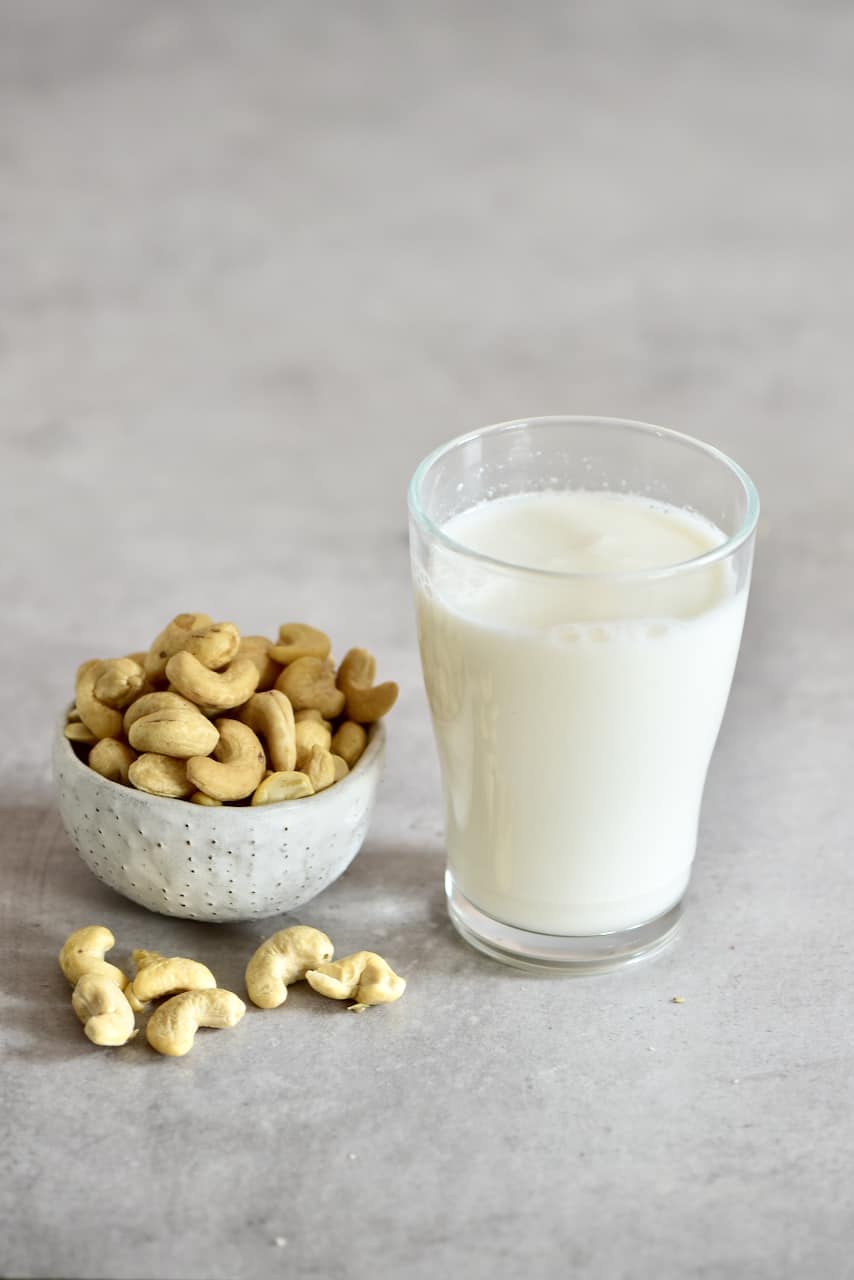
This homemade cashew milk recipe was originally posted in March 2020 but has been updated as of October 2021 with some extra notes, tips, uses, and flavor varieties!
I’ve been making dairy-free milk for several years now, including homemade coconut milk , homemade oat milk , and plenty of nut and seed options like homemade almond milk , homemade hazelnut milk , and this wonderfully creamy homemade cashew milk! Not only are homemade nut milks free from gums, stabilizers, and other additives, but they’re simple to make, usually cost less, and best of all, in the case of homemade cashew milk, you don’t even have to strain it (most of the time, anyway!).
All you need for this homemade cashew milk is just two ingredients (soaked cashews and water) and a few minutes of hands-on prep. The results are a smooth, creamy texture and delicious dairy alternative. It’s perfect for drinking, baking with, adding to sauces, and more! Plus, there are tons of ways to adapt this simple recipe. For example, change the water to cashew ratio based on how creamy you want it to be, add sweetener and other flavoring options if preferred, and more!
With a high-speed blender, you don’t even have to manually strain the cashew milk. Though if you do end up with leftover cashew pulp, I’ve provided a list of recommended uses for that too. After all, this is a zero-waste cashew milk recipe!
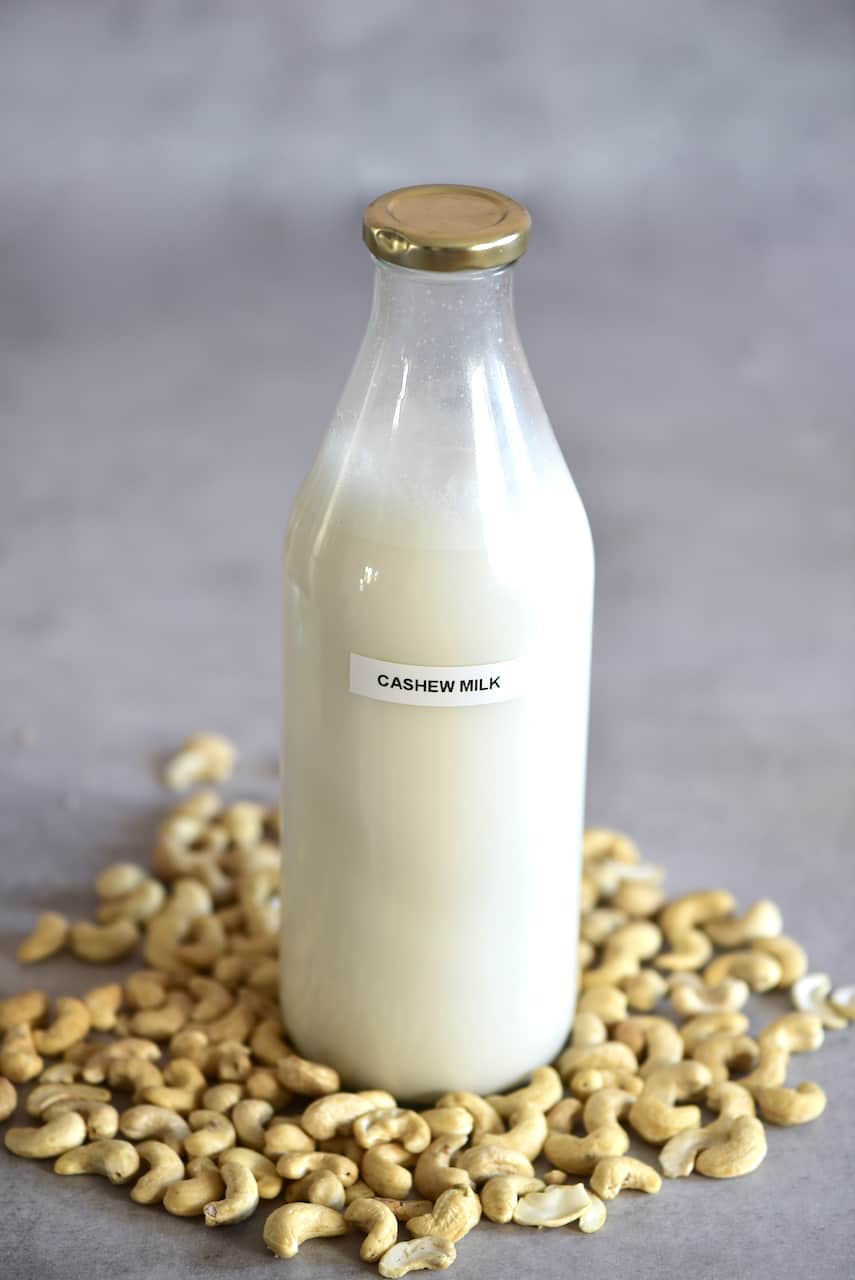
Want to save this recipe?
- What you’ll need
- What is the ideal cashew-to-water ratio?
- How to flavor cashew milk?
- How to make cashew milk
- How long does cashew milk last?
- How to use cashew milk?
- FAQs
- Top tips and recipe notes
- Other nut and seed milk recipes
- How to Make Cashew Milk Recipe
What you’ll need
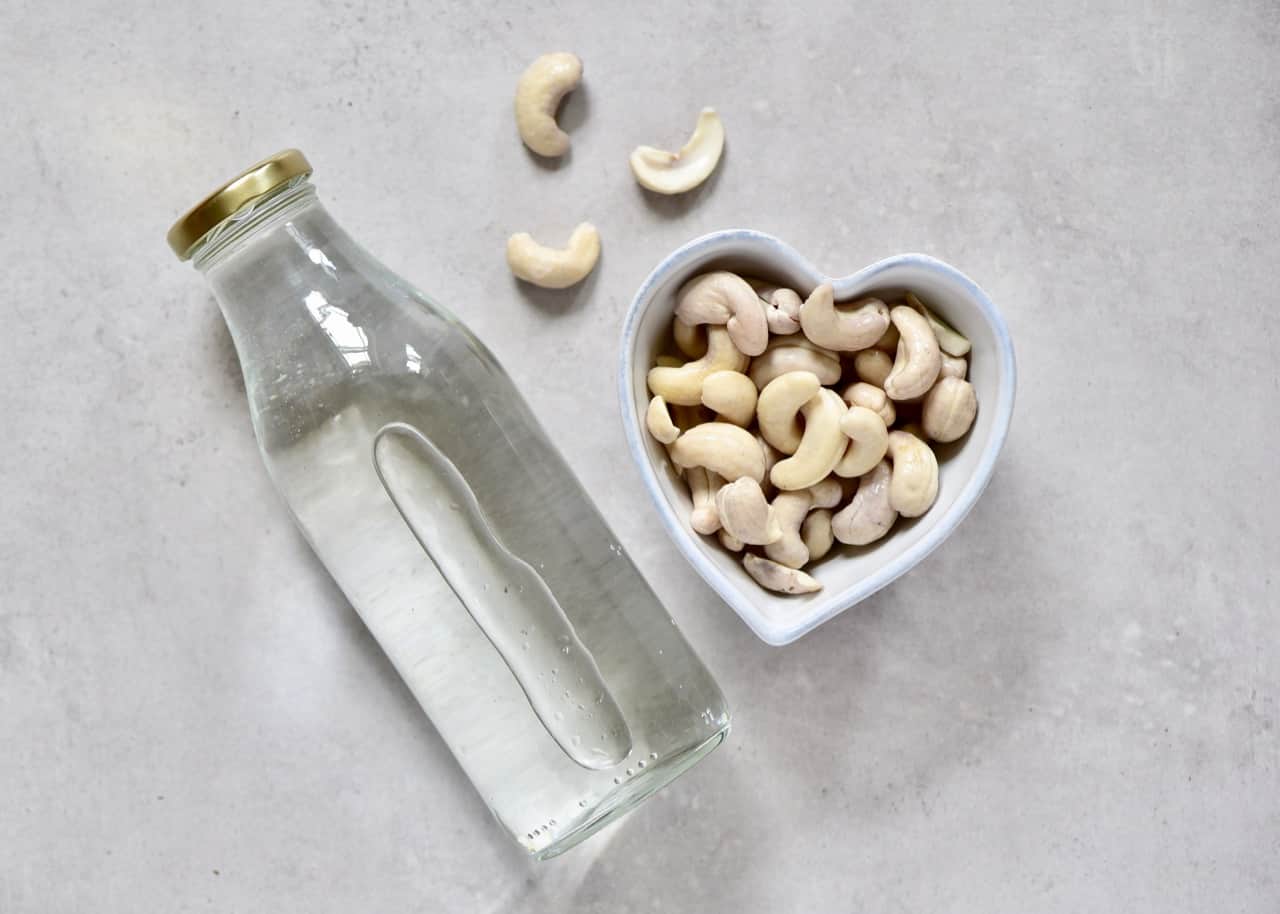
For unsweetened cashew milk
- Cashews: it’s best to use raw unsalted cashews. In a pinch, you could use roasted cashews, though you’ll likely end up with more pulp.
- Water : I like to use filtered water, but it isn’t necessary (tap water will be fine).
You also need:
- Blender: a high-speed blender is best for making homemade cashew milk that doesn’t require straining. However, thanks to the softness of the soaked cashews, you should also be able to use mid-level blenders.
- A nut milk bag, a coffe filter, or cheese cloth (optional) – if wanted, you’d need this to strain and filter the milk.
What is the ideal cashew-to-water ratio?
This comes down to personal preference and how you are planning on using the milk. However, my favorite ratio is:
ONE cup soaked cashews + FOUR cups filtered water.
With this ratio, the homemade cashew milk is wonderfully creamy and works well for drinking, baking, sauces, smoothies, cereal, etc. It’s probably similar to a 2% (or maybe slightly creamier) dairy milk.
- For creamier cashew milk (like half and half): use ONE cup soaked cashews + THREE cups water
- For cashew cream : using two cups of water to every one cup of cashews works perfectly for cream. However, in my “heavy”-style homemade cashew cream recipe, I use a 1:1 ratio (1 cup cashews to 1 cup water!) for thick and creamy cashew cream.
- For a light and subtle cashew milk : you could use ½ cup cashews for every four cups water. It will still be smooth and slightly creamy but with a mild flavor and more watery.
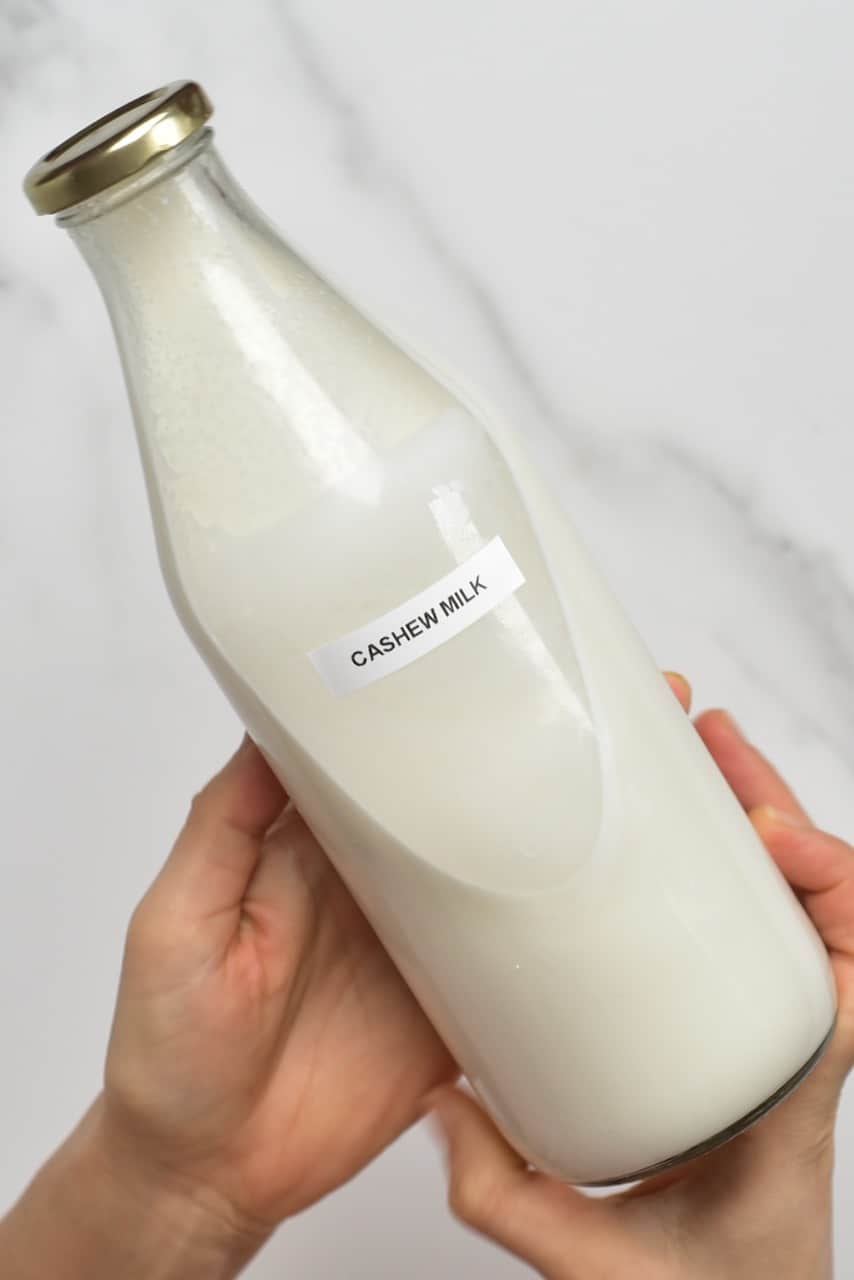
How to flavor cashew milk?
Basic optional add-ins
- Salt : not only is salt a natural preservative, but it enhances the flavors in the cashew milk for extra deliciousness.
- Sweetener : there are several sweetening options to choose from. You can use dates (3-6 based on how sweet you’d like it) or date paste , liquid sweeteners (like honey or maple syrup – start with 1 Tbsp and increase to taste), or even try with sugar-free sweeteners. I prefer to use liquid options, so it isn’t grainy.
Flavored cashew milk
- Vanilla cashew milk : use the sweetener of your choice, then add one teaspoon of homemade Vanilla extract or Vanilla Powder , and increase to personal taste.
- Chocolate Cashew milk : add 2 Tbsp of cocoa powder with the sweetener of your choice (adjusted to taste) and a pinch of salt. A pinch of espresso powder will also enhance the chocolate flavor.
- Strawberry cashew milk : you can use fresh or frozen (if drinking immediately) strawberries. I recommend using around 2 cups of berries with the sweetener of your choice, 1-2 tsp vanilla, and a pinch of salt. You can do the same with other berries (raspberries, blueberries, etc.).
- Salted caramel cashew milk : spoon in some of this vegan salted caramel (which is essentially dates, vanilla, and salt). I recommend 2-3 dates per cup of cashew milk. Feel free to make it sweeter with the addition of extra maple.
- Maple Spice milk: add 2-3 tablespoons maple syrup, a pinch of cinnamon and nutmeg, and a pinch of salt. Optionally add some vanilla too.
- Golden cashew milk: combine this homemade cashew milk with golden spice or golden paste .
- Espresso: add some instant espresso (2-3 tsp per cup of milk) and sweetener of your choice for a simple, sweet, caffeinated treat.
- Cashew almond milk: yes, you can even use a combination of nuts or nuts and seeds. I particularly like to make cashew oat milk and cashew almond milk. I use 50/50 cashews and almonds but feel free to experiment with the ratios.
If you want to make any of the above flavored cashew milk options, simply add all the ingredients to the blender when adding the water.
How to make cashew milk
Step 1: Soak the cashews
Add the cashews to a large bowl covered with cold/room temp water and a teaspoon of salt (to help “activate” them and further neutralize the enzyme inhibitors in nuts). Then leave to soak for between 8-12 hours (I usually do this overnight).
You can do a “quick soak “ option using hot water, allowing them to soak for at least three hours OR even boil the cashews for 15-20 minutes, until tender. For either of the “quick soak “ options, you can omit the salt.
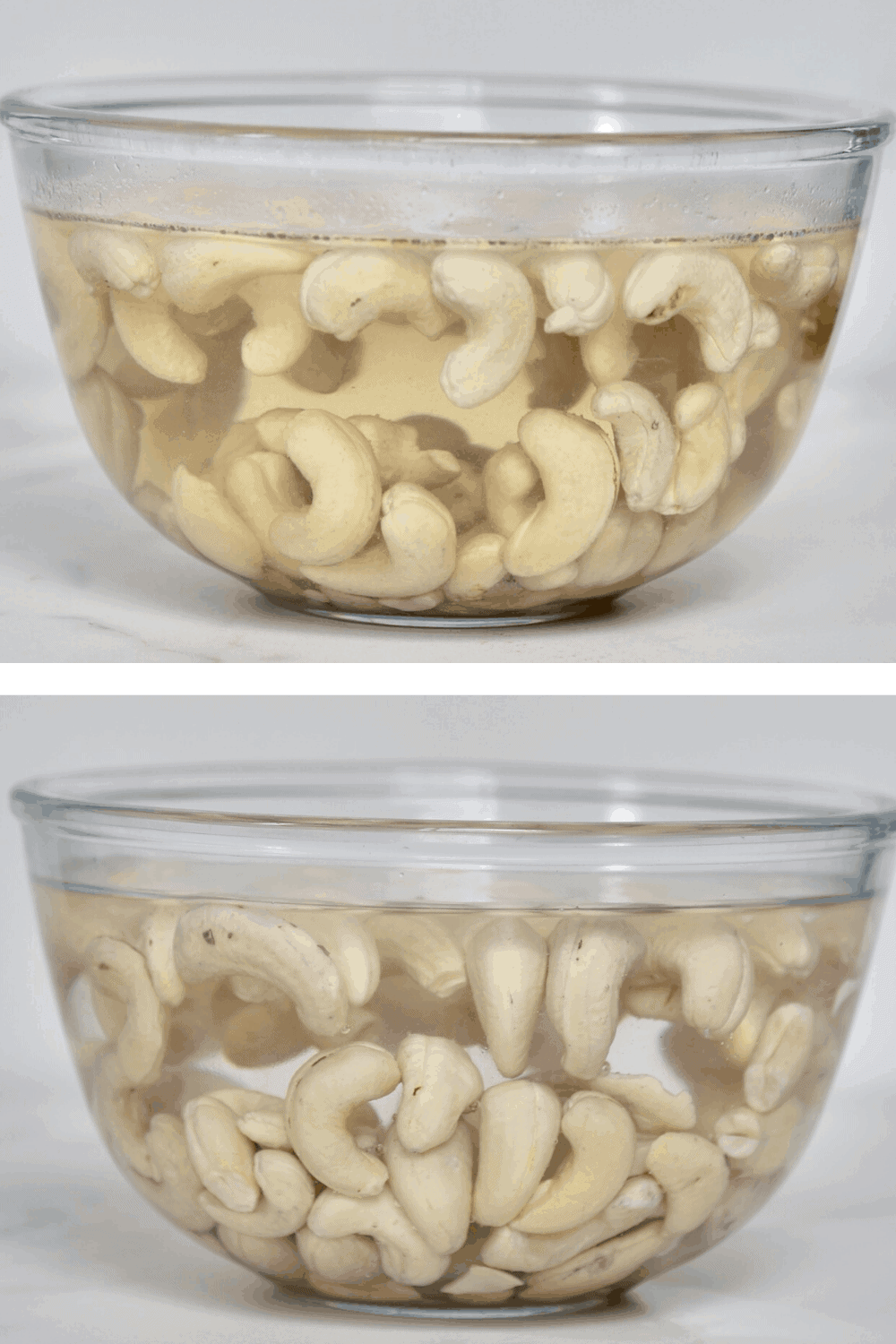
After soaking, drain the water from the cashews and rinse them again.
There’s no need to discard the soaking water if you didn’t salt it. This “wastewater” can be used to water plants. However, I don’t recommend drinking it as you’ll be drinking all the nasties you’ve just spent all that time soaking to remove!
Step 2: Blend the cashew milk
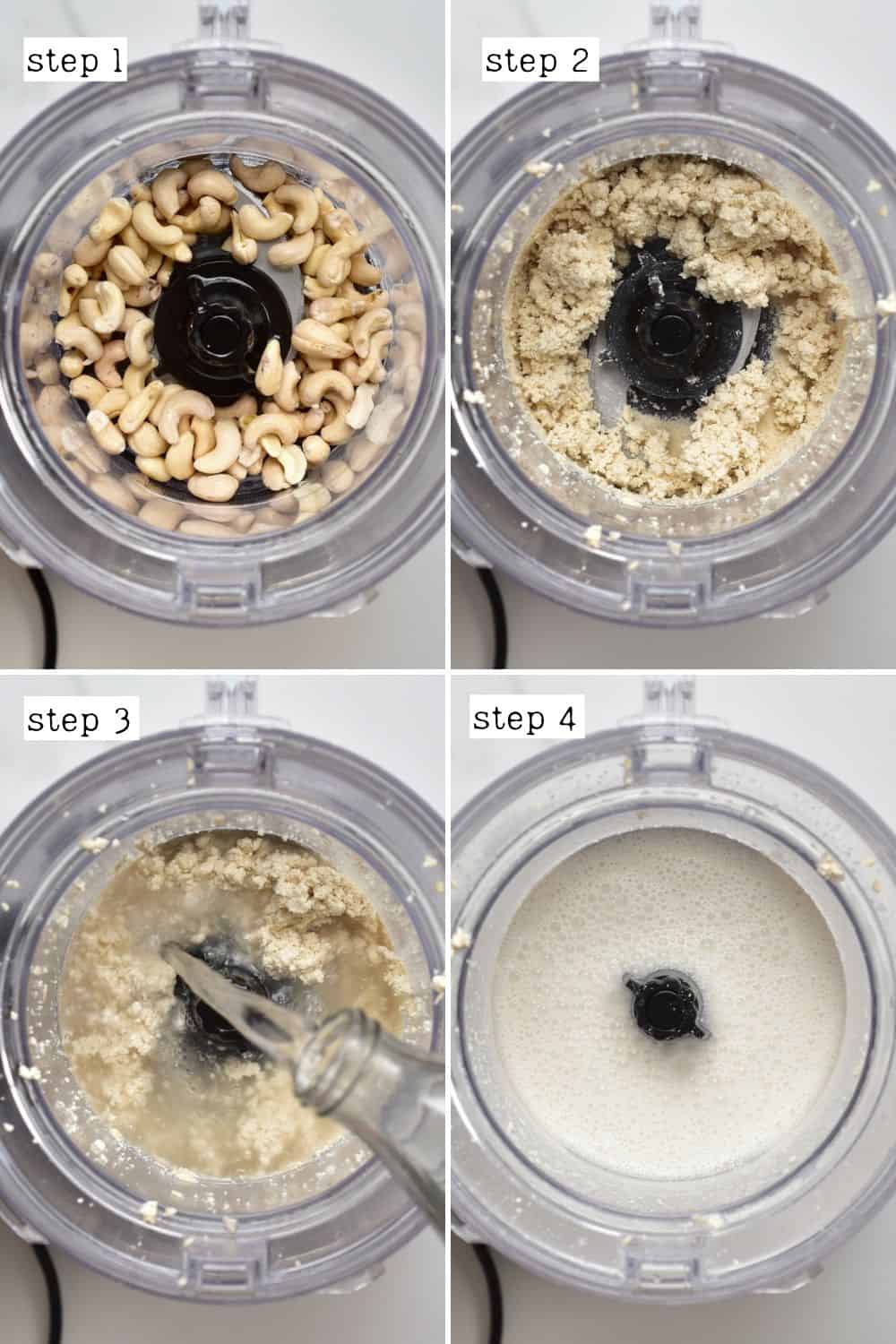
Transfer the soaked cashews to your blender and blend into a rough crumb consistency. Then, add the filtered water (or tap water, if that’s possible where you live) and allow the machine to blend until the liquid is creamy and milky-looking. This usually takes a couple of minutes but increase this if you don’t have a high-speed blender.
Step 3: Strain the cashew milk (optional)
In some cases, you might find that the cashews disperse well enough into the cashew milk to avoid straining. However, this will naturally contain more sediment and so will be grainier than when strained.
There are several ways to strain the leftover cashew pulp from the milk. These include using a coffee filter, cheesecloth (several layers placed within a sieve make it easiest to “hold” in place while pouring the milk in), or a nut milk bag (my preferred option) over a large bowl.
If you’re using a cheesecloth/a nut milk bag, squeeze as much liquid from the pulp as possible. With a coffee filter, you’ll need to allow it to filter in its own time (which is why I avoid this method).
After straining the cashew milk, you can transfer it to a glass bottle (easiest if you have a funnel).

How long does cashew milk last?
Store : store the cashew milk in an airtight bottle in the fridge for between 3-5 days.
As there are no stabilizers in this homemade cashew milk, it will likely separate slightly in the fridge. Just give it a good shake each time before using. You’ll know when the cashew milk has gone bad as it will smell and taste sour.
Can you freeze cashew milk? Absolutely. I like to freeze mine in ice-cube trays, so it’s perfectly “portioned,” and I can pop a few cubes out, as needed. I recommend freezing the cashew milk for up to 3 months.
How to use cashew milk?
There are tons of ways to enjoy this homemade cashew milk, including chilled or warmed up. Here are just a few of my favorite ways to use nut milk:
- Use for cereal and homemade granola .
- Mix it into chia pudding .
- Use for oatmeal or overnight oats .
- Mix into homemade smoothies and smoothie bowls.
- Use to make vegan ice cream .
- Mix into vegan mashed potato and sweet potato puree .
- Use for milkshakes and other drinks – like coffee!
- Stir into soups – like this cream of mushroom soup .
- Add to sauces – like this roasted red pepper sauce , etc.
- Flavor and drink as-is!
I would imagine that would work, though as they are more “dry,” you’ll likely end up with more pulp and slightly less creamy cashew milk, even when soaked.
One of the few pros to buying commercial nut milk is that they’re often fortified with additional vitamins (like Vitamin D3, B12, calcium, etc.). However, even this can be done at home, by blending supplements into the milk or even using the vitamin in drop/powdered form.
Yes, just make sure they only consume it in moderate amounts as the high fats in cashew milk could upset your pup’s tummy if they consume too much.
When using a regular blender (high-powered or not), I always recommend soaking the cashews. Not only does it make them easy to blend, but soaked nuts are also more easily absorbed by our bodies, and the antinutrients within are neutralized (or at least minimized), making them altogether better for us.
That’s because most store-bought options actually use a really low % of nuts to water but then make it seem thicker/creamier with the addition of emulsifiers and fillers and other ingredients. I’d much rather consume the nourishing calories of real ingredients!
Like with the pulp leftover from homemade almond milk , cashew pulp leftover from homemade cashew milk is useable in various recipes. When wet, you can use it to top cereal and oats, add into smoothies, to top yogurt ( homemade plain yogurt or dairy-free like homemade coconut yogurt , etc.). You can first dry it out (either at room temp if you live in a warm climate OR the oven at its lowest temperature until dry – usually 1 ½-2-ish hours at around 200ºF/90ºC). Then you can use it in baking recipes, like tart bases, energy balls, cookies, crackers, brownies, etc. A few examples include: – Cacao almond protein balls , – Almond butter granola bars .
I’ve never had issues getting my homemade cashew milk to froth up – however, others claim to have problems. If you find that yours doesn’t froth with a regular milk frother, you can pour the milk into a blender for 40-60 seconds of blending, and that will give a faux froth effect.
Top tips and recipe notes
- The amount of pulp will vary: in these images, I’ve used unsoaked cashews, which means I ended up with quite a lot of pulp. However, I’ve found that when using soaked cashews, the pulp is reduced to almost nothing.
- For a thicker/thinner consistency: simply adjust the amount of water used per cup of cashews.
- For 2-minute cashew milk from cashew butter : when you’ve run out of cashew milk and need more ASAP, then you can combine 2 tablespoons of unsalted cashew butter (raw is best but not necessary) with the 4 cups of fresh water and blend until smooth and creamy.
- Straining leftover sediment from the milk : if you’ve used a nut milk bag/cheesecloth and still have tons of sediment, you can strain the milk through a coffee filter.
- For whole30 cashew milk : you can either leave the cashew milk recipe unsweetened OR use dates to sweeten it naturally. You can even experiment with some of the flavored options (for example, you could use cacao powder with dates and a pinch of salt for chocolate cashew milk).
- When buying cashews : look out for ethically sourced fair-trade cashews. That way, you protect the workers who can end up with permanent hand/finger damage from harvesting cashews when the working conditions are poor.
Other nut and seed milk recipes
- Homemade Walnut Milk
- Homemade Hazelnut Milk
- Homemade Pistachio Milk
- ‘Instant’ almond milk
- Tiger nut milk (horchata de chufa)
- Homemade Hemp Seed Milk
Equipment
- Blender/Food processor
- Nut milk bag
Ingredients1x2x3x
- ▢ 1 cup cashew raw unsalted
- ▢ 4 cups filtered water
Basic optional add-ins
- ▢ salt a pinch will enhance the flavors
- ▢ sweetener dates (3-6 based on taste) or date paste ), maple syrup/agave/honey, or sugar-free liquid sweetenersÂ
Instructions
Step 1: Soak the Cashews
- Add the cashews to a large bowl covered with cold/room temp water and a teaspoon of salt (to help “activate” them and further neutralize the enzyme inhibitors in nuts). Then leave to soak for between 8-12 hours (I usually do this overnight). You can do a “quick soak” option using hot water, allowing them to soak for at least three hours OR even boil the cashews for 15-20 minutes, until tender. For either of the “quick soak” options, you can omit the salt.
- After soaking, drain the water from the cashews and rinse them again. There’s no need to discard the soaking water if you didn’t salt it. This “wastewater” can be used to water plants. However, I don’t recommend drinking it as you’ll be drinking all the nasties you’ve just spent all that time soaking to remove!
Step 2: Blend the Cashew Milk
- Transfer the soaked cashews to your blender and blend into a rough crumb consistency. Then, add the filtered water (or tap water, if that’s possible where you live) and allow the machine to blend until the liquid is creamy and milky-looking. This usually takes a couple of minutes but increase this if you don’t have a high-speed blender.
Step 3: Strain the Cashew Milk (Optional)
- In some cases, you might find that the cashews disperse well enough into the cashew milk to avoid straining. However, this will naturally contain more sediment and so will be grainier than when strained. For most mid-level blenders, straining is best. There are several ways to strain the leftover cashew pulp from the milk. These include using a coffee filter, cheesecloth (several layers placed within a sieve make it easiest to “hold” in place while pouring the milk in), or a nut milk bag (my preferred option) over a large bowl. If you’re using a cheesecloth/a nut milk bag, squeeze as much liquid from the pulp as possible. With a coffee filter, you’ll need to allow it to filter in its own time (which is why I avoid this method).
- After straining the cashew milk, you can transfer it to a glass bottle (easiest if you have a funnel).
How Long Does Cashew Milk Last?
- Store : Store the cashew milk in an airtight bottle in the fridge for between 3-5 days. As there are no stabilizers in this homemade milk, it will likely separate slightly in the fridge. Just give it a good shake each time before using. You’ll know when the milk has gone bad as it will smell and taste sour. Freeze : I like to freeze mine in ice-cube trays, so it’s perfectly “portioned,” and I can pop a few cubes out, as needed. I recommend freezing the cashew milk for up to 3 months.Â
Video
Notes
For creamier cashew milk (like half and half): Â use ONE cup soaked cashews + THREE cups water.
For cashew cream : using two cups of water to every one cup of cashews works perfectly for cream. However, in my “heavy”-style cashew cream recipe, I use a 1:1 ratio (1 cup cashews to one cup water!) for thick and creamy cashew cream.
For light and subtle cashew milk : you could use ½ cup cashews for every four cups water. It will still be smooth and slightly creamy but with a mild flavor and obviously more watery.
Vanilla cashew milk : use the sweetener of your choice, then add one teaspoon of homemade Vanilla extract or Vanilla Powder , and increase to personal taste.
Chocolate Cashew milk : add 2 Tbsp of cocoa powder with the sweetener of your choice (adjusted to taste) and a pinch of salt. A pinch of espresso powder will also enhance the chocolate flavor.
Strawberry cashew milk : you can use fresh or frozen (if drinking immediately) strawberries. I recommend using around 2 cups of berries with the sweetener of your choice, 1-2 tsp vanilla, and a pinch of salt. You can do the same with other berries (raspberries, blueberries, etc.).
Salted caramel cashew milk : spoon in some of this vegan salted caramel (which is essentially dates, vanilla, and salt). I recommend 2-3 dates per cup of cashew milk. Feel free to make it sweeter with the addition of extra maple.
Maple Spice milk: a dd 2-3 tablespoons maple syrup, a pinch of cinnamon and nutmeg, and a pinch of salt. Optionally add some vanilla too.
Golden cashew milk: combine this homemade cashew milk with golden spice or golden paste . Â
Espresso: Â add some instant espresso (2-3 tsp per cup of milk) and sweetener of your choice for a simple, sweet, caffeinated treat.
Cashew almond milk:  you can even use a combination of nuts or nuts and seeds. I particularly like to make cashew oat milk and cashew almond milk. I use 50/50 cashews and almonds but feel free to experiment with the ratios.
For a thicker/thinner consistency: Â simply adjust the amount of water used per cup of cashews.
For 2-minute cashew milk from cashew butter : when you’ve run out of cashew milk and need more ASAP, then you can combine 2 tablespoons of unsalted cashew butter (raw is best but not necessary) with the 4 cups of fresh water and blend until smooth and creamy.
Straining leftover sediment from the milk : if you’ve used a nut milk bag/cheesecloth and still have tons of sediment, you can strain the milk through a coffee filter.
For whole30 cashew milk : you can either leave the cashew milk recipe unsweetened OR use dates to sweeten it naturally. You can even experiment with some of the flavored options (for example, you could use cacao powder with dates and a pinch of salt for chocolate cashew milk).
When buying cashews : look out for ethically sourced fair-trade cashews. That way, you protect the workers who can end up with permanent hand/finger damage from harvesting cashews when the working conditions are poor.
Nutrition
Nutrition information is automatically calculated, so should only be used as an approximation.
How to Make Cashew Milk
Equipment
- Blender/Food processor
- Nut milk bag
Ingredients
- 1 cup cashew raw unsalted
- 4 cups filtered water
Basic optional add-ins
- salt a pinch will enhance the flavors
- sweetener dates (3-6 based on taste) or date paste ), maple syrup/agave/honey, or sugar-free liquid sweeteners
Instructions
Step 1: Soak the Cashews
- Add the cashews to a large bowl covered with cold/room temp water and a teaspoon of salt (to help “activate” them and further neutralize the enzyme inhibitors in nuts). Then leave to soak for between 8-12 hours (I usually do this overnight). You can do a “quick soak” option using hot water, allowing them to soak for at least three hours OR even boil the cashews for 15-20 minutes, until tender. For either of the “quick soak” options, you can omit the salt.
- After soaking, drain the water from the cashews and rinse them again. There’s no need to discard the soaking water if you didn’t salt it. This “wastewater” can be used to water plants. However, I don’t recommend drinking it as you’ll be drinking all the nasties you’ve just spent all that time soaking to remove!
Step 2: Blend the Cashew Milk
- Transfer the soaked cashews to your blender and blend into a rough crumb consistency. Then, add the filtered water (or tap water, if that’s possible where you live) and allow the machine to blend until the liquid is creamy and milky-looking. This usually takes a couple of minutes but increase this if you don’t have a high-speed blender.
Step 3: Strain the Cashew Milk (Optional)
- In some cases, you might find that the cashews disperse well enough into the cashew milk to avoid straining. However, this will naturally contain more sediment and so will be grainier than when strained. For most mid-level blenders, straining is best. There are several ways to strain the leftover cashew pulp from the milk. These include using a coffee filter, cheesecloth (several layers placed within a sieve make it easiest to “hold” in place while pouring the milk in), or a nut milk bag (my preferred option) over a large bowl. If you’re using a cheesecloth/a nut milk bag, squeeze as much liquid from the pulp as possible. With a coffee filter, you’ll need to allow it to filter in its own time (which is why I avoid this method).
- After straining the cashew milk, you can transfer it to a glass bottle (easiest if you have a funnel).
How Long Does Cashew Milk Last?
- Store : Store the cashew milk in an airtight bottle in the fridge for between 3-5 days. As there are no stabilizers in this homemade milk, it will likely separate slightly in the fridge. Just give it a good shake each time before using. You’ll know when the milk has gone bad as it will smell and taste sour. Freeze : I like to freeze mine in ice-cube trays, so it’s perfectly “portioned,” and I can pop a few cubes out, as needed. I recommend freezing the cashew milk for up to 3 months.
Video
Notes
For creamier cashew milk (like half and half): use ONE cup soaked cashews + THREE cups water.
For cashew cream : using two cups of water to every one cup of cashews works perfectly for cream. However, in my “heavy”-style cashew cream recipe, I use a 1:1 ratio (1 cup cashews to one cup water!) for thick and creamy cashew cream.
For light and subtle cashew milk : you could use ½ cup cashews for every four cups water. It will still be smooth and slightly creamy but with a mild flavor and obviously more watery.
Vanilla cashew milk : use the sweetener of your choice, then add one teaspoon of homemade Vanilla extract or Vanilla Powder , and increase to personal taste.
Chocolate Cashew milk : add 2 Tbsp of cocoa powder with the sweetener of your choice (adjusted to taste) and a pinch of salt. A pinch of espresso powder will also enhance the chocolate flavor.
Strawberry cashew milk : you can use fresh or frozen (if drinking immediately) strawberries. I recommend using around 2 cups of berries with the sweetener of your choice, 1-2 tsp vanilla, and a pinch of salt. You can do the same with other berries (raspberries, blueberries, etc.).
Salted caramel cashew milk : spoon in some of this vegan salted caramel (which is essentially dates, vanilla, and salt). I recommend 2-3 dates per cup of cashew milk. Feel free to make it sweeter with the addition of extra maple.
Maple Spice milk: a dd 2-3 tablespoons maple syrup, a pinch of cinnamon and nutmeg, and a pinch of salt. Optionally add some vanilla too.
Golden cashew milk: combine this homemade cashew milk with golden spice or golden paste .
Espresso: add some instant espresso (2-3 tsp per cup of milk) and sweetener of your choice for a simple, sweet, caffeinated treat.
Cashew almond milk: you can even use a combination of nuts or nuts and seeds. I particularly like to make cashew oat milk and cashew almond milk. I use 50/50 cashews and almonds but feel free to experiment with the ratios.
For a thicker/thinner consistency: simply adjust the amount of water used per cup of cashews.
For 2-minute cashew milk from cashew butter : when you’ve run out of cashew milk and need more ASAP, then you can combine 2 tablespoons of unsalted cashew butter (raw is best but not necessary) with the 4 cups of fresh water and blend until smooth and creamy.
Straining leftover sediment from the milk : if you’ve used a nut milk bag/cheesecloth and still have tons of sediment, you can strain the milk through a coffee filter.
For whole30 cashew milk : you can either leave the cashew milk recipe unsweetened OR use dates to sweeten it naturally. You can even experiment with some of the flavored options (for example, you could use cacao powder with dates and a pinch of salt for chocolate cashew milk).
When buying cashews : look out for ethically sourced fair-trade cashews. That way, you protect the workers who can end up with permanent hand/finger damage from harvesting cashews when the working conditions are poor.
Nutrition
Recipe on Alphafoodie: https://www.alphafoodie.com/zero-waste-homemade-cashew-milk/
