Condiments
One Ingredient Tahini in Minutes
By Samira Kazan
updated November 02, 2023
How to make the BEST tahini with just ONE ingredient and a food processor or blender! This sesame paste is creamy, rich, and way better than store-bought!
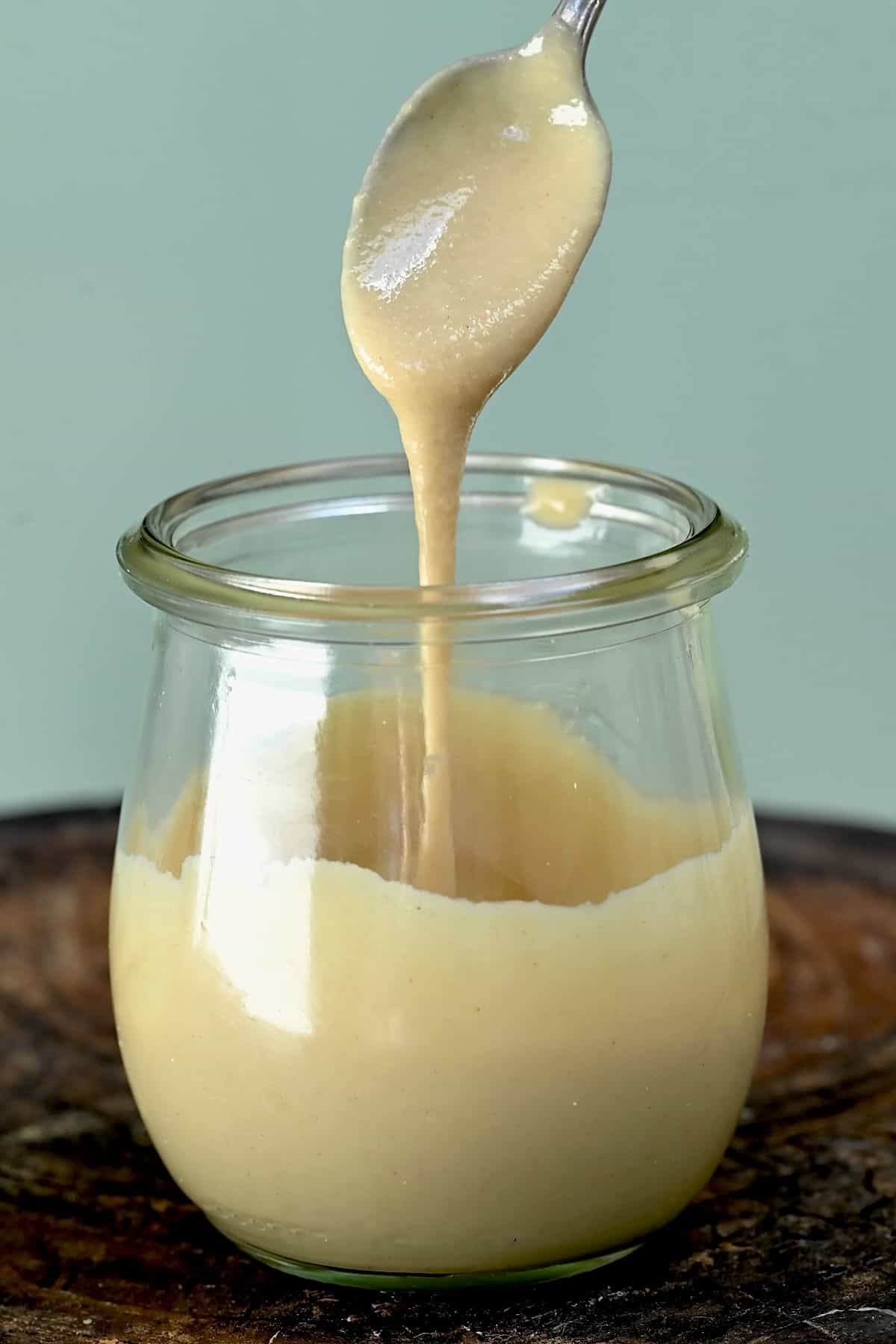
I’m no stranger to making nut and seed butter at home with minimal ingredients and a simple process. In terms of seeds, I’ve already shared how to make homemade sunflower seed butter , hemp seed butter , and pumpkin seed butter , but now it’s time to learn how to make tahini (aka sesame seed butter)!
This creamy condiment requires just ONE ingredient -with no added oils – and takes under 15 minutes to prepare from scratch. The resulting homemade tahini is creamy and flavorful (perfect for your next batch of homemade hummus ) and works out as far more budget-friendly and delicious than store-bought versions and with fewer ingredients. Plus, you can store it for several months, yay!
Want to save this recipe?
- What Is Tahini?
- How To Make Tahini?
- Ways to Use Tahini
- How to Store Tahini
- FAQs
- More Seed and Nut Butters
- One Ingredient Tahini in Minutes Recipe
What Is Tahini?
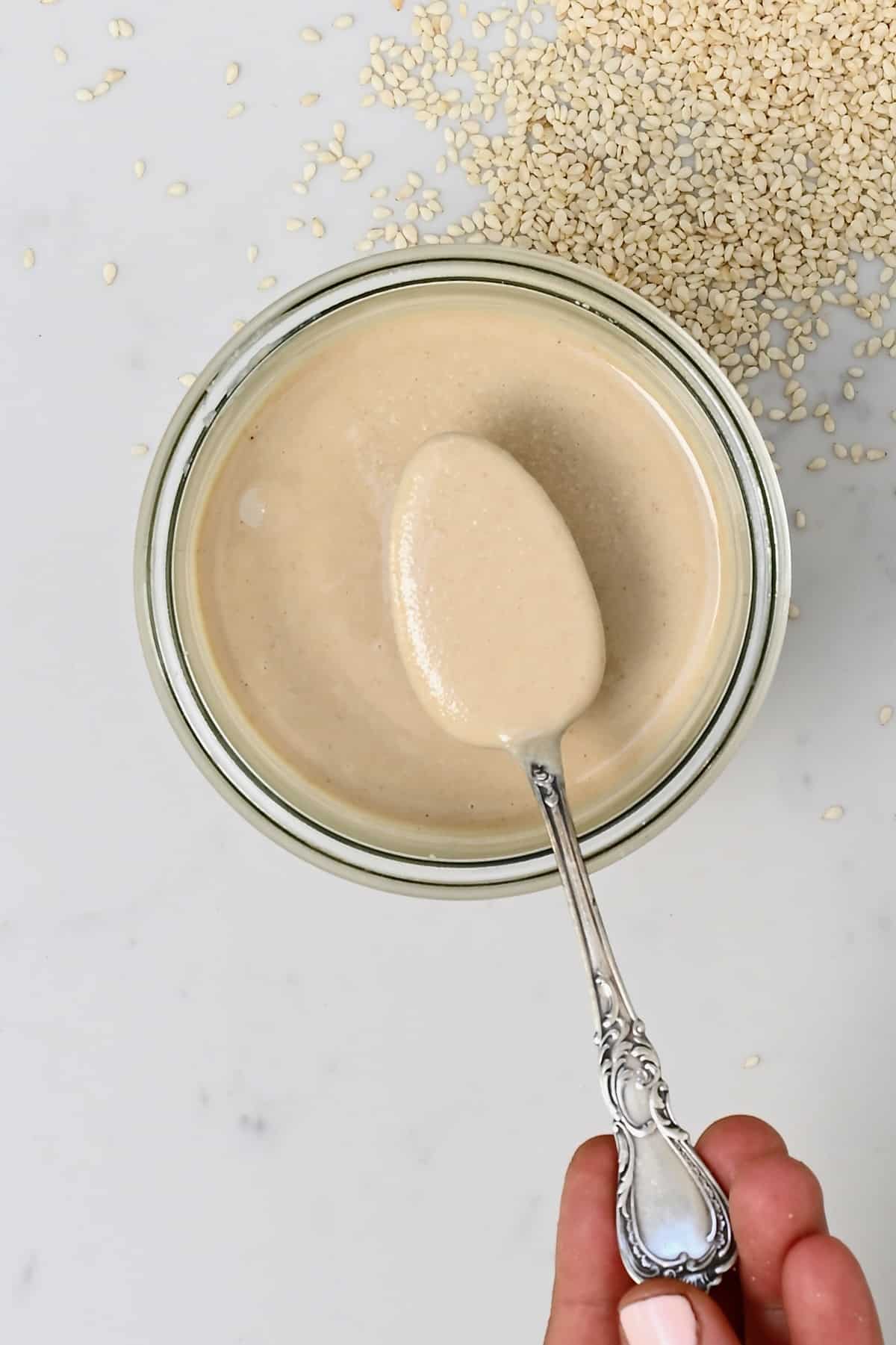
First, what is tahini made of? It is simply a paste made from lightly toasted sesame seeds, also referred to as tahini butter, sesame butter, and sesame paste. It is a staple in Middle Eastern and Mediterranean cuisine.
It’s popularly known as a must-have ingredient for hummus, but this nutty-tasting, gluten-free, vegan sesame paste has far more uses than that.
In fact, as a Lebanese woman, my pantry would feel empty without a large jar of tahini (and some black sesame paste , too!) for mixing, dipping, spreading, and more! Unfortunately, store-bought options can be iffy, with flavor and quality varying massively between brands. Some are overly bitter, others lack flavor. But luckily, you can skip the hassle by picking up a bag of hulled sesame seeds and making this homemade tahini recipe at home!
How To Make Tahini?
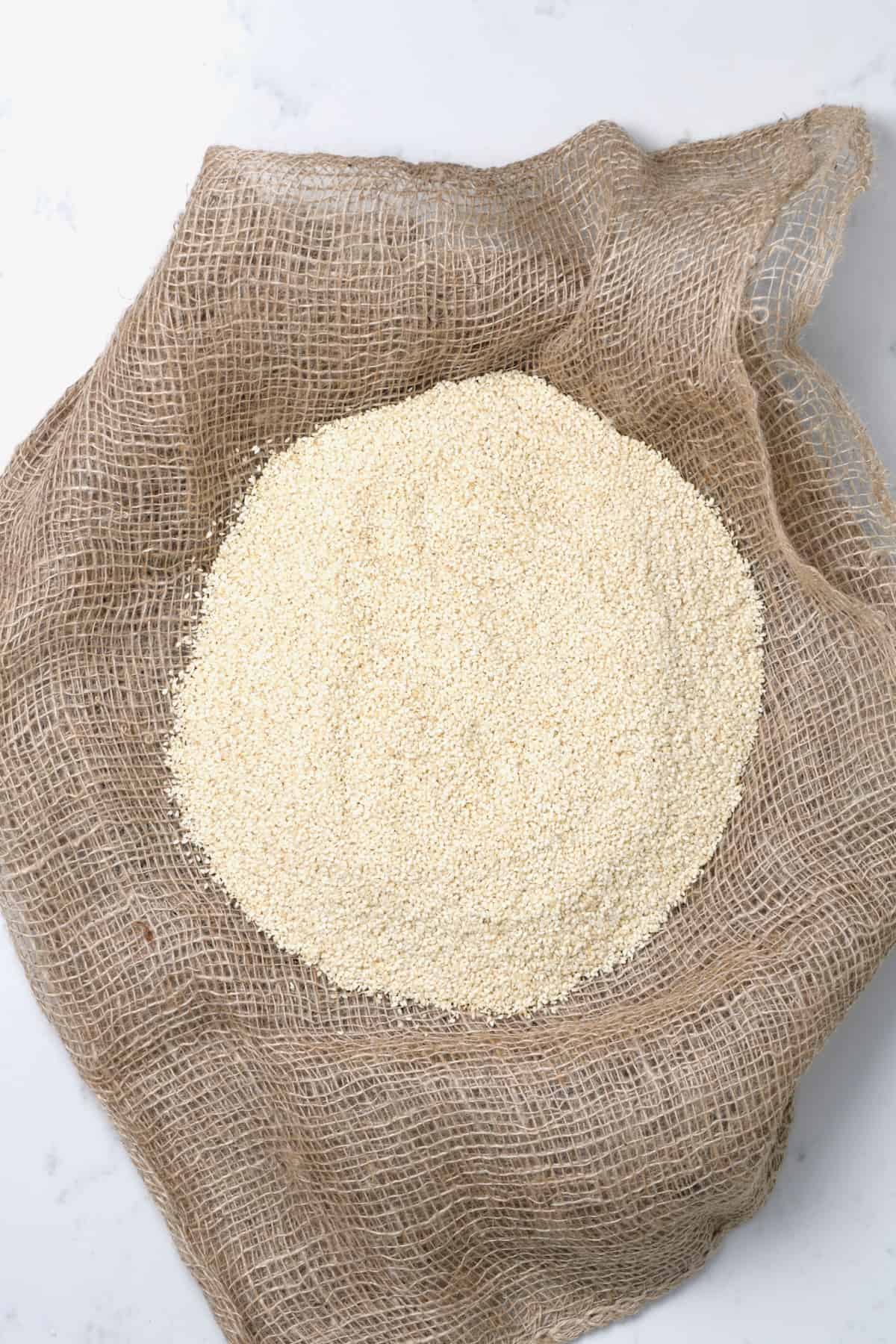
All you need to prepare the homemade tahini recipe is your hulled white sesame seeds, a pinch of salt if you’d prefer, a wide skillet, and a high-speed food processor. Like other nut and seed butters, making homemade tahini primarily consists of grinding the seeds until smooth.
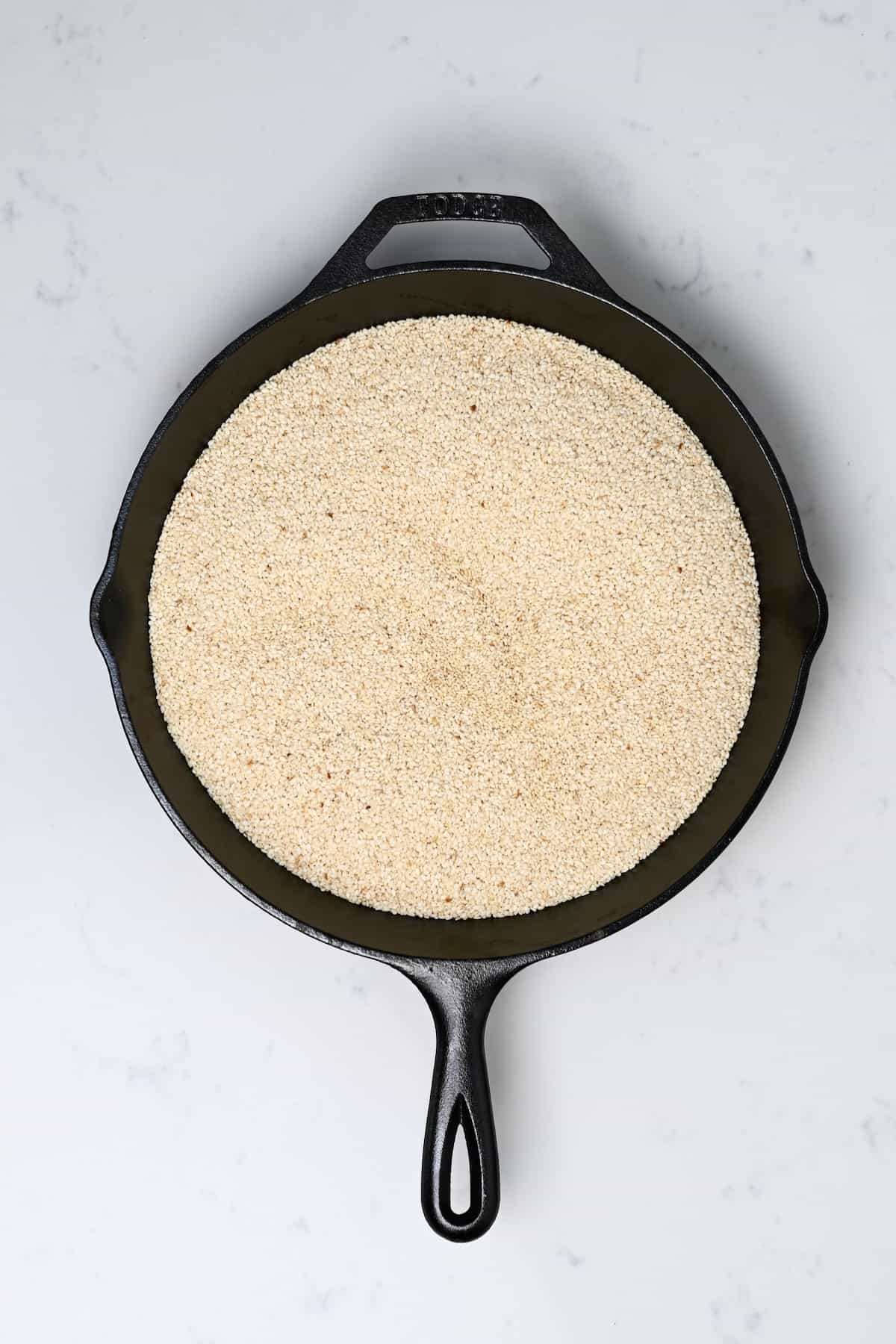
First, preheat a wide skillet over low heat, then add the sesame seeds. Cook them, stirring often, until fragrant and golden brown.
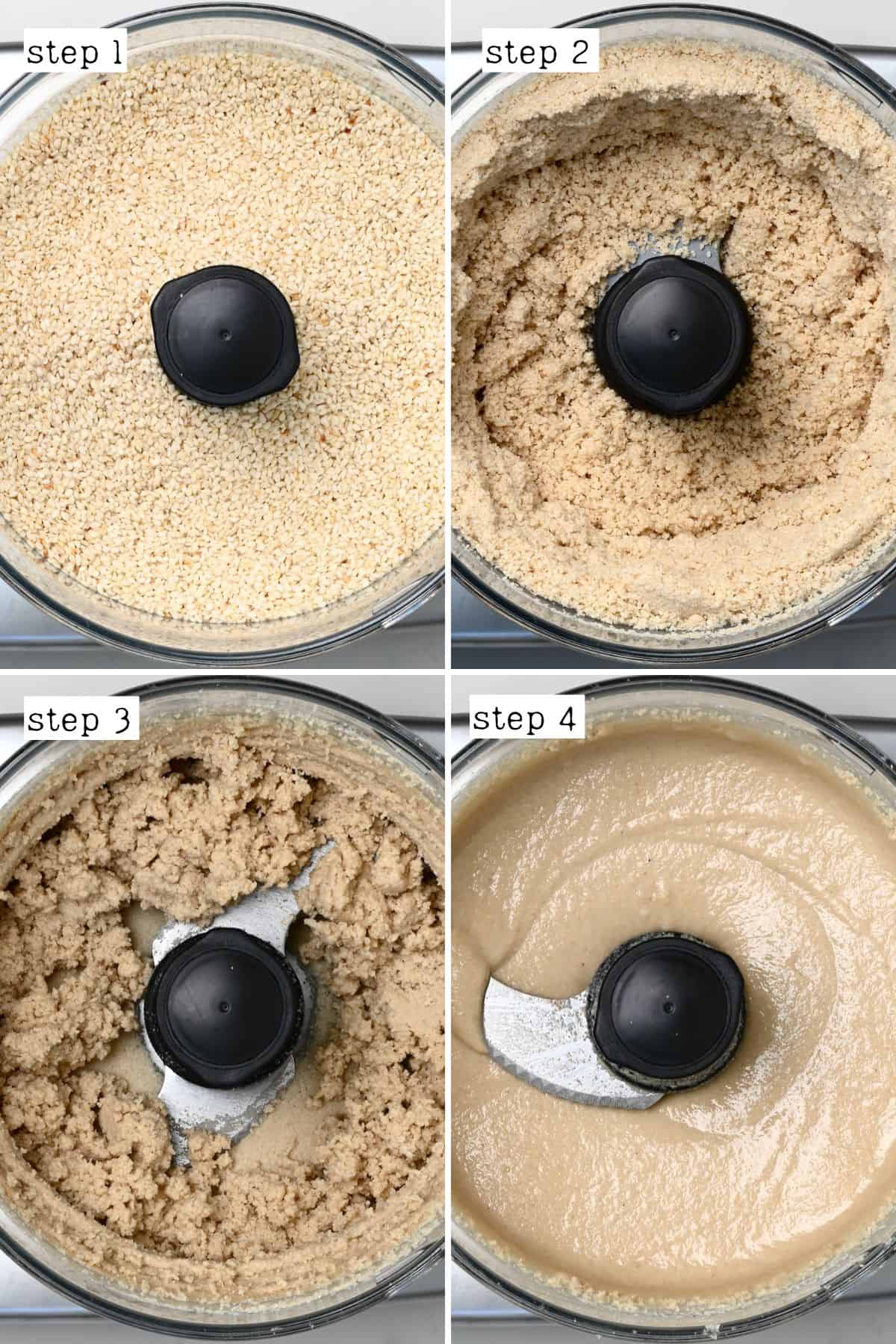
Then, transfer the sesame seeds to a high-speed food processor or blender. Blend the seeds into a creamy, smooth paste, pausing the machine to scrape down the sides of the jug as needed. During this process, it will first become a crumbly paste before eventually smoothing out in a creamy consistency.
The longer you leave the machine running, the smoother and runnier it will become. I blend mine for around 7-10 minutes, giving the machine a break halfway to avoid overheating.
If you want to add a pinch of salt, do so now, seasoning to taste. Then, transfer the homemade tahini to a sterilized jar and enjoy!
Ways to Use Tahini
The options are still plentiful when wondering how to use tahini outside of its popular inclusion in hummus and baba ghanoush. Here are just a few tahini uses to inspire your use of this creamy ingredient.
- Tahini is a classic ingredient in hummus recipes like traditional hummus, roasted red pepper hummus , and beet hummus .
- Add to other dips – like this vegan moutabal , baba ganoush , etc.
- With falafels – like rainbow falafels (fried) or baked falafel.
- Spread over toast with date syrup.
- Drizzle over roasted cauliflower wings or use it as tahini seasoning.
- Use in or to drizzle over ice cream.
- Add to salad dressings and sauces.
- Mix into pasta sauces.
- Drizzled over a baked sweet potato.
- Use in cookies, brownies, and other baked or chocolate goods.
- Make tahini halva.
- Add to stuffed dates.
Tahini substitute options? If you find a recipe calling for tahini and need a quick substitute, I often recommend using sunflower seed butter or another nut or seed butter. Of course, the results won’t be the same, but they often work in a pinch!
How to Store Tahini
Thanks to this tahini recipe containing only one ingredient, the shelf life is pretty impressive. You can store the homemade tahini in a glass container in a cool, dark location (like a kitchen cupboard/pantry) for at least 1-2 months or in the refrigerator for longer.
Note that it’s natural for the oil to separate from the seed paste over time. Just stir it back in again before using it.
Does tahini need to be refrigerated?
No, you can store the homemade tahini at room temperature or in the fridge. While the latter will slightly extend the shelf life, the sesame paste will also somewhat thicken in the fridge and won’t be the runny texture needed for many recipes without first allowing it to warm slightly.
You can also freeze the tahini paste. I like to do so in tablespoon-sized portions in an ice cube tray for 4-6 months.
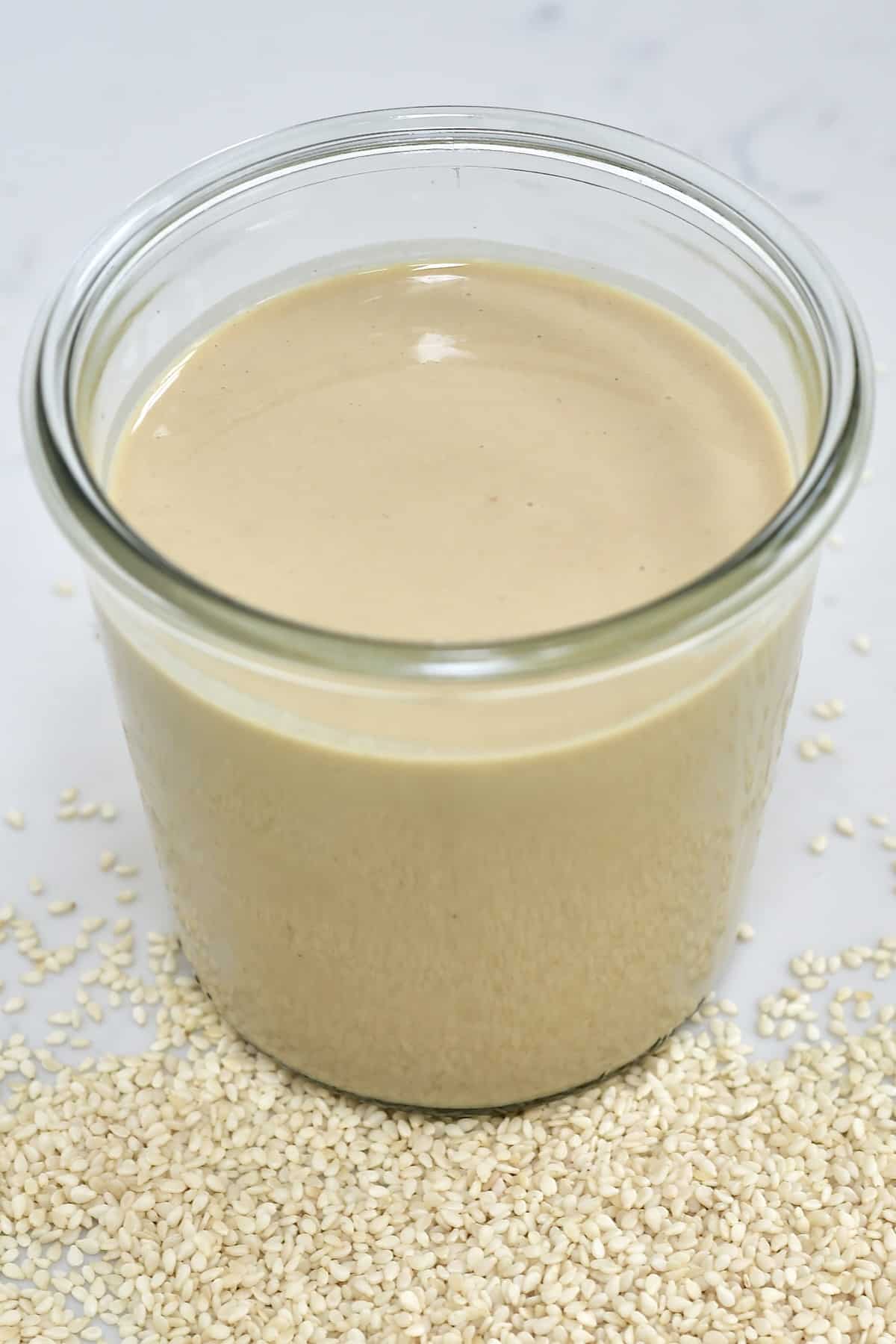
Unsurprisingly, tahini tastes like toasted sesame seeds. Compared to other seed butters, tahini paste has a slightly bitter undertone. However, if it’s overly bitter, this is usually a sign of over-roasted or low-quality seeds.
Homemade tahini is a delicious addition to several types of dressings and sauces. For example, you might enjoy this simple lemon juice tahini sauce or this herb homemade tahini sauce .
Yes, just like any nut or seed butter, the oils in the seeds will eventually turn rancid, or the paste will “dry out.” To look for signs of spoilage, inspect for any mold, give it a sniff (if the oils are rancid, it will have a chemical/paint-like smell), and give it a small taste (if it’s very sour, then it’s likely spoiled).
You may just need to leave it longer. After the first few minutes in the food processor/blender, you might be tempted to reach for a bottle of oil but give it at least 8-10 minutes (with breaks every 3-4 minutes, so the machine doesn’t overheat). Then and only then, if the machine still seems to be struggling, then you can help it along with a small drizzle of neutral oil like vegetable oil, avocado oil, canola oil, light olive oil, sesame oil, etc.
More Seed and Nut Butters
- Cashew butter
- Almond butter
- Pistachio butter
- Natural peanut butter
If you try this homemade tahini recipe (sesame paste), I’d love to hear your thoughts/questions below. Also, I’d appreciate a recipe card rating below, and feel free to tag me in your recipe recreations on Instagram @Alphafoodie !
Equipment
- Blender/Food processor
IngredientsUS CustomaryMetric1x2x3x
- ▢ 18 oz sesame seeds hulled
- ▢ 1/2 tsp Salt optional
This will yield about2cups of tahini paste.
Instructions
- Preheat a wide skillet over low heat, then add the sesame seeds. Cook them, stirring often, until fragrant and golden brown – about 5 minutes.
- Transfer the sesame seeds to a high-speed food processor or blender. Blend the seeds into a creamy, smooth paste, pausing the machine to scrape down the sides of the jug as needed. During this process, it will first become a crumbly paste before eventually smoothing out in a creamy consistency. The longer you leave the machine running, the smoother and runnier it will become. I blend mine for around 7-10 minutes, giving the machine a break halfway to avoid overheating.
- If you want to add a pinch of salt, do so now, seasoning to taste. Blitz to incorporate. Then, transfer the homemade tahini to a sterilized jar!
Video
Notes
- Money-saving tip: If you can, buy sesame seeds in bulk in Middle Eastern/Asian markets for the best price. Hulled sesame seeds (which are a light golden color) are the best for homemade tahini.
- Hulled vs. unhulled sesame seeds : I highly recommend using hulled sesame seeds when you make your own tahini. While it’s technically possible to use unhulled (and sprouted) sesame seeds, I find the resulting sesame paste is usually more bitter. It’s also harder to blend as smooth.
- Don’t burn the seeds : When toasting the seeds on the stovetop, always do so over low heat and stirring often. Burning the seeds can result in a bitter-tasting tahini paste.
- Use a high-powered food processor/blender: If your machine isn’t powerful enough, you may need extra oil to help the seeds blend into a smooth sesame paste.
- Have patience: Like any nut or seed butter, this process takes time. It may look like a failure for the first few minutes, but just keep blending (giving the machine breaks every few minutes). During the process, it will become a crumbly dough, form into a sticky ball, and eventually smooth out into a creamy, runny sauce-like consistency.
Nutrition
Nutrition information is automatically calculated, so should only be used as an approximation.

One Ingredient Tahini in Minutes
Equipment
- Blender/Food processor
Ingredients
- 18 oz sesame seeds hulled
- 1/2 tsp Salt optional
This will yield about2cups of tahini paste.
Instructions
- Preheat a wide skillet over low heat, then add the sesame seeds. Cook them, stirring often, until fragrant and golden brown - about 5 minutes.
- Transfer the sesame seeds to a high-speed food processor or blender. Blend the seeds into a creamy, smooth paste, pausing the machine to scrape down the sides of the jug as needed. During this process, it will first become a crumbly paste before eventually smoothing out in a creamy consistency. The longer you leave the machine running, the smoother and runnier it will become. I blend mine for around 7-10 minutes, giving the machine a break halfway to avoid overheating.
- If you want to add a pinch of salt, do so now, seasoning to taste. Blitz to incorporate. Then, transfer the homemade tahini to a sterilized jar!
Video
Notes
- Money-saving tip: If you can, buy sesame seeds in bulk in Middle Eastern/Asian markets for the best price. Hulled sesame seeds (which are a light golden color) are the best for homemade tahini.
- Hulled vs. unhulled sesame seeds : I highly recommend using hulled sesame seeds when you make your own tahini. While it’s technically possible to use unhulled (and sprouted) sesame seeds, I find the resulting sesame paste is usually more bitter. It’s also harder to blend as smooth.
- Don’t burn the seeds : When toasting the seeds on the stovetop, always do so over low heat and stirring often. Burning the seeds can result in a bitter-tasting tahini paste.
- Use a high-powered food processor/blender: If your machine isn’t powerful enough, you may need extra oil to help the seeds blend into a smooth sesame paste.
- Have patience: Like any nut or seed butter, this process takes time. It may look like a failure for the first few minutes, but just keep blending (giving the machine breaks every few minutes). During the process, it will become a crumbly dough, form into a sticky ball, and eventually smooth out into a creamy, runny sauce-like consistency.
Nutrition
Recipe on Alphafoodie: https://www.alphafoodie.com/homemade-tahini-sesame-paste/
